What Are Phalguna Month Dietary Guidelines?
By Aparna Patni
Ayurvedic Science Of Roasted Chickpeas, Dry Ginger And Thandai
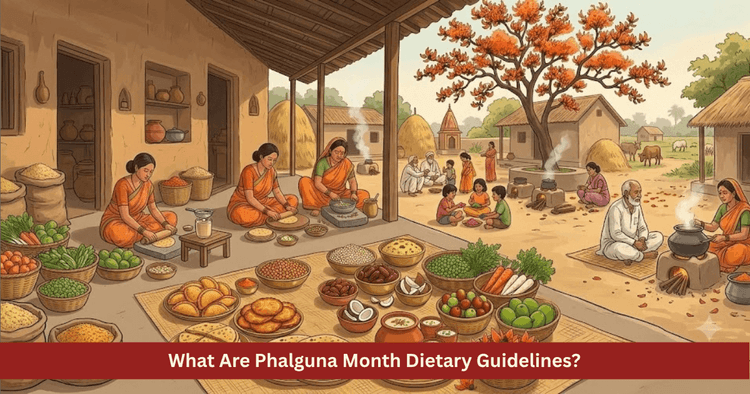
Table of Contents
Panchang Context And Seasonal Dietary Transition
According to the classical Vedic calendar, the month of Phalguna represents an exceptionally delicate and sensitive seasonal junction for both the macrocosmic solar environment and the human biological vessel. This temporal span serves as the exact meeting point between the departure of harsh winter chills and the emergence of radiant spring warmth. Classical astronomical manuals recognize this interval as a subtle expression of the transitional Yamadanshtra phase, wherein diurnal atmospheric temperatures rise rapidly while nocturnal and dawn air currents retain persistent coldness. This sharp environmental contrast destabilizes the natural biological equilibrium of the three bodily humors: vata, pitta and kapha.
Foundational Ayurvedic treatises, including the Sutrasthana of the Charaka Samhita and the Ashtanga Hridayam, explicitly warn that dense, unctuous and heavy kapha accumulated during the winter begins to liquefy under the mounting heat of the spring sun. As this systemic kapha liquefies, it dampens the primary internal digestive fire situated within the gastrointestinal tract. This dampening precipitates sluggish metabolism, loss of appetite, systemic inertia, respiratory congestions and acute seasonal fevers. Consequently, dietary regimens prescribed for Phalguna are not designed merely for sensual satiation but are formulated to ignite digestive fire and dehydrate liquefied systemic kapha.
| Astrological and Seasonal Metric | Classical and Ayurvedic Parameter |
|---|---|
| Calendar and Seasonal Transition | Phalguna Month, Junction of Winter and Spring |
| Primary Biological Imbalance | Liquefaction of Accumulated Kapha and Weak Digestion |
| Recommended Dietary Tastes | Pungent (Katu), Bitter (Tikta) and Astringent (Kashaya) |
| Prohibited Dietary Tastes | Excess Sweet (Madhura), Sour (Amla), Salty, Heavy, Oily |
| Core Therapeutic Nutrients | Roasted Chickpeas, Dry Ginger, Carom, Black Pepper, Thandai |
| Functional State of Digestion | Irregular and Fluctuating Digestive Fire (Vishama Agni) |
| Bestowed Physiological Benefit | Expulsion of Kapha, Enhanced Digestion, Cellular Vitality |
To preserve physical immunity and reinforce digestive strength throughout Phalguna, a practitioner must incorporate rigorous scriptural dietary protocols into daily life from dawn onward.
- Awakening before sunrise during Brahma Muhurta, drinking warm water infused with dry ginger powder and holy basil leaves instead of cold water.
- Consuming strictly fresh, warm, light and easily digestible satvic meals throughout the daytime hours.
- Utilizing unadulterated mustard oil or sesame seed oil in culinary preparations while strictly renouncing hydrogenated fats.
- Eliminating completely the dense, excessively oily, deeply chilled and stale leftovers consumed routinely during midwinter.
- Chewing a modest piece of aged raw jaggery alongside powdered dry ginger or lightly roasted carom seeds immediately following meals.
- Avoiding the consumption of thick yogurt, heavy buttermilk or fermented sour consumables during midday, as they aggravate kapha.
- Partaking in the evening meal immediately following sunset or prior to 8:00 PM, keeping the portion light and warm.
- Consuming a measured serving of dry roasted chickpeas and hot therapeutic decoctions seasoned with crushed black pepper daily.
The Therapeutic Power Of Roasted Chickpeas And Parched Harvest Grains
During the month of Phalguna, premier legume crops, particularly chickpeas, reach complete maturity across rural fields. Traditional culture observes an ancient ritual of roasting freshly harvested green chickpea pods over sacred cow dung embers, celebrated in classical vernaculars as holha or the first harvest offering. Concurrently, consuming mature dry roasted chickpeas without oil is mandated throughout the month. In the Annapana Vidhi chapter of the Charaka Samhita, roasted chickpea is classified as light, dry, astringent and possessing natural scraping properties that eliminate systemic adipose tissue and stagnant mucus.
When increasing spring sunshine causes bodily kapha to liquefy and accumulate within the pulmonary chambers, bronchial passages and stomach, dry roasted chickpeas function as a natural biological absorbent. Their inherent dryness and astringency dehydrate lingering fluid accumulations while expanding the operational capacity of the respiratory system.
| Nutritional and Biochemical Factor | Physiological Action in the Body | Classical Therapeutic Health Advantage |
|---|---|---|
| High Natural Dietary Fiber | Acceleration of peristaltic colon movements | Elimination of metabolic toxins and chronic constipation |
| Dominance of Astringent Taste | Absorption of excess gastric secretions | Dehydration of melted kapha and igniting metabolism |
| Pure Plant Based Protein | Cellular repair and muscular restoration | Dissolution of chronic fatigue and surge of stamina |
| Rich Bioavailable Iron and Copper | Accelerated synthesis of red blood cells | Complete reversal of anemia and radiant skin luster |
| Exceptionally Low Glycemic Index | Gradual and sustained glucose absorption | Natural regulation of blood sugar and healthy satiety |
When dry roasted chickpeas are chewed slowly alongside aged raw jaggery, the combination soothes aggravated vata without aggravating dormant kapha. This dietary synergy elevates cellular immunity, shielding the human vessel against airborne viral infections, bronchial coughing, seasonal colds and respiratory distress.
The Tri-Pungent Science: Dry Ginger, Carom Seeds And Black Pepper
In classical pharmacology, the synergy of dry ginger, black pepper and long pepper is crowned as Trikatu, meaning the three great pungent healers. Incorporating dry ginger, carom seeds and black pepper into the daily dietary regimen of Phalguna acts as an infallible biological nectar. Dry ginger possesses a heating energy yet digests with a sweet post digestive effect; it stimulates the secretion of gastric enzymes, preventing intestinal putrefaction.
Carom seeds contain the active compound thymol, which relieves flatulence, intestinal cramping and abdominal heaviness within minutes. During Phalguna, when changing atmospheric humidity conflicts with solar warmth, consuming carom seeds purges intestinal parasites and tones the hepatic system.
Black pepper contains concentrated piperine, an alkaloid that accelerates basal metabolic rate. The sharp heat of black pepper liquefies and expels stubborn phlegm adhering to the bronchial walls, clearing airway resistance.
- Boil half a teaspoon of dry ginger powder and two pinches of freshly crushed black pepper in clean water at dawn, consuming it like warm tea.
- Season lentils and vegetables utilizing carom seeds and pure asafoetida alongside cumin seeds to ensure optimal assimilation.
- Ingest half a teaspoon of dry roasted carom seeds with black salt and warm water following heavy meals to relieve sluggish digestion.
- Consume a pinch of dry ginger powder blended into a small cup of warm cow milk prior to retiring at night to prevent pulmonary congestion.
The Science Of Traditional Thandai And Tridoshic Equilibrium
The arrival of the month of Phalguna and the festival of colors immediately evokes the heritage of traditional thandai. However, modern commercial culture misinterprets thandai as merely an oversweetened, intoxicating party drink, demonstrating profound ignorance of its Ayurvedic lineage. Ancient seers and physicians designed thandai as an exceptional therapeutic tonic aimed at stabilizing bodily pitta and vata during the seasonal shift into spring and summer.
Authentic Vedic thandai contains no synthetic artificial dyes, commercial chemical essences or refined cane sugar. Every individual ingredient performs a distinct physiological role:
- Fennel Seeds: Serving as the cooling foundation, fennel seeds provide sweet and digestive properties that neutralize gastric acidity.
- Almonds and Pistachios: These raw nuts furnish bioavailable fatty acids, nourishing cranial nerves and expanding bodily vigor.
- Melon Seeds: Sourced from cantaloupes and watermelons, these seeds are mild diuretics that assist the renal system in expelling metabolic waste.
- Poppy Seeds: Possessing gentle sedative properties, poppy seeds soothe the central nervous system, relieving insomnia and seasonal restlessness.
- Fragrant Rose Petals: Rose petals strengthen cardiac tissues, expel excess hepatic heat and purify the circulatory bloodstream.
- Black Pepper and Cardamom: These warming spices balance the profound cooling nature of the beverage, preventing pulmonary congestion.
- Saffron Strands: Saffron accelerates peripheral blood circulation and imparts a golden complexion to the skin.
When these botanicals are ground into a smooth paste upon unblemished stone slabs and blended with unboiled cow milk and raw rock sugar, the formulation functions as a rejuvenative elixir. It shields the human organism against sudden heat exhaustion while calming the nervous system.
Strictly Prohibited Foods And Environmental Hazards In Phalguna
Adhering to beneficial dietary items is only half the science; renouncing harmful and prohibited items is of supreme importance. Classical medicine dictates that if an individual fails to eliminate disease producing foods, no therapeutic remedy can restore lasting equilibrium.
| Strictly Prohibited Consumable | Biological Impact on Human Physiology | Foreseen Acute Clinical Disorder |
|---|---|---|
| Iced and Refrigerated Water | Extinction of digestive fire and kapha congestion | Acute pharyngitis, tonsillitis, asthma, rhinitis |
| Stale, Chilled and Reheated Leftovers | Formation of heavy metabolic toxins (Ama) | Dyspepsia, severe constipation, blood impurities |
| Excessive Consumption of Thick Curd | Severe obstruction of microcirculatory channels | Sinusitis, cutaneous allergies, joint stiffness |
| Excess Refined Salt and Sour Pickles | Retention of lymphatic fluids and pitta flareups | Vascular hypertension, skin hives, tissue inflammation |
| Heavy Black Gram Dal and Pastries | Exhaustion of gastric enzymes and metabolic lethargy | Hepatic congestion, rapid weight gain, chronic torpor |
Consuming refrigerated ice water during Phalguna acts like a slow metabolic poison. An individual should drink exclusively water maintained at ambient room temperature in natural earthenware urns or copper vessels. Sleeping during the daytime and remaining awake through midnight hours must be strictly avoided, as both habits aggravate kapha and pitta simultaneously.
Food Consecration, Physical Immunity And Spiritual Contemplation
Within Sanatana culture, dietary consumption is not viewed as mundane fuel for the body but as a sacred ritual of spiritual purification. The ancient Chandogya Upanishad proclaims that as the food is purified, the inner mind becomes pure. The dietary science of Phalguna is tailored to render human consciousness satvic, serene and focused.
When a seeker partakes in light, warm and easily assimilable nutrition during this seasonal shift, systemic lethargy and mental dullness vanish. Because the physical vessel remains light and free from congestion, the mind naturally concentrates during Brahma Muhurta meditation, breath regulation and mantra chanting. Conversely, individuals who consume heavy, greasy and tamasic foods during this month experience chronic sluggishness, excessive sleep and erratic emotional turbulence.
The dietary wisdom of Phalguna teaches humanity to live in rhythm with the cosmic laws of nature. Aligning dietary habits with seasonal shifts prevents physiological illness while harmonizing human consciousness with universal life energy. This seasonal dietary regimen equips human awareness to cross into the upcoming Vedic New Year in Chaitra with radiant health, unwavering vitality and spiritual clarity.
FAQ
Why is consuming dry roasted chickpeas considered essential during Phalguna?
The dry and astringent properties of roasted chickpeas dehydrate liquefied kapha, stimulate sluggish digestion and fortify systemic immunity.
What physiological advantages stem from combining dry ginger and carom seeds?
Dry ginger and carom seeds ignite digestive fire, eliminate intestinal gas and abdominal heaviness and protect the respiratory system from seasonal infections.
Why is crushed black pepper incorporated into authentic Vedic thandai?
Black pepper balances the intense cooling properties of nuts and seeds, ensuring that mucus does not accumulate within the pulmonary channels.
Which specific foods should be strictly avoided throughout the month of Phalguna?
Refrigerated ice water, stale reheated leftovers, heavy thick curd, excessive salt, sour pickles and greasy pastries should be completely renounced.
What is the classical health significance of consuming freshly roasted green harvest pods?
Known as holha, freshly roasted green harvest pods are light, easily digestible, nutrient dense and clean accumulated metabolic waste from the intestinal tract.
Get your accurate Kundali
Generate KundaliDid you like it?
Author

Aparna Patni (63)
Experience: 20
Consults About: Family Planning, Career
Clients In: Punjab, Haryana, Delhi
Share this article with friends and family
WELCOME TO
ZODIAQ
Right Decisions at the right time with ZODIAQ
