What Is The Spiritual Mystery Of Phalguna?
By Pt. Nilesh Sharma
Shiva Detachment, Krishna Love, Seasonal Transition And Karmic Renewal
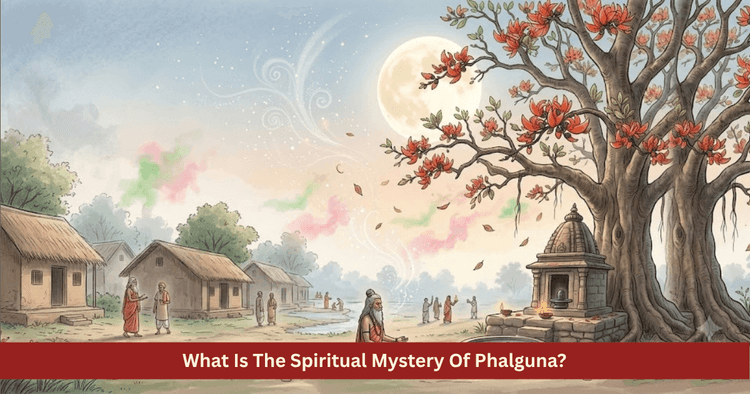
Table of Contents
Panchang Description And Schedule Of Major Sacred Observances
Phalguna is revered as the 12th and concluding month of the traditional Hindu lunar calendar. This auspicious time marks the profound junction between the departure of late winter and the vibrant blooming of spring. During this celestial transit, Surya Deva departs from Capricorn to enter Aquarius and subsequently culminates the annual cycle with the transition into Pisces. From a metaphysical viewpoint, this month represents the dissolution of watery inert coldness and the dynamic arousal of the solar fire element within mortal consciousness.
| Panchang Component | Classical Description |
|---|---|
| Calendar Position | 12th and Concluding Month of the Hindu Year |
| Nakshatra Association | Purva Phalguni and Uttara Phalguni Nakshatras |
| Presiding Deities | Lord Shiva, Mother Parvati, Radha Krishna, Chandra Deva, and Surya Deva |
| Krishna Paksha Observances | Vijaya Ekadashi, Maha Shivratri Vrat, Phalguna Amavasya |
| Shukla Paksha Observances | Amalaki Ekadashi, Holika Dahan, Vasantotsava, Phalguna Purnima |
| Seasonal Transformation | Celestial Transition from Late Winter into Spring |
| Prescribed Charitable Acts | Sesame seeds, raw jaggery, clarified butter, food, garments, and copper urns |
From the earliest dawn of Phalguna, every dedicated seeker must observe rigorous scriptural disciplines and unshakeable inner purification.
- Waking during the auspicious hours of Brahma Muhurta before sunrise to bathe in cool water consecrated with drops of sacred river currents.
- Offering holy water mixed with kumkum, red sandalwood paste, unbroken rice grains, and crimson flowers to Surya Deva thrice from a pure copper vessel.
- Offering unbroken rice grains, sacred ash, datura fruits, crown flowers, and consecrated trifoliate wood apple leaves continuously upon the Shiva Lingam.
- Chanting the supreme Maha Mrityunjaya mantra or the primordial five syllable sound Om Namah Shivaya at least 108 times with unbroken concentration.
- Submitting fragrant abir, herbal colors, and fresh blossoms before Radha Krishna accompanied by devotional kirtan singing.
- Renouncing tamasic foods, abusive speech, lethargy, sensual indulgence, and negative patterns of mind without hesitation.
- Lighting a lamp filled with pure sesame oil or cow clarified butter before the holy Tulsi plant and at the main threshold every dusk.
Planetary Dynamics And The Astrological Science Of Phalguna
In the rigorous science of Vedic astrology, the designation of any lunar month is determined by the specific constellation occupied by the full moon. During the sacred night of Phalguna Purnima, the Moon attains full luminosity while traversing either Purva Phalguni or Uttara Phalguni nakshatras. Because of this celestial occurrence, the month is designated as Phalguna. Purva Phalguni nakshatra is presided over by the solar deity Bhaga, who rules wealth and good fortune, while its planetary sovereign is Venus. Venus governs worldly affluence, marital harmony, aesthetic beauty, fine arts, sensuality, and romantic attraction.
Conversely, Uttara Phalguni nakshatra is governed by the solar deity Aryama and ruled by the planetary sovereign Surya Deva. The Sun embodies the soul, inner vitality, worldly reputation, ancestral debts, and righteous administrative power. Venus and the Sun display contrasting temperaments. While Venus directs mortal awareness outward toward sensory luxuries and bodily comfort, the Sun inspires inward austerity, spiritual penance, and self realization. Phalguna harmonizes these two opposing cosmic forces. When a seeker undertakes disciplined Vedic worship during this period, the planetary balance between Venus and the Sun becomes firmly established. If an individual suffers from an afflicted Moon or persistent anxiety and mental despondency, spiritual practices observed during the nights of Phalguna untie the inner knots of the mind and restore lasting tranquility.
Deep Secrets Of Maha Shivratri And Dark Fortnight Asceticism
The dark fortnight of Phalguna, known as Krishna Paksha, carries a solemn, contemplative, and deeply ascetic character. This fortnight instructs the seeker to abandon worldly illusions and anchor personal consciousness within the transcendental Self. On the fourteenth night of this fortnight falls the supreme festival of Maha Shivratri. Classical scriptures describe this night as the eternal wedding union between the primordial yogi Lord Shiva and the supreme cosmic energy Mother Parvati. Spiritually, this occasion marks the cosmic communion between absolute consciousness and primordial nature.
The four quarter vigil worship conducted throughout Maha Shivratri yields unfathomable spiritual benefits. In the first quarter the sacred Lingam is bathed with raw milk, in the second quarter with fresh yogurt, in the third quarter with clarified butter, and in the final fourth quarter with pure honey. This fourfold worship ensures the fulfillment of the four fundamental pursuits of human life, namely virtue, material prosperity, righteous desire, and final spiritual liberation. A seeker who remains awake throughout this night chanting the Maha Mrityunjaya mantra burns away the accumulated karmic debts of multiple incarnations. Astronomically, during this night in the northern hemisphere, subtle magnetic currents assist the upward ascent of the dormant Kundalini energy from the Muladhara center toward the Sahasrara center.
| Shiva Worship Quarter | Holy Oblation Fluid | Associated Vedic Mantra | Bestowed Spiritual Benefit |
|---|---|---|---|
| First Quarter | Pure raw cow milk | Om Sadyojataya Namah | Establishment of virtue and bodily health |
| Second Quarter | Pure cow yogurt | Om Vamadevaya Namah | Purification of wealth and mental stillness |
| Third Quarter | Pure cow clarified butter | Om Aghoraya Namah | Subjugation of lust and spiritual vitality |
| Fourth Quarter | Pure wild forest honey | Om Tatpurushaya Namah | Attainment of liberation and freedom from karma |
Divine Pastimes Of Radha Krishna And Bright Fortnight Devotion
The moment the dark fortnight concludes and the bright fortnight of Phalguna begins, the tone of spiritual sadhana shifts from austere detachment to ecstatic divine devotion. This period is dedicated to worshiping the personal manifest aspect of divinity and awakening pure love within the human heart. In the sacred geography of Braj, the advent of Shukla Paksha brings exuberant celebrations of folk singing and flower petals. The transcendental pastimes of Radha Rani and Lord Krishna remind humanity that worldly attachments must dissolve into the pure colors of divine ecstasy.
The eleventh lunar day of the bright fortnight is observed as Amalaki Ekadashi. The Amalaki or Indian gooseberry tree is revered as the living embodiment of Lord Narayana and Goddess Lakshmi. Worshiping Lord Vishnu beneath the branches of the gooseberry tree and distributing its fruits on this day brings merits equal to performing grand Vedic sacrifices. Soon afterward arrives the night of Phalguna Purnima, celebrated with the blazing fire of Holika Dahan. The steadfast devotion of Prahlada contrasted against the arrogance of Hiranyakashipu and his sister Holika proves that when demonic pride reaches its zenith, the Divine descends to protect the surrendered devotee. Into the holy embers of Holika, the seeker must consign internal defects, jealousy, malice, and narrow egoism to emerge purified like molten gold.
Ayurvedic Health Preservation During Seasonal Metamorphosis
The foundational treatises of Ayurveda, including the Charaka Samhita and Sushruta Samhita, recognize Phalguna as an extraordinarily vulnerable seasonal junction. During the severe chill of late winter, excessive kapha dosha accumulates within the biological channels of the human body. As Surya Deva moves northward during Phalguna and solar radiation warms the earth, this congealed kapha begins to liquefy rapidly. The sudden liquefaction of kapha dampens the digestive fire, giving rise to sluggish metabolism, respiratory congestion, cough, seasonal fevers, dermal irritations, and pervasive bodily heaviness. To preserve optimal health, strict dietary protocols must be adopted.
- One must strictly avoid excessively oily, fried, heavily spiced, and overly sweet foods that burden the stomach.
- The regular diet should include wholesome portions of roasted gram, barley porridge, chickpea flour, and fresh ginger.
- Stale, refrigerated, cold, and leftover food items must never be consumed under any circumstance.
- One should walk in the gentle morning sunshine for at least 30 minutes daily and practice pranayama to expand lung capacity.
- Bathing in comfortably lukewarm water and eating light, easily digestible dinners before nightfall preserves bodily equilibrium.
- Taking a teaspoon of triphala powder or drinking decoctions of giloy every morning pacifies excess kapha and maintains physical immunity.
Eradication Of Sins In The Final Month And Preparation For The New Year
Within the Vedic calendar system, Phalguna is far more than an ordinary month, it is an occasion for deep self examination of twelve months of accumulated karma. While fulfilling everyday domestic duties, a person inevitably accumulates subtle misdeeds through speech, thought, and physical actions. Phalguna offers the sacred opportunity to place the balance sheet of one's past conduct before divinity and seek genuine forgiveness. The fragrant breeze drifting across the earth during this season reminds humanity that life is a journey where the old must be gracefully released to welcome the new.
Just as trees shed their withered leaves in spring to nourish tender emerald sprouts, so must human beings consign ancient sorrows, resentments, failures, and grievances into the sacred blaze of Phalguna. On the first day of the bright fortnight of Chaitra, the sacred Hindu New Year dawns. Prior to entering this new cycle, the mirror of the heart must be cleansed of all stains. Distributing sesame seeds, serving cows, offering warm clothes to the needy, feeding learned persons, and listening to the sacred Shrimad Bhagavatam during Phalguna removes heavy karmic burdens and infuses the spirit with renewal. Through these practices, a seeker attains the immovable contemplative poise of Shiva and the radiant joy of Krishna.
FAQ
What is the position of Phalguna in the traditional Vedic calendar?
Phalguna serves as the 12th and concluding month of the Hindu lunar calendar, right before the arrival of the New Year in Chaitra.
Which two spiritual traditions find harmonious synthesis during Phalguna?
This month uniquely unites the ascetic Shaivite traditions seen during Maha Shivratri with the ecstatic Vaishnavite devotion witnessed during Holi and Radha Krishna pastimes.
What significant event is commemorated on the full moon of Phalguna?
Phalguna Purnima commemorates the miraculous protection of the young devotee Prahlada and the incineration of the demoness Holika in the fire.
What primary Ayurvedic guideline should be observed during this month?
To counteract the liquefaction of accumulated kapha dosha, one should abandon oily, heavy foods and consume light meals containing roasted gram, barley, and fresh ginger.
Worship of which deities brings holistic auspiciousness throughout Phalguna?
Devout worship directed toward Lord Shiva, Mother Parvati, Radha Krishna, Surya Deva, and Chandra Deva fulfills all legitimate worldly and spiritual aspirations.
Get your accurate Kundali
Generate KundaliDid you like it?
Author

Pt. Nilesh Sharma (63)
Experience: 20
Consults About: Family Planning, Career
Clients In: Punjab, Haryana, Delhi
Share this article with friends and family
WELCOME TO
ZODIAQ
Right Decisions at the right time with ZODIAQ
