Who Are The Presiding Deities Of Phalguna?
By Pt. Abhishek Sharma
Lord Shiva, Radha Krishna, And Kamadeva Rati Divine Triad
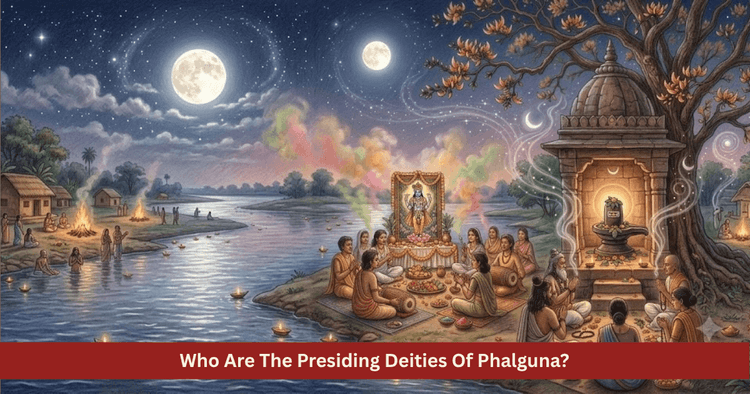
Table of Contents
The Divine Triad And Spiritual Energy Matrix Of Phalguna Month
Phalguna serves as an extraordinary mirror of the profound metaphysical philosophy of Sanatana Dharma, where three vital dimensions of human consciousness reveal themselves simultaneously. This sacred month is not merely a combination of calendar dates, it functions as a vibrant energetic sanctuary synthesizing deep detachment, selfless divine love, and harmonious marital affinity. Within this 12th month of the Hindu lunar calendar, an aspirant witnesses the supreme asceticism of Lord Mahadeva, the ecstatic love of Radha Krishna, and the graceful aesthetic attraction embodied by Kamadeva and Goddess Rati. This sacred triad provides the bound soul with a balanced path leading toward worldly fulfillment and spiritual liberation.
| Presiding Deity Form | Fortnight And Primary Timing | Elemental Cosmic Quality | Primary Energy Center | Bestowed Spiritual Fruits |
|---|---|---|---|---|
| Lord Mahadeva Shiva | Dark fortnight and Maha Shivratri | Supreme detachment, stillness, knowledge | Sahasrara and Ajna center | Liberation, fearlessness, karma purification |
| Divine Couple Radha Krishna | Bright fortnight, Phulera Dooj, Holi | Divine love incarnation, supreme joy | Anahata heart center | Pure devotion, mental tranquility, love |
| Lord Kamadeva And Rati | Spring climax throughout Phalguna | Attraction, physical glow, marital concord | Swadhishthana center | Domestic happiness, vitality, lineage growth |
| Chandra Deva And Surya Deva | Full moon, new moon, and dawns | Mental coolness, soul authority, radiance | Mind and soul purification | Radiant health, soul luster, dignity |
To harmonize these three celestial energies within daily living throughout Phalguna, every spiritual seeker must maintain disciplined Vedic observances.
- Awakening before sunrise during Brahma Muhurta, taking a bath in cool water blended with sacred river currents, and offering three water oblations to Surya Deva from a copper vessel.
- Offering fresh milk, sacred water, white sandalwood paste, holy ash, and three leaf wood apple leaves upon the Shiva Lingam while chanting the five syllable mantra.
- Submitting fragrant sandalwood paste, fresh blossoms, and herbal colored powders before the holy icons of Radha Krishna accompanied by sweet butter offerings.
- Offering white blossoms and natural floral perfumes in honor of Kamadeva and Goddess Rati to eliminate lingering bitterness from marital relations.
- Keeping the mind free from malicious envy, lustful distortions, angry words, and unrighteous thoughts toward any living creature.
- Lighting a clarified butter lamp every evening before the sacred Tulsi plant and at the main threshold of the residence.
Lord Shiva And The Ascetic Sadhana Of The Dark Fortnight
The initial half of Phalguna, known as Krishna Paksha, is entirely dedicated to the profound contemplation of the king of yogis, Lord Shiva. The fundamental principle of Shiva represents the unshakeable stillness that provides the cosmic foundation for the dissolution and peaceful rest of the universe. As late winter draws to a close and nature prepares to shed its withered outer forms, the supreme vigil of Maha Shivratri arrives on the 14th night of the dark fortnight. This is the sacred night when the supreme ascetic and master of dispassion, Lord Shiva, accepted the sacred ties of marriage with Mother Parvati.
This divine union is far more than a physical marriage, it represents the metaphysical communion between silent static consciousness and dynamic cosmic energy. Spiritual practices observed during the dark fortnight of Phalguna consume internal vanity, doubt, dread of death, and accumulated karmic debts. When a practitioner pours streams of cool water and submits bilva leaves upon the sacred Lingam, the restless fluctuations of the mind naturally dissolve into silence. Lord Shiva delivers the timeless lesson that unless an individual subdues internal lust, anger, and greed, one cannot become eligible to experience lasting transcendental joy.
Divine Pastimes Of Radha Krishna And The Ecstatic Devotion Of The Bright Fortnight
The moment the dark fortnight of Phalguna concludes and the first lunar day of Shukla Paksha dawns, the mood of spiritual practice transforms from silent contemplation into joyful songs of divine love. The bright fortnight is the glorious realm of pure devotion to Lord Krishna and Sri Radha Rani. In the sacred land of Braj, the advent of this fortnight sends waves of devotional singing, floral festivities, and sacred colors rippling through the air. Lord Krishna is not merely a historical incarnation, he is the personal manifestation of eternal bliss.
From the second lunar day known as Phulera Dooj up to the culmination of the full moon, the entire period remains immersed in the pure colors of Radha Krishna love. This love is completely detached from worldly lust, it represents the selfless longing of the individual soul to merge with the Supreme Lord. Devotional contemplation of Radha Krishna unties emotional knots within the heart, allowing boundless compassion, warmth, tenderness, and universal fraternity to expand. The joyful festival of Holi celebrated on Phalguna Purnima demonstrates that when a mortal becomes saturated with the divine color of the Divine, all mundane divisions of caste, status, and ego dissolve forever.
Balance Of Kamadeva And Goddess Rati In The Sanctification Of Householder Life
The third essential energetic dimension of Phalguna belongs to Kamadeva and his consort Goddess Rati. In the Sanatana Vedic philosophy, lawful desire holds an essential position among the four cardinal human aims, alongside righteousness, material prosperity, and final liberation. Kamadeva is revered as the divine architect of beauty, romantic attraction, bodily luster, and affection. The spring season is described as the intimate companion of Kamadeva because nature adorns herself like his celestial bow during this period. Fragrant mango blossoms serve as his flowery arrows, and the gentle spring breeze becomes his chariot.
| Human Life Dimension | Associated Cosmic Principle | Practical Worldly Harmony | Spiritual Metamorphosis |
|---|---|---|---|
| Desire and physical attraction | Kamadeva and Goddess Rati | Marital loyalty, affection, progeny | Contentment through righteous enjoyment |
| Righteousness and divine love | Sri Radha Krishna | Selfless service, kindness, surrender | Purification of the heart and pure bhakti |
| Liberation and spiritual detachment | Lord Mahadeva Shiva | Abandoning attachments and meditation | Complete freedom from karmic rebirth |
If desire becomes unrestrained and detached from moral duty, it drags an individual down into spiritual degradation. However, when that same creative impulse is guided by the laws of dharma and enters domestic life with Goddess Rati, it becomes the sacred pillar of lineage protection and marital peace. Worshipping Kamadeva and Rati during Phalguna provides immense peace to householders whose marriages have grown cold, strained, or distant. Phalguna demonstrates that desire must not be refined through violent suppression, rather it must rise from base indulgence into tender love, and from human love into divine communion.
Synthesis Of Detachment And Devotion In The Evolution Of Consciousness
This divine triad of Phalguna reveals that authentic Vedic living is never one sided. It neither advises human beings to abandon life in dry ascetic renunciation nor does it permit undisciplined sensory indulgence. The authentic beauty of human life lies in balancing the deep dispassion of Shiva with the ecstatic affection of Krishna. Within the inner soul must reside the silent presence of Shiva, anchored in unshakeable peace and detachment, while in external worldly actions must flow the joy of Krishna, radiating duty, warmth, and generous love.
When an individual recognizes the natural impulse of Kamadeva and aligns it with dharma, quiets internal passions at the feet of Shiva, and fills the emotional vessel with the holy singing of Radha Krishna, that soul enjoys legitimate worldly blessings while securing the promise of final liberation. This final month of the lunar cycle serves as a golden gateway of inner renewal, transforming the seeker into an illuminated, balanced, and serene human being ready to welcome the Vedic New Year in Chaitra.
FAQ
What combined spiritual lesson arises from worshiping Shiva and Krishna in Phalguna?
This practice demonstrates that true living requires cultivating inner detachment like Shiva while expressing joyful, compassionate love in worldly duties like Krishna.
Why are Kamadeva and Goddess Rati worshiped during Phalguna?
They are venerated to restore marital warmth, enhance domestic accord, and sanctify the creative life force within the boundaries of righteous householder duty.
What is the deeper metaphysical connection between Maha Shivratri and Holi?
Maha Shivratri is an inward austerity that burns away base passions, while Holi is the outward celebration of painting the purified soul with divine love.
Which deity should be worshiped to resolve persistent marital friction?
Offering prayers before the combined icon of Radha Krishna and honoring Kamadeva and Rati helps dissolve emotional bitterness and restores harmony between spouses.
How does Phalguna month bestow both worldly prosperity and spiritual liberation?
The dark fortnight grants liberation through the contemplative grace of Lord Shiva, while the bright fortnight provides righteous enjoyment through Krishna devotion and marital peace.
Get your accurate Kundali
Generate KundaliDid you like it?
Author

Pt. Abhishek Sharma (63)
Experience: 20
Consults About: Family Planning, Career
Clients In: Punjab, Haryana, Delhi
Share this article with friends and family
WELCOME TO
ZODIAQ
Right Decisions at the right time with ZODIAQ
