What Are The Rules And Prohibitions In Phalguna?
By Pt. Amitabh Sharma
Seven Golden Rules, Seven Critical Prohibitions And Ethical Checklist
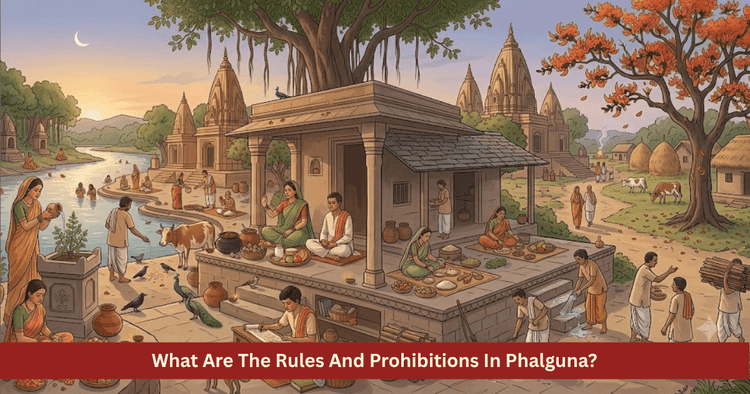
Table of Contents
Panchang Description And The Classical Code Of Conduct At Year End
According to the classical Vedic calendar, the month of Phalguna represents the twelfth and culminating lunar month of the sacred annual cycle. This temporal window signifies the delicate junction linking the departure of late winter to the complete emergence of radiant spring. Cosmologically and astronomically, Lord Surya Deva completes his passage through Capricorn, transiting across Aquarius toward the watery sign of Pisces. During this seasonal transition and cyclical reset, the three bodily humors-vata, pitta and kapha-become sensitive within the human physical vessel. Mounting ambient warmth causes dense winter kapha to liquefy, destabilizing the digestive fire and inducing mental restlessness.
Foundational treatises of sacred law-most notably the Nirnaya Sindhu, the Dharmasindhu and the Skanda Purana-explicitly dictate that every physical, vocal and mental action executed during the terminal month shapes the destiny of the approaching annual cycle. If an aspirant adheres to scriptural rules while renouncing prohibited actions throughout Phalguna, accumulated karmic debts, past-life transgressions and challenging planetary afflictions dissolve completely. Conversely, careless conduct, ethical laxity and lifestyle negligence during this critical window invite domestic friction, chronic infirmities and persistent poverty into the household.
| Astrological and Ethical Factor | Classical Scriptural Parameter |
|---|---|
| Calendar and Seasonal Window | Phalguna Month (Terminal Twelfth Month of Sacred Year) |
| Authoritative Scriptural Treatises | Nirnaya Sindhu, Dharmasindhu, Garuda Purana, Charaka Samhita |
| Critical Transit Window | Holashtaka (Phalguna Shukla Ashtami to Purnima) |
| Recommended Liturgical Orientation | Northeast (Ishanya Axis) and Eastern Horizon |
| Presiding Sovereign Divinities | Lord Mahadeva Shiva, Surya Deva, Sri Radha Krishna |
| Foundational Dietary Rule | Light, Warm, Digestible, Astringent and Bitter Tastes |
| Bestowed Spiritual Fruit | Purification of Past Karma, Somatic Health, New Year Grace |
To maintain the spiritual sanctity of Phalguna and secure the comprehensive merits of this transitional phase, scriptural authorities institute a rigorous code of conduct. Certain righteous actions must be performed daily, while specific detrimental habits must be completely eliminated.
- Awakening before sunrise during Brahma Muhurta, completing morning ablutions in cool or ambient fresh water.
- Adding sacred river drops and unblemished white sesame seeds to bathing water to cleanse external and subtle physical channels.
- Offering three continuous water oblations to the rising Sun from an unblemished copper vessel mixed with rice grains, kumkum and flowers.
- Presenting fresh bilva leaves and raw unboiled cow milk over the Shiva Lingam and offering yellow blossoms and herbal gulal to Sri Krishna.
- Consuming dry roasted chickpeas, dry ginger, carom seeds, black pepper and easily digestible satvic meals aligned with the season.
- Renouncing all auspicious secular rites, major domestic celebrations and commercial inaugurations during the eight days of Holashtaka.
- Refraining from throwing toxic chemical dyes onto human beings against consent and keeping voiceless animals and birds unharmed.
- Lighting a clarified butter lamp fueled by pure cow ghee near the sacred Tulsi plant at sunset, performing the evening twilight arati.
Seven Golden Rules Mandated For Phalguna Month
According to classical treatises, observing the following seven golden disciplines is mandatory for every human being seeking physical balance, mental equanimity and spiritual elevation during Phalguna:
1. Sacred Ablutions During Brahma Muhurta Utilizing Sesame Seeds
Awakening prior to dawn to bathe before the solar disc appears is celebrated across the Padma Purana as an act capable of burning immense karmic guilt. One who bathes before sunrise during this month attains merit comparable to performing a solemn Vedic horse sacrifice. Blending drops of holy Ganga water and unblemished white sesame seeds into the water is mandatory. Sesame seeds possess natural detoxifying properties, expelling metabolic toxins and preserving dermal hydration.
2. Regular Solar Oblations And Recitation Of The Aditya Hridaya Stotra
Solar radiation intensifies steadily as the northern traversal advances through Phalguna. Every morning, fill a polished copper urn with pure spring water, adding red sandalwood paste, pure kumkum, unbroken rice grains and raw jaggery to offer oblations to Surya Deva. Subsequently, reciting the classical Aditya Hridaya Stotra from the Valmiki Ramayana soothes cardiac strain, sharpens eyesight and elevates public honor.
3. Libations Over The Shiva Lingam Utilizing Consecrated Palash Water
Phalguna is the supreme month for Shaivite adoration. Abluting the sacred Shiva Lingam utilizing the saffron extract of dried palash blossoms steeped overnight in water is scripturally praised as pouring immortal nectar. This oblation instantly cools mental tension, soothes insomnia, extinguishes systemic burning sensations and harmonizes challenging natal placements of the Moon and Venus.
4. Offering Sacred Herbal Gulal To Laddu Gopala And Sri Krishna
The spring season of Phalguna represents the pinnacle of divine love manifested by Lord Sri Krishna in the groves of Braj. After bathing the infant form of Lord Krishna (Laddu Gopala) in panchamrita at dawn, apply a touch of natural herbal crimson gulal and fragrant sandalwood paste upon his cheeks and lotus feet. This service fosters domestic affection, marital concord and blessings of healthy progeny.
5. Seasonal Nutrition: Ingestion Of Roasted Chickpeas And Dry Ginger
To dehydrate liquefied winter phlegm and ignite sluggish metabolism, incorporate dry roasted chickpeas, powdered dry ginger, carom seeds and black pepper into the daily diet. Chewing a small morsel of aged raw jaggery alongside dry ginger following the midday meal stimulates gastric juices, protecting the respiratory tract from seasonal colds, coughs and fevers.
6. Observance Of The Five Daily Sacrifices And Universal Charity
Prior to partaking of the midday meal, domestic householders must separate food portions for sacred cattle, dogs, wild ravens and subterranean insects. Concurrently, distributing white sesame seeds, copper vessels, unstitched garments, pure cow ghee and seasonal harvest fruits to the impoverished cleanses conscious and unconscious sins accumulated across the departing year.
7. Universal Forgiveness And Releasing Internal Hostility
The foundational spiritual duty of Phalguna is internal purification. If interpersonal friction, envy or bitterness unfolded with any soul across the annual cycle, fold your hands to ask sincere forgiveness, while releasing all grievances harbored against others. Consign internal arrogance and anger into the sacred flames of Holika Dahan.
| Golden Scriptural Discipline | Foundational Treatise | Somatic and Cognitive Impact | Attained Metaphysical Fruit |
|---|---|---|---|
| Dawn Bath with Sesame Seeds | Padma Purana & Nirnaya Sindhu | Cleansing of Tissues, Overcoming Torpor | Merit Equivalent to Vedic Sacrifices |
| Solar Oblations from Copper Urn | Atharvaveda & Saura Purana | Expansion of Vision and Willpower | Social Renown, Pacification of Sun |
| Palash Water Shiva Abhisheka | Shiva Purana (Vidyeshwara) | Cooling Pitta, Healing Dermal Layers | Mental Serenity, Lunar-Venusian Harmony |
| Offering Herbal Gulal to Krishna | Garga Samhita & Braj Tradition | Awakening Pure Devotional Ecstasy | Conjugal Bliss, Longevity of Progeny |
| Ingesting Roasted Gram and Ginger | Charaka Samhita (Sutrasthana) | Dehydrating Stagnant Phlegm, Digestion | Tridoshic Balance, Immune Fortification |
| Five Daily Sacrifices and Charity | Manusmriti & Hemadri Danakhanda | Clearing Cosmic Debts, Karmic Audit | Imperishable Merit, Stable Prosperity |
| Universal Forgiveness Practice | Mahabharata (Anushasana Parva) | Dissolving Subconscious Emotional Knots | Absolute Purity of Heart, Spiritual Grace |
Seven Critical Prohibitions And Detrimental Transgressions To Avoid
Adhering to beneficial virtues is only half the spiritual discipline; renouncing destructive transgressions is of paramount importance. Committing the following seven major errors during Phalguna precipitates severe karmic consequences and life distress:
1. Initiating Auspicious Secular Rites During The Eight Days Of Holashtaka
The eight day interval extending from the eighth lunar day of the bright fortnight of Phalguna through the full moon night is classified as Holashtaka. Classical astrological treatises reveal that across these eight days, eight planetary sovereigns (the Moon on Ashtami, the Sun on Navami, Saturn on Dashami, Venus on Ekadashi, Jupiter on Dvadashi, Mercury on Trayodashi, Mars on Chaturdashi and Rahu on Purnima) occupy agitated and turbulent states. Consequently, conducting weddings, betrothals, housewarmings, tonsure rites, naming ceremonies, commercial inaugurations or purchasing real estate is strictly forbidden. Undertaking auspicious secular initiatives during this window leads to disruptions, conflict and failure.
2. Utilizing Synthetic, Toxic And Glass Contaminated Dyes
Utilizing commercial chemical pigments, industrial paints, enamels, heavy greases and glass contaminated powders during the festival of colors is an unrighteous act. These industrial compounds inflame dermal tissues, risk permanent blindness and contaminate groundwater tables. Throwing colors upon any human being against their explicit consent violates ethical scriptural decorum.
3. Subjecting Voiceless Animals And Birds To Chemical Pigments
Throwing dyes onto street dogs, domestic cattle, oxen and resting birds is an unforgivable sin. Animals lick the colors from their coats during grooming. Ingesting industrial lead, mercury and copper poisons their gastrointestinal tracts, inducing organ failure and painful death within days. Scriptural treatises declare that one who torments defenseless creatures incurs severe karmic retributions.
4. Consuming Meat, Intoxicants And Uncontrolled Chemical Substances
Ingesting alcohol, meat, tobacco or heavy doses of crude cannabis during Phalguna invites spiritual and physical debility. Many individuals distort the festive joy of Holi into an excuse for intoxication and vulgar public brawling. Consuming tamasic foods extinguishes internal digestive fire, creating severe vascular and metabolic imbalances.
5. Daytime Sleeping And Remaining Awake Through Midnight Hours
Sleeping during daytime hours throughout Phalguna is prohibited by classical Ayurveda. Daytime sleep causes bodily kapha to surge, precipitating bronchial asthma, chronic sinus congestion and rapid lethargy. Similarly, staying awake past midnight disrupts bodily vata and pitta humors.
6. Consuming Stale Leftovers, Refrigerated Ice Water And Excess Sour Consumables
Drinking refrigerated ice water during Phalguna acts as a metabolic toxin. It solidifies liquefying phlegm within the pulmonary chambers, triggering severe pharyngitis and tonsillitis. Stale leftovers, thick sour curd and raw tamarind preparations must be eliminated, as they contaminate the bloodstream.
7. Abrasive Speech, Interpersonal Conflicts And Arrogant Pride
Phalguna represents the farewell threshold of the sacred annual cycle. Wounding another heart through malicious words, speaking falsehoods, bearing false witness or humiliating the defenseless nullifies the spiritual merits of the entire year. Maintaining strict discipline over vocal expression is mandatory throughout this month.
| Prohibited Transgression | Reason for Prohibition | Foreseen Somatic and Worldly Damage | Classical Atonement Protocol |
|---|---|---|---|
| Auspicious Rites in Holashtaka | Extreme Astrological Turbulence | Dissolution of Alliances, Failure, Debt | Maha Mrityunjaya Japa, Shiva Worship |
| Using Industrial Chemical Dyes | Physical Harm, Environmental Poison | Severe Dermatitis, Blindness, Sin | Distributing Herbal Water, Planting Trees |
| Throwing Pigments onto Animals | Severe Cruelty to Voiceless Life | Ancestral Afflictions, Severe Karma | Donating Green Fodder to Cattle Shelters |
| Ingesting Meat and Intoxicants | Tamasic Contamination of Intellect | Hepatic Failure, Scarcity, Degradation | Three Day Fast, Chanting Gayatri Mantra |
| Sleeping during Daylight Hours | Destructive Aggravation of Kapha | Bronchial Asthma, Sinusitis, Obesity | Surya Namaskar Postures, Triphala Water |
| Iced Water and Stale Leftovers | Extinction of Digestive Fire (Ama) | Acute Dyspepsia, Pulmonary Congestion | Ingestion of Dry Ginger and Carom Tea |
| Abrasive Speech and Arrogance | Verbal Karma Dissolving Past Merits | Loss of Reputation, Anxiety, Discord | Vow of Sacred Silence, Studying Gita |
The Astronomical And Puranic Mystery Of Holashtaka
The eight days of Holashtaka occupy a unique position within the disciplines of Phalguna. Puranic history records that the demonic sovereign Hiranyakashipu subjected his saintly son Prahlada to cruel tortures across these eight specific days, spanning from Phalguna Shukla Ashtami through the full moon night.
On the first day Prahlada was administered lethal poison, on the second he was cast into a pit of venomous serpents, on the third he was placed beneath the feet of wild elephants, on the fourth he was thrown from high mountain precipices, on the fifth he was submerged in ocean depths, on the sixth he was starved within a dark dungeon, on the seventh he was assaulted with iron weapons and on the eighth night of the full moon he was seated upon a blazing pyre within the lap of Holika.
Throughout these eight days of trials, Prahlada remained anchored solely in the continuous repetition of the divine name of Lord Narayana. From an astronomical perspective, atmospheric electromagnetic currents fluctuate intensely during this window, rendering human consciousness vulnerable to agitation.
Consequently, all major auspicious secular rites are suspended during Holashtaka. However, this window represents the most potent period of the year for inward meditation, mantra recitation and spiritual purification. An aspirant who recites the Gayatri mantra, the Narasimha Kavacha or the Maha Mrityunjaya mantra daily throughout Holashtaka dissolves chronic life obstacles and lingering physical ailments.
Daily Ethical Checklist For Phalguna Month
To integrate the classical disciplines of Phalguna smoothly into daily life, every spiritual seeker should maintain the following diurnal checklist:
- Did I awaken before sunrise during Brahma Muhurta to bathe in cool or ambient water?
- Were sacred river drops and unblemished white sesame seeds mixed into my bathing water?
- Did I offer three continuous water oblations to the rising Sun utilizing an unblemished copper vessel?
- Did I pour cool water steeped with palash blossoms or raw cow milk over the sacred Shiva Lingam?
- Did I bathe Laddu Gopala, dress the deity in fresh spring garments and apply pure herbal gulal?
- Were dry roasted chickpeas, dry ginger, carom seeds and black pepper incorporated into my diet?
- Were dedicated food portions offered to sacred cattle, dogs, ravens and subterranean insects before lunch?
- Did I abstain from sleeping during daylight hours to preserve metabolic vitality?
- Was refrigerated ice water and stale leftover food completely avoided throughout the day?
- Did I kindle a clarified butter lamp near the base of the sacred Tulsi plant at sunset?
- Did I refrain from speaking abrasive words, telling lies or displaying anger toward any living soul?
- Did I chant the divine name of the Lord 108 times before resting for the night?
Philosophical Essence Of The Ethical Code And Spiritual Renaissance
The comprehensive ethical framework governing Phalguna is far more than a rigid compilation of external mandates; it represents a scientific pathway for elevating human consciousness from sensory obsession to divine adoration. Spiritual codes are not formulated to bind human freedom; they are designed to liberate mortal consciousness from worldly entanglements.
When an individual regulates nutrition in harmony with seasonal transitions, the biological vessel remains free from disease. When a seeker commands speech and thoughts with care, internal consciousness becomes serene and focused. When a person displays compassion toward creatures and distributes charity to the impoverished, the soul expands to perceive unity with universal life.
The month of Phalguna reminds humanity that at the close of the year, we must incinerate our character flaws, past transgressions and personal arrogance within the sacred pyre, transmuting our identity into an unblemished, humble and pure soul. A spiritual seeker who maintains this ethical code across the month steps across the threshold of the sacred Vedic New Year in Chaitra with vitality, confidence and divine grace, ensuring the upcoming year remains filled with peace, health and spiritual abundance.
FAQ
Which five spiritual duties must be performed daily throughout the month of Phalguna?
Bathing before sunrise, offering water to Surya Deva, abluting the Shiva Lingam with palash water, offering gulal to Krishna and consuming roasted chickpeas are mandatory.
Why are auspicious secular ceremonies strictly forbidden during the eight days of Holashtaka?
Planetary forces occupy agitated states during Holashtaka and puranic tradition recalls the tortures endured by Prahlada, making secular beginnings inauspicious.
Why is sleeping during daylight hours prohibited by classical Ayurveda in Phalguna?
Daytime sleep during spring causes systemic kapha to surge, dampening digestive fire and triggering respiratory ailments like asthma, coughing and sinus allergies.
What severe biological harm arises from throwing commercial synthetic colors onto animals?
Animals ingest toxic lead and mercury when licking their coats, which destroys internal organs and induces systemic failure and painful death.
What is the principal dietary regulation governing the month of Phalguna?
Renounce refrigerated ice water, stale food and sour items, consuming dry roasted chickpeas, dry ginger, carom seeds, black pepper and warm satvic meals.
Get your accurate Kundali
Generate KundaliDid you like it?
Author
Pt. Amitabh Sharma (56 Years)
Experience: 20
Consults About: Family Planning, Career
Clients In: Punjab, Haryana, Delhi
Share this article with friends and family
WELCOME TO
ZODIAQ
Right Decisions at the right time with ZODIAQ
