What Are The Sacred Festivals Of Phalguna?
By Pt. Suvrat Sharma
Vijaya Ekadashi, Phulera Dooj, Amalaki Ekadashi And Holika Secrets
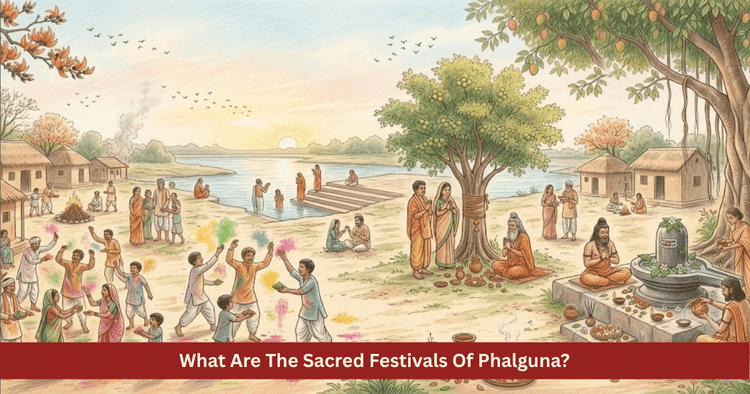
Table of Contents
Detailed Panchang Schedule Of Sacred Observances In Phalguna Month
Phalguna is not merely an occasion of climatic transformation, it embodies a profound sequence of highly meritorious spiritual austerities within the Vedic tradition. From the initial lunar phase of the dark fortnight to the culmination of the full moon night, every lunar day is dedicated to the focused adoration of a presiding deity and inner purification. The scriptural observances performed during this month eliminate bodily, verbal, and mental transgressions, systematically elevating the human soul toward righteousness, lawful abundance, pure desire, and ultimate liberation.
| Sacred Observance | Lunar Fortnight And Tithi | Presiding Deity | Scriptural Rituals And Protocols | Spiritual And Temporal Fruits |
|---|---|---|---|---|
| Janaki Jayanti | Krishna Paksha Ashtami | Mother Sita and Lord Rama | Invocation of Earth born Sita, yellow vestments | Protection of marital virtue and lasting auspiciousness |
| Vijaya Ekadashi | Krishna Paksha Ekadashi | Lord Lakshmi Narayana | Installation of seven grain vessel, strict fasting | Victory over formidable adversaries and enterprise success |
| Maha Shivratri | Krishna Paksha Chaturdashi | Lord Mahadeva Shiva | Four quarter continuous worship, nocturnal vigil | Freedom from the transmigration cycle and soul tranquility |
| Phalguna Amavasya | Krishna Paksha Amavasya | Departed Ancestors and Sun | Sacred river bathing, sesame oblations, rites | Mitigation of ancestral afflictions and lineage prosperity |
| Phulera Dooj | Shukla Paksha Dwitiya | Radha Krishna | Floral celebrations, offering powdered colors | Resolution of domestic bitterness and deepening of love |
| Amalaki Ekadashi | Shukla Paksha Ekadashi | Lord Vishnu and Gooseberry | Circumambulation and sixteen step formal rites | Merit equivalent to grand sacrifices and sound bodily health |
| Holika Dahan | Shukla Paksha Purnima | Prahlada and Lord Narasimha | Sacred fire oblations, roasted grains, reverent circumambulation | Annihilation of demonic darkness and psychic liberation |
While observing these sacred days, the practitioner must rigorously maintain elevated Vedic personal conduct.
- Rising before sunrise to bathe in cool water blended with drops of consecrated river water.
- Maintaining complete celibacy in thought, word, and physical action while scrupulously avoiding anger and divisive arguments.
- Continually chanting the sacred seed syllables of the chosen deity while abstaining from frivolous conversations.
- Lighting a perpetual clarified butter lamp before the sacred shrine at twilight.
- Concluding the fast at the designated scriptural hour utilizing only pure, unprocessed satvic nourishment.
- Offering charity in the form of wholesome grains, clean clothing, and modest coins to ascetics and the needy according to capacity.
The Inner Meaning Of Vijaya Ekadashi And The Rite Of Sacred Triumph
The eleventh lunar day of the dark fortnight of Phalguna is designated as Vijaya Ekadashi across sacred puranic literature. Classical texts such as the Padma Purana and Skanda Purana articulate the transcendental virtues of this specific vow. When Lord Rama assembled his forest allies along the southern oceanic shore seeking to redeem Mother Sita, he consulted Sage Bakdalabhya, who instructed him to execute the formal disciplines of Vijaya Ekadashi. Through the merit generated by this austerity, the vast ocean granted unhindered passage, leading to the triumph of righteousness over oppressive tyranny.
The ceremonial procedure for Vijaya Ekadashi incorporates profound Vedic geometry. A sacred mound composed of seven essential grains is prepared, upon which an urn crafted from gold, silver, or copper is placed. The urn is filled with clean river water, five sacred tree leaves, areca nuts, and fragrant unguents, topped by a metal icon of Lord Lakshmi Narayana. Devotees remain awake throughout the night chanting sacred litanies including the thousand names of Vishnu. For individuals struggling against complicated litigations, deep adversaries, or chronic crises, observing Vijaya Ekadashi functions as an impenetrable armor, restoring unwavering inner fortitude and divine grace.
The Radiance Of Phulera Dooj And The Emergence Of Divine Love
The second lunar day of the bright fortnight of Phalguna is observed throughout India as Phulera Dooj. In the computational science of Vedic astrology, Phulera Dooj is recognized as an unblemished auspicious timing. This classical status indicates that an individual does not need to analyze planetary afflictions or calendar blemishes to inaugurate righteous actions on this date. Important undertakings such as marriages, betrothals, house inaugurations, or the launching of noble enterprises manifest smoothly and successfully when initiated during these auspicious hours.
Sacred oral tradition records that on Phulera Dooj, Lord Krishna and Radha Rani played their first joyful game of floral colors in the groves of Braj, marking the spiritual beginning of the spring celebration. Shrines and private altars are decorated with aromatic flowers including jasmine, marigold, rose, and scarlet palash petals. Devotees offer sweet butter blended with rock sugar and submit colorful powders before the icons. For couples experiencing protracted marital bitterness or emotional alienation, offering fragrant blossoms before Radha Krishna on Phulera Dooj dissolves lingering coldness, restoring mutual devotion and reverence within the sacred home.
Amalaki Ekadashi And The Eternal Sanctity Of The Sacred Gooseberry
The eleventh lunar day of the bright fortnight of Phalguna is designated as Amalaki Ekadashi, sometimes celebrated as Rangbhari Ekadashi. The Sanskrit term amalaki identifies the Indian gooseberry, an arboreal species revered in both Ayurveda and Vedic theology as the botanical manifestation of immortality. The Brahmanda Purana states that when Lord Vishnu exhaled the cosmic sound Om at the dawn of creation, tears of transcendental joy dropped from his eyes onto the earth, germinating as the first gooseberry tree. Consequently, every part of this sacred tree is populated by divine celestial principles.
| Section of the Sacred Tree | Residing Divine Presence | Bestowed Scriptural Merits |
|---|---|---|
| Root Foundation | Lord Hari Vishnu | Purification of accumulated ancestral sins |
| Central Trunk | Lord Mahadeva Shiva | Protection against physical infirmities and untimely end |
| Extended Branches | Sages, Seers, and Ascetics | Bestowal of intellect, discernment, and spiritual wisdom |
| Foliage and Leaves | The Entire Multitude of Deities | Peace, domestic stability, and enduring family harmony |
| Flowers and Ripened Fruit | Mother Mahalakshmi | Unbroken abundance, opulence, and material sufficiency |
On Amalaki Ekadashi, devotees bathe the base of the gooseberry tree with raw milk, sacred water, and perfumed sandalwood. A raw cotton thread is wound around the trunk seven times during clockwise circumambulation, followed by formal sixteen step adoration. Consuming gooseberry preparations and distributing them to the needy yields vast spiritual merit. In the ancient city of Kashi, this day commemorates the arrival of Mother Parvati at the abode of Lord Vishwanath following their cosmic marriage, marked by the joyful offering of pink powder. This holy day simultaneously enhances bodily vitality and awakens spiritual awareness.
Holika Dahan Fire Rites And The Dissolution Of Demonic Influences
On the culminating full moon night of Phalguna, the grand ritual of Holika Dahan is performed across the subcontinent with solemn reverence. This observance represents the direct continuation of the ancient Vedic Navanneshti sacrifice. In ancestral eras, farmers bringing home the fresh rabi harvest offered the first unthreshed ears of grain into the consecrated fire, expressing deep humility toward the cosmic forces that sustain life. This ancient practice endures today through the ritual roasting of fresh green wheat and chickpea stalks in the consecrated embers of Holika.
From a metaphysical perspective, this evening commemorates the victory of the young devotee Prahlada over the tyrannical pride of his father Hiranyakashipu. Hiranyakashipu arranged for his sister Holika, who possessed an immunity to fire, to sit within a towering pyre with Prahlada in her lap. Through unshakeable surrender, Prahlada emerged completely unscathed, whereas Holika perished within the flames. This incident demonstrates that demonic pride inevitably brings self destruction, while pure devotion transforms the fiercest fires into comforting cool breezes. The night of Holika Dahan is recognized as an exceptionally potent time for spiritual sadhana.
- Building a sacred altar utilizing dried wood, cow dung cakes, and medicinal tree twigs prior to the auspicious moment.
- Circling the consecrated flame three or seven times clockwise while pouring a continuous stream of pure water.
- Consigning black sesame seeds, barley grains, camphor, whole cloves, and brown mustard seeds into the blaze to eradicate malefic influences.
- Preserving the holy ash of Holika, applying it to the forehead to dispel irrational fears and psychic burdens.
- Scattering small portions of the sanctified ash in the four corners of the dwelling to neutralize spatial architectural afflictions.
- Celebrating the vibrant festival of colors the following dawn utilizing non-toxic palash extracts to foster social harmony.
FAQ
What is the specific spiritual purpose of observing Vijaya Ekadashi?
Vijaya Ekadashi is observed to overcome severe crises, alleviate legal complications, and achieve righteous triumph in complicated undertakings.
Why is Phulera Dooj considered an unblemished auspicious timing?
This lunar day is completely free from planetary blemishes, permitting the initiation of weddings, commercial projects, and sacred rituals without calendar calculation.
Which botanical species is uniquely venerated on Amalaki Ekadashi?
The Indian gooseberry tree is venerated on this holy day as the living embodiment of Lord Vishnu and Goddess Lakshmi.
How does one utilize the sacred ash derived from Holika Dahan?
Applying the sacred ash to the forehead alleviates psychological distress, while sprinkling it inside residential rooms removes stagnant negative vibrations.
What is the foundational metaphysical message of the Phalguna festivals?
These festivals instruct humanity to abandon demonic arrogance and purify the consciousness through detachment, heartfelt surrender, and compassionate fraternity.
Get your accurate Kundali
Generate KundaliDid you like it?
Author
Pt. Suvrat Sharma (63)
Experience: 20
Consults About: Family Planning, Career
Clients In: Punjab, Haryana, Delhi
Share this article with friends and family
WELCOME TO
ZODIAQ
Right Decisions at the right time with ZODIAQ
