What Is The Ultimate Philosophy Of Phalguna?
By Pt. Nilesh Sharma
Dissolution Of Colors, Soul Awakening And Welcoming The New Year
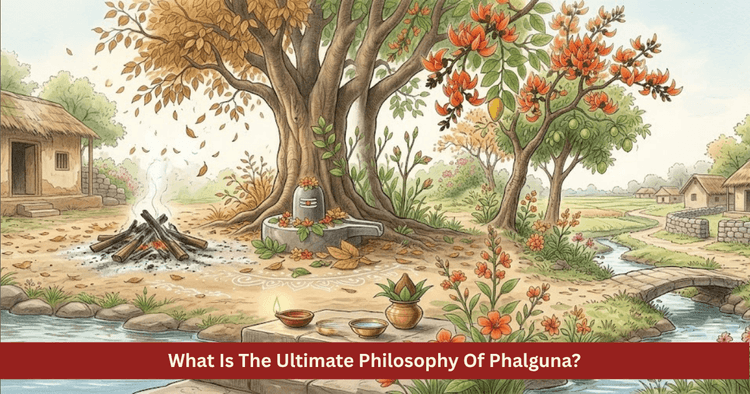
Table of Contents
Panchang Description And The Grand Dissolution Of The Sacred Annual Cycle
According to the computational cosmology of the classical Vedic calendar and astronomical metaphysics, the month of Phalguna represents the twelfth, culminating and ultimate station of rest within the sacred annual cycle. This temporal span is far more than the chronological conclusion of a calendar month; it signifies the grand dissolution of an entire annual life cycle of Kala Purusha and the threshold of cosmic rebirth. Within classical astronomy, this window witnesses Lord Surya Deva departing from the airy quadrant of Aquarius to enter the deep watery sanctuary of Pisces, governed by the divine preceptor Jupiter. This ingress, celebrated as Meena Sankranti, initiates a deep psychological, biological and metaphysical transition across the entirety of manifest life.
Scriptural treatises, the Shatapatha Brahmana and the Upanishads affirm that cosmic time is never a linear progression; time is an eternal cyclical wheel (Samvatsara Chakra) devoid of absolute beginning or final end. Just as an unblemished seed dissolves into the dark soil, surrendering its individual physical boundary to give birth to a massive banyan tree, so do the accumulated memories, karmic impressions, joys and sorrows of the departing year dissolve within Phalguna, resurrecting as the sacred New Year on the opening lunar day of Chaitra. The metaphysical peak of Phalguna is the sacred dissolution of colors, where outward duality merges into nondual awareness.
| Panchang and Philosophical Factor | Classical Scriptural Description |
|---|---|
| Chronological Placement | Twelfth and Concluding Month (Finale of the Lunar Year) |
| Astronomical Solar Ingress | Meena Sankranti, Ascending Radiance of Northern Sun |
| Presiding Sovereign Divinities | Lord Mahadeva Shiva (Mahakala) and Sri Radha Krishna |
| Foundational Philosophical Systems | Advaita Vedanta, Sankhya Cosmology, Surrender, Renaissance |
| Essential Culminating Liturgy | Consigning Ego to the Pyre, Dust Cleansing upon Dhulendi |
| Harmonization of Elements | Nondual Union of Fiery Pyre and Cosmic Water of Dhulendi |
| Ultimate Spiritual Fruit | Transmuting Mortal Ego into Absolute Divine Consciousness |
To anchor this ultimate philosophical conclusion within the heart and cross into the approaching sacred New Year as a transformed soul, a spiritual seeker must observe rigorous scriptural conduct from dawn onward.
- Awakening before sunrise during Brahma Muhurta, gazing upon both open palms to contemplate that the experiences of the departed year were expressions of divine play.
- Bathing in cool water consecrated with sacred river drops and boiled extracts of palash petals to dissolve lingering somatic fatigue and mental residue.
- Sitting quietly before the domestic altar facing eastward, making a firm internal vow to surrender ancient resentments, perceived insults and envy.
- Chanting the classical Isha Upanishad peace invocation Om Purnamadah Purnamidam Purnat Purnam Udachyate 108 times before icons of Shiva and Radha Krishna.
- Practicing silence and witness consciousness throughout the day, observing the flow of worldly phenomena like a river without personal entanglement.
- Visualizing, while applying sanctified herbal gulal to another forehead on the day of colors, that one is saluting the transcendental indwelling Divine.
- Providing wholesome nourishment, clothing and affection to an impoverished, lonely person, awakening joy within their heart.
- Sitting in solitude near living waters or beneath the open sky at dusk, feeling personal boundaries expand to merge into the infinite cosmos.
Metaphysics Of Colors: From External Multiplicity To Inner Nonduality
The most vibrant manifestation of Phalguna is the spring festival of colors. Secular society misinterprets this holy observance as mere physical play with powders, demonstrating ignorance of its deep esoteric foundations. According to Vedic metaphysics, colors are not merely reflected wavelengths of physical light; they represent visible projections of subconscious emotional moods, mental tendencies and discrete layers of human awareness.
Throughout mundane existence, every individual walks through the world wrapped in the narrow color of their ego, identifying with intellectual pride, physical form, wealth, social status or lineage. One soul burns with the fiery red of wrath; another is trapped within the yellow color of academic conceit; one pursues the sensory pink of infatuation, while another is clouded by the dark hue of jealousy and spiritual ignorance. As long as an individual clings to these fragmented colors, consciousness remains isolated, defensive and restless.
| Specific Color Frequency | Psychological and Metaphysical Symbolism | Associated Primal Element | Consciousness State After Dissolution |
|---|---|---|---|
| Pure Crimson (Rakta Varna) | Vitality, Courage, Dynamic Pure Devotion | Fire Element (Tejas) | Transmuting Wrath into Unconditional Love |
| Radiant Yellow (Pita Varna) | Intellectual Wisdom, Austerity, Truth | Earth and Ether Elements | Melancholy Intellect Transmuted into Wisdom |
| Pristine White (Abir) | Transcendent Serenity, Sattvic Harmony | Water and Ether Elements | Pacification of Duality, Advaitic Unity |
| Emerald Green (Harita Varna) | Creative Renewal, Botanical Vitality | Earth Element (Prithvi) | Awakening of the Heart Center, Harmony |
| Sapphire Blue (Shyama Varna) | Infinite Sky, Profound Devotional Depth | Ether and Water Elements | Dissolving Ego into Divine Transcendence |
| Midnight Black (Krishna Varna) | Primordial Void, Dissolution of Vanity | Tamasic Quiescence | Total Surrender of Ego into Formless Space |
Upon the sacred morning of Dhulendi, when human beings scatter diverse botanical colors upon each other, a sublime metaphysical phenomenon unfolds within hours. All distinct personal colors dissolve. The brilliant crimsons, bright yellows, emerald greens and sapphire blues blend upon human skin, transforming into a uniform, earthy, neutral gray tone.
At that singular moment, outward divisions separating the prince from the mendicant, the beautiful from the unadorned and the learned scholar from the humble laborer vanish. The external identity dissolves; only the human being remains. This is the nondual reality of Advaita Vedanta. When mortal vanity is washed away, human consciousness is saturated in a single unifying frequency-the transcendental color of the Supreme Divine. Celebrating this state of realization, the saint Kabir sang:
Lali mere lal ki, jit dekhun tit lal. Lali dekhan main gayi, main bhi ho gayi lal.
(The radiant crimson grace of my Beloved permeates everywhere I turn. Journeying forth to behold that divine effulgence, I too dissolved into that identical crimson light.)
The Consecrated Pyre: The Final Oblation Of Accumulated Transgressions
The consecrated fire kindled upon the full moon night of Phalguna is far more than a physical bonfire; it represents the sovereign sacrificial altar of the entire annual cycle. Within Vedic cosmology, the sacred fire element is venerated as Pavaka, signifying the cosmic force that remains pure while purifying everything that enters its flames.
The pastimes of Holika Dahan commemorate the child Prahlada and his demonic aunt Holika. Blessed with a boon granting immunity against combustion, Holika presumed her physical body was invincible, symbolizing the arrogance of mortal ignorance. Yet when unalloyed devotional surrender (Prahlada) and prideful tyranny (Holika) entered the flames together, the fire incinerated arrogance into lifeless ash while delivering Prahlada unharmed and radiant.
From a philosophical perspective, Holika Dahan reveals three vital truths:
- Incinerating Subconscious Mental Afflictions: All internal complexes gathered across the year-lust, wrath, greed, possessiveness, vanity and malice-must be offered as dry firewood into that consecrated flame.
- Biological Purification of Environmental Channels: As spring warms ambient air, increasing airborne pathogens and bodily phlegm, the thermal radiation emitted by the consecrated pyre clears environmental microbes while stabilizing human respiration during circumambulation.
- The Metaphysical Lesson of Sacred Ash: Applying the cooled ash of the pyre upon the forehead and physical limbs at dawn serves as a reminder: "O mortal soul, this physical frame you cherish with vanity must culminate in a handful of gray ash." When this realization of impermanence awakens, worldly anxieties dissolve.
Advaita Vedanta And The Rasa Dance Of Krishna-Radha: Love As Pure Wisdom
This culminating station of Phalguna represents the union of the path of wisdom (Advaita Vedanta) with the path of devotional ecstasy (Bhakti Yoga). At this junction, intellectual discrimination and transcendental love merge into a singular stream.
The nondual philosophy of Adi Shankaracharya declares: "Aham Brahmasmi"-I am the Absolute and nothing exists outside that supreme conscious reality. Concurrently, the devotional heritage of Braj affirms that Radha and Krishna are one identical essence manifesting as two forms to experience transcendental bliss. When Lord Sri Krishna plays with colors alongside the gopis and Sri Radha, the pastimes reflect cosmic realities rather than mundane physical encounters:
- Lord Sri Krishna is the supreme transcendental awareness sustaining the cosmos.
- Sri Radha is his personal energetic potency (Hladini Shakti), embodying unconditional bliss.
- The gopis and individual living souls represent sparks of consciousness separated from that Source.
- The spring pastimes signify the conscious reunion of individual souls with their eternal Divine Origin.
When an aspirant realizes this esoteric truth, personal ego dissolves. The seeker beholds the divine presence moving through every living entity across creation. Enemies cease to exist and judgment ends. Every earthly relationship transforms into an expression of the Divine. This is the summit of the spiritual disciplines of Phalguna.
Spiritual Rebirth And The Golden Threshold Of Chaitra Nav Samvatsara
The conclusion of Phalguna is never an end; it represents an awakening of the soul. Rebirth cannot manifest without the death of the old; creation cannot emerge without the surrender of what was. Until the withered, yellow leaf drops from the branch, the tender emerald shoot cannot emerge. Phalguna is the period dedicated to letting the dry leaf fall.
The thirty days of contemplative discipline observed throughout Phalguna cleanse the consciousness of accumulated guilt, rendering the soul as innocent, pure and receptive as a newborn child.
| The Surrender of Phalguna (The Departing Year) | The Dawn of Chaitra (The Incoming New Year) | Attained Spiritual Metamorphosis |
|---|---|---|
| Deciduous trees shed dry foliage | Emerald shoots and floral buds emerge | Liberation from Past Chains, Awakening |
| Vices and vanity consumed in the pyre | First solar rays of the New Year dawn | Total Purification of Internal Consciousness |
| External colors dissolve into unity | Nine sovereign forms of Shakti venerated | Dissolution of Duality, Spiritual Grace |
| Winter stagnation dissolves completely | Vibrant cosmic prana circulates freely | Elimination of Lethargy, Selfless Karma |
Crossing this threshold, the seeker does not merely move from one calendar year into another; the soul comprehends the cyclical wheel of cosmic time. Time is a stream in which nothing is lost; forms merely evolve into higher expressions of life. An individual who learns to move with this cosmic flow achieves liberation while walking the earth.
The Complete Spiritual Harvest Of The Fifty Discourses
Across this journey exploring fifty classical dimensions of Vedic chronology, Ayurveda, predictive astrology, sacred architecture and metaphysics, we have uncovered a living science designed to elevate human existence into divine communion.
We have explored how the Sun, the Moon and planetary alignments regulate our biological vessels and mental states. We have seen how roasted chickpeas, dry ginger, palash blossoms and traditional thandai balance the bodily humors, establishing health. We have understood how Mahashivratri, Vijaya Ekadashi, Phulera Dooj and Daruna Ratri align the individual soul with transcendental reality. Above all, we have recognized that the purpose of every spiritual observance is the surrender of personal ego to experience communion with the Divine.
The concluding message of Phalguna calls to us: Arise, surrender all past grief, lingering guilt and mental chains. Anoint your brow with the sacred ash of the consecrated pyre, walking forward without fear. Behold, the golden dawn of the sacred New Year in Chaitra approaches to welcome you. The incoming year brings more than a civil calendar milestone; it heralds the spiritual rebirth of your soul.
FAQ
What is the core philosophical message embodied by the month of Phalguna?
The core message is universal surrender, forgiveness, the dissolution of personal ego and the purification of consciousness prior to the New Year.
What spiritual realization is revealed through the blending of colors during Holi?
The merging of diverse colors into a single tone demonstrates that all worldly divisions and vanity dissolve, revealing our unity within nondual divine consciousness.
What is the deeper significance of applying cooled ash following Holika Dahan?
Applying sacred ash serves as a contemplation of physical impermanence, cooling worldly desires and protecting the biofield against negative vibrations.
Why is the junction linking Phalguna and Chaitra spiritually significant?
It represents the cosmic boundary where the old annual cycle dissolves and the new cycle emerges, infusing creation with renewed life force.
What is the ultimate takeaway of the fifty discourses on Phalguna sadhana?
The ultimate takeaway is that through seasonal lifestyle harmony, righteous contemplation and devotional surrender, human life transforms into an expression of spiritual liberation.
Get your accurate Kundali
Generate KundaliDid you like it?
Author

Pt. Nilesh Sharma (63)
Experience: 20
Consults About: Family Planning, Career
Clients In: Punjab, Haryana, Delhi
Share this article with friends and family
WELCOME TO
ZODIAQ
Right Decisions at the right time with ZODIAQ
