What Is The Spiritual Mystery Of Vijaya Ekadashi?
By Pt. Nilesh Sharma
Sacred Fast Observed By Lord Rama Before Conquering Lanka
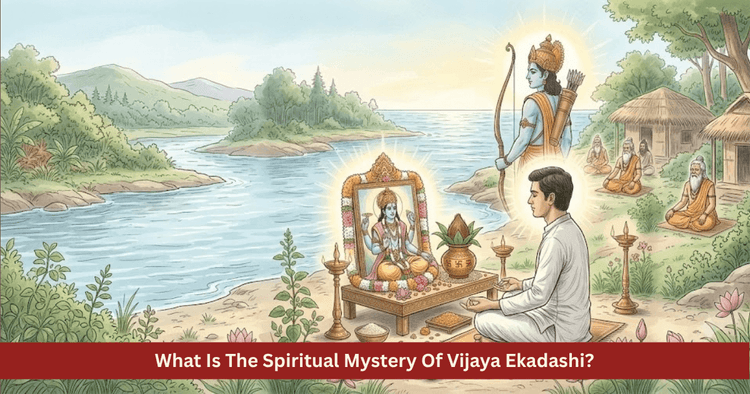
Table of Contents
Panchang Description And Sacred Vow Protocols Of Vijaya Ekadashi
The eleventh lunar day of the dark fortnight in the month of Phalguna is designated across the sacred calendar as Vijaya Ekadashi. This holy day immediately precedes the great festival of Mahashivratri, instilling the spiritual practitioner with unwavering soul strength to conquer both internal passions and external crises. According to classical astrological wisdom, this period marks the transitional meeting of departing late winter and emerging early spring, when Surya Deva traverses through the sign of Aquarius. Classical manuals declare that adoring Lord Lakshmi Narayana upon a consecrated pedestal of seven sacred grains surmounted by a holy urn yields unparalleled spiritual rewards.
| Panchang Component | Classical Description |
|---|---|
| Month and Fortnight | Phalguna Month, Dark Fortnight |
| Sacred Tithi | Krishna Paksha Ekadashi |
| Presiding Deities | Lord Lakshmi Narayana and Lord Ramachandra |
| Primary Vow Protocols | Seven grain altar installation, holy urn rites, diurnal fast |
| Prescribed Offerings | Seasonal fruits, butter rock sugar, five nectars, tulsi leaves |
| Bestowed Fruit | Dissolution of adversaries, victory in litigation, and liberation |
To assimilate the entire spiritual and material fruit of Vijaya Ekadashi, every practitioner must maintain strict scriptural conduct commencing from the eve of the tenth lunar day.
- Partaking in a light, satvic meal on the night of the tenth lunar day while practicing unbroken physical celibacy.
- Awakening before sunrise during Brahma Muhurta, bathing in cool water blended with sacred river drops.
- Spreading the seven sacred grains comprising black gram, green gram, wheat, chickpea, barley, unpolished rice, and pearl millet evenly across the altar.
- Placing a holy urn forged of gold, silver, copper, or unblemished clay upon the mound of grains with reverence.
- Filling the sacred vessel with clean water, mango leaves, areca nuts, aromatic gums, and sacred grass, topping it with a consecrated plate.
- Installing a golden or brass icon of Lord Lakshmi Narayana or bow bearing Lord Rama upon the top plate.
- Observing an unbroken diurnal fast while reading or chanting the sacred thousand names of Lord Vishnu.
- Maintaining a nocturnal vigil before the illuminated shrine, concluding the fast after dawn on the twelfth lunar day following formal charity.
The Historic Observance Of Lord Rama Prior To The Conquest Of Lanka
The profound origins of Vijaya Ekadashi are extensively chronicled in the Skanda Purana and the Padma Purana. When Lord Ramachandra reached the shores of the southern ocean in search of Mother Sita, he was confronted by the roaring, unfathomable waters that barred the passage to Lanka. Observing the vast legions of Ravana and the impregnable oceanic defenses, Sugriva, Lakshmana, and the entire host of vanaras experienced intense anxiety regarding the means of crossing the ocean.
In that critical hour, Lord Rama approached the hermitage of the revered seer Bakdalabhya, who resided upon the coastal bluffs. Folding his hands, the great sage remarked that although Lord Rama is the unmanifest Supreme Lord whose subtle glance dissolves universes, he must execute the formal vow of Vijaya Ekadashi to demonstrate righteous discipline to future generations. Following the explicit injunctions of the sage, Lord Rama installed the holy urn upon the ocean shore and observed the unbroken fast alongside his allies.
Through the spiritual power generated by this observance, the deity of the ocean appeared and granted unhindered passage for the building of the causeway. Under the direction of Nala and Nila, stones inscribed with the holy name floated upon the waves, leading to the triumph of righteousness over tyrannical darkness. This narrative demonstrates that when worldly crises seem insurmountable and mortal efforts fail, the spiritual power generated by this fast dissolves all impediments.
Astrological Mitigation Of Adversaries And Inimical Conspiracies
In the computational framework of Vedic astrology, the eleventh lunar phase is governed by Lord Vishnu, and the position of the Moon on this day assists the mind in withdrawing sensory energy inward toward the soul. When an individual's astrological chart suffers from heavy afflictions in the sixth house governing disputes, debts, and enemies, or when the ascendant ruler is weakened, Vijaya Ekadashi establishes an impenetrable shield of spiritual protection.
This holy discipline purges internal psychological enemies including lust, anger, greed, infatuation, arrogance, and envy. Once internal vices are quieted, external adversaries lose their destructive hold over human life. For individuals seeking relief from chronic courtroom litigations, unresolved family disputes, severe academic challenges, or career barriers, chanting the Rama Raksha Stotra or the Vijaya Stotra 11 times before the image of Lord Rama produces decisive breakthroughs.
| Area of Worldly Struggle | Prescribed Scriptural Rite | Intended Astrological Fruit |
|---|---|---|
| Court litigations and disputes | Placing a copper coin on the urn with Vishnu Sahasranama | Triumph of truth and decisive closure |
| Competitive tests and career | Offering yellow oleander blossoms and gram sweets | Intellectual clarity and exceptional success |
| Family friction and rivalries | Chanting the twelve syllable Vasudeva formula 11 rounds | Annihilation of animosity and restoration of peace |
| Financial burdens and debts | Submitting sacred tulsi leaves marked with sandalwood | Complete liquidation of debts and affluence |
Liturgical Procedure And Scriptural Merits Of The Sacred Fast
The worship ceremony of Vijaya Ekadashi requires strict adherence to the sixteen classical steps of adoration. Following the installation of the holy urn, the icon of Lord Vishnu is bathed using the five sacred nectars composed of raw milk, yogurt, clarified butter, wild honey, and cane sugar. Thereafter, the deity is washed with consecrated water and adorned with clean yellow garments. Unbroken sesame seeds and yellow sandalwood paste are applied in place of rice grains, as the consumption and ritual use of rice is strictly prohibited on Ekadashi.
During the ceremonial proceedings, reciting the sacred narrative of Vijaya Ekadashi remains mandatory. The listener holds unbroken sesame seeds and flowers during the discourse. The rite concludes with the offering of camphor lamps and clarified butter wicks. Because plucking or damaging tulsi foliage is forbidden on this holy day, leaves needed for worship must be harvested respectfully on the tenth lunar day. Practicing an absolute fast without consuming a single drop of water on this date yields spiritual merits equal to the performance of grand ancient sacrifices.
Charitable Donations, Fast Conclusion And Spiritual Triumph
The efficacy of the Ekadashi observance depends entirely upon concluding the fast within the prescribed hours of the twelfth lunar day. Scriptural manuals warn that if the fast is not concluded before the expiration of the twelfth tithi, the accumulated merit of the vow is lost. On the following morning, the practitioner performs a purification bath, offers brief morning prayers, and donates the installed urn, the sacred grains, yellow garments, and modest coins to a learned Brahmin or ascetic.
Only following the completion of these charitable acts should the practitioner conclude the fast by taking consecrated water containing tulsi leaves, followed by a simple satvic meal. Vijaya Ekadashi imparts the eternal lesson that no external adversity or inner weakness can overcome the power of unwavering faith in the Supreme Lord. When a mortal walks the path of righteousness and surrenders to divine guidance, victory becomes an undeniable certainty. This sacred fast transforms despair into unshakeable spiritual courage.
FAQ
What is the core purpose of observing Vijaya Ekadashi?
Vijaya Ekadashi is observed to overcome severe life crises, dissolve litigation troubles, eliminate inimical obstructions, and achieve victory in righteous undertakings.
Under whose guidance did Lord Rama observe Vijaya Ekadashi?
Lord Rama observed this sacred fast on the sea shore prior to the march on Lanka under the spiritual counsel of the venerable Sage Bakdalabhya.
What is the rule regarding the seven grains and holy urn?
Seven sacred grains are spread upon the altar to form a foundation for a consecrated urn, atop which an icon of Lord Vishnu is installed and venerated.
Why is eating rice prohibited on Ekadashi?
Ancient scriptural tradition holds that the life essence of Sage Medha resides within food grains on this day, making the consumption of rice spiritually unsuitable.
When should the fast of Vijaya Ekadashi be concluded?
The fast must be concluded after sunrise on the twelfth lunar day prior to the expiration of the tithi, following acts of charity and water oblations.
Get your accurate Kundali
Generate KundaliDid you like it?
Author
Pt. Nilesh Sharma (63)
Experience: 20
Consults About: Family Planning, Career
Clients In: Punjab, Haryana, Delhi
Share this article with friends and family
WELCOME TO
ZODIAQ
Right Decisions at the right time with ZODIAQ
