What Is Year End Introspection?
By Pt. Sanjeev Sharma
Releasing Ancient Bitterness At Year End Through Soul Reflection
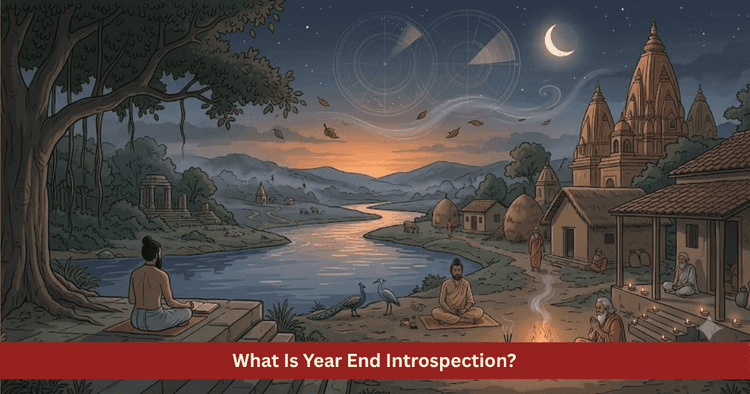
Table of Contents
Panchang Description And The Final Junction Of The Annual Cycle
Within the computational cosmology of the classical Vedic calendar, a Samvatsara or sacred annual cycle, is never regarded as a mechanical progression of solar and lunar days; it is revered as the manifest physical embodiment of Kala Purusha, the Lord of Universal Cosmic Time. The full moon of the month of Phalguna and the subsequent dark lunar fortnight constitute the twelfth and concluding phase of the sacred year. According to authentic astronomical digests, this temporal junction marks an intensely sensitive metaphysical threshold linking the dissolution of the departing cycle to the threshold of the approaching New Year. Foundational scriptures, including the Rigveda, the Shatapatha Brahmana and ancient chronological treatises, explicitly mandate that just as twilight demands mental stillness and Gayatri contemplation to conclude the diurnal cycle, so does the close of Phalguna demand profound soul introspection, karmic purification, repentance and universal forgiveness.
| Panchang and Philosophical Factor | Classical and Scriptural Description |
|---|---|
| Annual Transition Window | Concluding Fortnight of Phalguna (Terminal Twelfth Month) |
| Astronomical Conjunction | Solar Transition from Aquarius into Pisces and Final Full Moon |
| Presiding Transcendental Powers | Kala Purusha, Mahakala, Agni Deva and Lord Satyanarayana |
| Metaphysical Nature | Surrender, Universal Forgiveness, Karmic Purging, Renewal |
| Primary Contemplative Paths | Soul Introspection, Sacred Silence, Repentance, Charity |
| Essential Ritual Enactment | Consigning Vices into the Sacred Pyre and Earth Reverence |
| Bestowed Spiritual Fruit | Liberation from Mental Guilt, Auric Purity, Soul Renaissance |
To purge the internal consciousness of gathered impressions and prepare worthily for the incoming sacred cycle, a spiritual seeker must observe rigorous scriptural conduct from dawn onward.
- Awakening before sunrise during Brahma Muhurta, bathing in cool water consecrated with dark sesame seeds and drops of holy Ganga currents.
- Sitting in a secluded sanctuary facing eastward following ablutions, reviewing the mental actions and conduct of the entire annual cycle as an unattached witness.
- Generating a firm, solemn internal vow to perform heartfelt repentance for all conscious and unconscious transgressions, abrasive speech and errors committed throughout the year.
- Reaching out directly or through silent prayer to any soul with whom ideological friction, malice or estrangement unfolded, asking sincere forgiveness.
- Releasing all bitterness, perceived insults, psychological trauma and hostility inflicted by others, forgiving them completely from the core of the heart.
- Consigning internal arrogance, lust, anger, greed and envy as dry spiritual tinder into the sacred blaze of Holika Dahan.
- Relieving the subtle burden of accumulated karmic debt by distributing wholesome grains, unstitched garments, metal vessels and sesame seeds to the destitute.
- Reciting the twelfth or fifteenth discourse of the Shrimad Bhagavad Gita with quiet focus during the tranquil twilight hours of this closing month.
Botanical Wisdom Of Autumn Leaves And Inward Renunciation
When an aspirant observes the natural world during the month of Phalguna, the entire plant kingdom delivers a silent, sublime philosophical discourse. Across this seasonal window, deciduous trees shed their withered, yellow, decayed foliage upon the earth without hesitation, resistance or sorrow. Popularly characterized as the seasonal fall, authentic Vedic philosophy venerates this botanical shedding as the supreme physical expression of dispassion and surrender.
The trees intuitively comprehend that if they cling stubbornly to decayed, lifeless leaves, the fresh, fragrant emerald buds of spring will find no space to manifest. Until old, stagnated energy is surrendered completely, fresh cosmic prana cannot enter the living vessel.
Humanity, however, frequently ignores this profound cosmic law. Human beings cling to grievances, ancient insults, domestic disputes and painful memories, carrying them within the subconscious vessel like a heavy stone. The year end transition of Phalguna urges humanity to emulate the dispassion of the trees, casting aside all decaying, rancid emotional thoughtforms that poison the mental atmosphere. Only when the heart is swept clean of psychological debris can the fragrant blossoms of divine peace, spiritual bliss and pure love take root during the approaching New Year in Chaitra.
Karmic Ledger Review And The Science Of Soul Reflection
What contemporary psychotherapy identifies as deep psychological reflection and emotional catharsis was formulated millennia ago by Vedic seers as soul introspection and internal karmic auditing. This concluding station of Phalguna is the sacred hour to stand before the tribunal of one's own conscience, rendering impartial judgment upon personal behavior.
| Dimension of Introspection | Ordinary Secular Pattern | Purification Protocol at Year End | Attained Spiritual Metamorphosis |
|---|---|---|---|
| Vocal Karma (Speech) | Abrasive speech, slander, falsehood | Practicing vow of silence, humble apologies | Vocal sweetness, truth, speech purity |
| Mental Karma (Thoughts) | Jealousy, resentment, ill will | Silent meditation, prayer for universal peace | Mental tranquility, relief from anxiety |
| Physical Karma (Bodily) | Lethargy, violence, indulgence | Fasting, holy river baths, physical service | Bodily lightness, radiant cellular ojas |
| Fiscal Karma (Wealth) | Deceit, greed, hoarding | Tithe charity, feeding hungry beings | Purification of resources, lasting grace |
The classical procedure for soul introspection advises the practitioner to sit in nocturnal solitude, cataloging upon clean white parchment all character flaws, moments of pride and ethical lapses committed across the annual cycle. Gazing upon this record, the seeker cleanses the heart with tears of genuine remorse, subsequently consigning the parchment into the consecrated blaze of Holika with the prayer: "May these discordant traits be reduced to lifeless ash." This single ritual act dissolves subterranean psychological complexes, liberating the subconscious mind from lingering guilt.
The Universal Forgiveness Rite And Dismantling Inner Adversaries
Throughout Sanatana Dharma, the virtue of forgiveness is crowned as the supreme jewel of the spiritually awakened soul. Within the Vana Parva of the Mahabharata, Sage Vedavyasa declares that forgiveness is the highest duty, forgiveness is the ultimate sacrifice, forgiveness is absolute truth and forgiveness remains the foundational pillar of the cosmos. The metaphysical culmination of the year end transition in Phalguna unfolds in the interval dividing Holika Dahan from the daytime celebration of Dhulendi.
When lingering negative impressions are consumed within the sacred flames of Holika, even long standing adversaries embrace and apply colors to each other upon the dawn of Dhulendi. This is far from an empty social greeting; it represents a monumental spiritual liturgy of seeking and granting unconditional forgiveness.
As long as an individual harbors resentment, bitterness and vengeance toward another soul, that individual damages their own energetic vessel rather than the adversary. Hatred is a lethal poison that the bitter person drinks while expecting the other party to perish.
Seeking forgiveness requires profound humility, while granting forgiveness demands an expansive, magnanimous heart. The concluding days of Phalguna empower human consciousness to proclaim: "For whatever transgressions I committed consciously or unconsciously across this year, I fold my hands and beg for forgiveness; and whoever caused me harm, I release them completely, accepting their conduct as the divine unfolding of karma." The instant this realization dawns within the heart, the stubborn karmic chains of lifetimes dissolve.
Atonement At Year End And The Completion Of Five Daily Sacrifices
Classical Vedic collections prescribe that every householder must observe five daily sacrifices: Brahma Yajna (scriptural study), Deva Yajna (fire oblations), Pitri Yajna (ancestral libations), Bhuta Yajna (feeding living creatures) and Nri Yajna (honoring guests). However, under the pressures of worldly obligations, secular distractions and human negligence, householders often fail to execute these five duties continuously throughout the year. The concluding threshold of Phalguna offers the definitive window to rectify these annual deficiencies through conscious atonement.
To dissolve karmic debts accumulated across the departing year, the following scriptural codes must be fulfilled during this final junction:
- Completion of Brahma Yajna: Dedicate at least one unbroken hour daily during the concluding week of Phalguna to the contemplative study of the Upanishads, the Bhagavad Gita or your designated Vedic lineage texts.
- Completion of Deva Yajna: Offer 108 consecrated fire oblations into the domestic sacrificial hearth utilizing cow clarified butter, dark sesame seeds, barley, dry ginger, natural camphor and palash twigs to satisfy celestial forces.
- Completion of Pitri Yajna: Pour water oblations seasoned with dark sesame seeds and kusha grass for departed ancestors on Phalguna Amavasya or during the solar transit, distributing food and vestments to worthy ascetics.
- Completion of Bhuta Yajna: Provide fresh bread to an indigenous cow, anoint bread with oil for a dog, scatter grains for wild ravens and feed sugar mixed with flour to ants daily, fulfilling obligations toward creaturely life.
- Completion of Nri Yajna: Ensure no wandering mendicant, impoverished pilgrim or hungry soul departs from your domestic threshold without receiving warm food, clean water and modest monetary charity.
Executing these five offerings balances the individual karmic ledger, allowing the seeker to cross into the upcoming New Year free from energetic debts.
Spiritual And Psychological Preparation For Greeting The New Year
The conclusion of Phalguna is never an absolute end; it serves as the sacred foundation for an auspicious divine beginning. On the first lunar day of the bright fortnight of Chaitra, when the inaugural dawn of the Vedic New Year breaks across the sky, nature manifests in full creative splendor. That radiant dawn can be greeted worthily only by a seeker who has executed thorough internal and external purification throughout the closing days of Phalguna.
Just as we thoroughly cleanse domestic rooms, apply fresh paint to walls and discard broken furniture prior to welcoming an exalted, beloved guest, so must we cleanse the dwelling of our consciousness to greet the arrival of the sacred New Year.
Sweep away the cobwebs of lust, wrath, greed, attachment, arrogance and envy using the broom of spiritual discrimination. Wash the courtyard of the heart utilizing the cool waters of unconditional love and empathy. Anoint your speech with the fragrant sandalwood paste of truth and gentleness. When internal consciousness is rendered spotless, the arrival of Chaitra Navratri and the dawn of the sacred New Year bring far more than a civil calendar milestone; they bestow an absolute spiritual rebirth upon the mortal soul.
FAQ
In which lunar month does the sacred annual cycle conclude?
According to the Vedic calendar, the entire annual cycle concludes in the month of Phalguna, specifically around the conjunction of Phalguna Purnima and the final dark moon.
What is the foundational spiritual lesson conveyed by autumn leaf fall?
The shedding of leaves demonstrates that just as trees shed dry foliage to allow emerald buds to bloom, so must human consciousness release ancient resentments to welcome fresh life.
Why is universal forgiveness considered essential at the close of the year?
Dissolving annual resentments, lingering arguments and envy through forgiveness purges the subconscious mind of karmic guilt, ensuring the New Year begins with an unblemished aura.
How does an individual consign internal vices into the Holika pyre?
By cataloging character flaws on parchment and consigning the writing into the sacred fire with repentance, praying that those tendencies be reduced to lifeless ash.
What is the purpose of completing the Five Daily Sacrifices before the year ends?
Fulfilling the Five Daily Sacrifices at the close of Phalguna rectifies annual liturgical omissions, clearing cosmic, ancestral and social debts prior to the New Year.
Get your accurate Kundali
Generate KundaliDid you like it?
Author

Pt. Sanjeev Sharma (63)
Experience: 20
Consults About: Family Planning, Career
Clients In: Punjab, Haryana, Delhi
Share this article with friends and family
WELCOME TO
ZODIAQ
Right Decisions at the right time with ZODIAQ
