What Is The Spiritual Lore And Healing Science Of Bael Fruit In Vaishakha Month?
By Pt. Abhishek Sharma
Vaishakha Bilva Fruit Lore, Skanda Purana Rites, Lakshmi Shriphala Lore & Healing Bael Sharbat Science
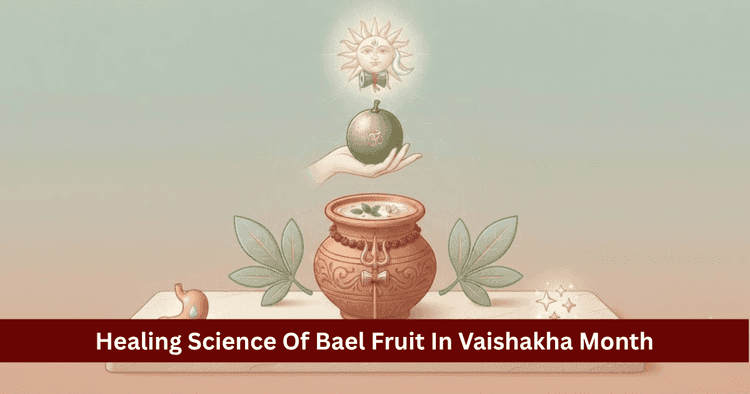
Table of Contents
Panchang Description And The Astrological Dimensions Of Bilva Fruit
Within classical predictive astrology, the Vaishakha Mahatmya of the Skanda Purana, the Vidyeshvara Samhita of the Shiva Purana, the Brihaddharma Purana and classical Ayurvedic compendiums like the Charaka Samhita and Sushruta Samhita, the offering and consumption of the Bael fruit (Bilva / Wood Apple / Aegle marmelos) and its cooling nectar (Bilva Panaka) during the month of Vaishakha is celebrated as a vital spiritual offering and an unmatched natural therapeutic remedy.
From an astronomical perspective, Vaishakha represents the peak period of atmospheric drying, occurring while Lord Surya Deva transits through his sign of deep exaltation in cardinal fiery Aries (Mesha). Aries is a cardinal fire sign ruled by Mars (Mangala). The simultaneous convergence of peak solar radiation and intense Martian heat draws out terrestrial moisture and sharply aggravates bile and metabolic heat (Pitta Dosha) within the human organism.
To restore physiological balance during this thermal junction, the living earth yields a potent seasonal remedy-the fully ripened Bael fruit. In Sanatana sacred ecology, the Bilva tree is revered as a wish-fulfilling tree (Kalpavriksha), embodying Lord Brahma at its roots, Lord Vishnu in its trunk and Lord Sadashiva in its crown. While its tripartite leaves are offered to honor Shiva's trident throughout the year, extracting the pulpy nectar of the ripe Bilva fruit into a sweet, cooling beverage during Vaishakha and serving it to travelers is regarded as an act of great spiritual merit (Mahadana). This soothing drink relieves gastric hyperacidity, soothes peptic inflammation, counters chronic dysentery and replenishes vital bodily fluids.
| Astrological Factor | Scriptural, Astrological and Ayurvedic Detail |
|---|---|
| Prescribed Timeframe | Throughout the month of Vaishakha (Pratipada to Purnima) | Midday & Pradosha |
| Solar Celestial Alignment | Sun exalted in Aries (Fiery cardinal ingress generating severe dry heat) |
| Presiding Sovereign Divinities | Lord Sadashiva (The Shiva Lingam), Lord Vishnu and Goddess Mahalakshmi |
| Botanical Medium | Fully ripened Bilva fruit (Wood Apple / Aegle marmelos) |
| Sacramental Beverage | Chilled Bael Sharbat (Blended with rock sugar, roasted cumin and mint) |
| Ayurvedic Energetic Profile | Cold metabolic potency (Sheeta Veerya), astringent, digestive, balancing |
| Astrological Synthesis | Harmonic union of the Sun (Rigid protective shell) and Moon (Cooling sweet pulp) |
| Scriptural Equivalent Merit | Equal to bathing across sacred pilgrimage waters; pacifies untimely mortality |
| Primary Somatic Benefits | Relief from ulcers, chronic colitis, dysentery, acid reflux and heatstroke |
To assimilate the physical and spiritual benefits of the Bael fruit during Vaishakha, an aspirant should observe disciplined daily habits from dawn:
- Awaken before sunrise during Brahma Muhurta, bathing in ambient cool water consecrated with sacred Ganga drops while meditating upon Lord Shiva.
- Dress in clean white or unstitched cotton garments, offering three continuous water libations mixed with red vermilion, unbroken raw rice and blossoms to Lord Surya Narayana from a copper pitcher.
- Cleanse the domestic altar or temple Shiva Lingam with cold Ganga water, raw milk and fragrant white sandalwood paste.
- Break open a fragrant, golden-ripe Bael fruit, scoop the fibrous pulp into pure spring or well water, gently knead it by hand and strain it through a coarse mesh.
- Blend the extracted pulp with unrefined rock sugar (Mishri), a pinch of pink salt, roasted cumin powder and fresh mint leaves to prepare the sacred nectar (Bilva Panaka).
- Consecrate the drink by offering the first portion upon the domestic altar while chanting Om Namah Shivaya (or placing it before the Shaligram stone with fresh tulsi leaves).
- During the heat of the midday window, gift a cup of this chilled Bael beverage alongside a whole, ripe Bael fruit to a laborer, an ascetic or a weary traveler.
- Partake of the remaining drink as consecrated nourishment (Prasada), sipping it slowly to soothe internal heat.
- Maintain composure throughout the day, refraining from harsh words, heated arguments and heavily spiced or fried foods.
Puranic Lore: The Skanda Purana And The Merit Of Bilva Panaka
In the Vaishakha Mahatmya of the Skanda Purana, during an instruction delivered by Sage Narada to King Ambarisha, the spiritual merit of gifting Bael fruit during peak summer is recorded:
Vaishākhe māsi yo dadyāt bilvaphalam manoharam.
Sarvakāmapradam punyam shivaloke maheeyate.
Pipāsitasya yah kuryāt bilvapānakadānakam.
Tasya punyaphalam vaktum na shaknomi maheepate.
Meaning: Whoever offers a beautiful, ripe Bael fruit or gifts its refreshing nectar (Bilva Panaka) to a parched traveler during the month of Vaishakha attains a reservoir of spiritual merit that even celestial sages cannot fully measure. Such an individual experiences lasting inner peace and attains an enduring place in the realm of Shiva.
The Appearance of the Bilva Tree from Lakshmi's Devotion
In the Brihaddharma Purana and the Padma Purana, the divine advent of the Bilva tree is closely linked with the asceticism of Goddess Mahalakshmi:
- In ancient times, Goddess Lakshmi undertook prolonged tapas to honor Lord Shiva, offering one thousand blooming lotus flowers upon the lingam each morning.
- One morning, through divine play, two lotus blossoms were missing from the altar. Determined not to leave the morning worship incomplete, Lakshmi resolved to offer her own bosom, which classical poetry had likened to blossoming lotuses.
- Moved by her dedication, Lord Shiva appeared before her and gently stayed her hand.
- The Lord declared: "O Goddess of Fortune! Your pure dedication touches the heart of creation. From your hands shall manifest a divine tree upon earth-the Bilva tree."
- The sacred fruit that blossomed forth from this divine grace was the Bael fruit, which came to be known as Shriphala (the fruit of Lakshmi). It carries the joint blessings of both Lord Shiva and Goddess Mahalakshmi.
The Biophysics And Healing Science Of Bael Fruit: Nature's Gastric Panacea
The foundational masters of Ayurveda-Maharishi Charaka and Acharya Vagbhata-praised both raw and ripened Bael fruit as an unmatched remedy for the human digestive tract:
Bilvam deepana-pāchanam grāhi kaphavāta-vināshanam.
Pakvam tu madhuram sheetam durjaram doshakārakam (atisevane).
1. Soothing Ulcers and Gastric Inflammation (IBD & Acidity)
- The pulp of the ripe Bael fruit contains natural mucilage, tannins and protective flavonoids.
- During the intense heat of Vaishakha, when the digestive lining can become irritated by excess stomach acid, Bael nectar coats the mucosal lining of the stomach and intestines, calming burning sensations and promoting tissue repair.
2. Relieving Chronic Dysentery, Colitis and IBS
- Bael possesses an astringent quality (Grahi), making it helpful for managing loose stools and digestive irregularity.
- For individuals experiencing summer diarrhea, intestinal cramping or irritable bowel syndrome (IBS), consuming fresh Bael nectar blended with rock sugar helps soothe gut inflammation and restore regular digestion.
3. Natural Colon Cleansing and Easing Constipation
- Rich in insoluble dietary fiber and natural pectin, the fibrous pulp of the ripe fruit helps clear accumulated waste from the intestinal walls. It encourages smooth, regular bowel movements naturally without irritating the digestive tract.
| Bioactive Compound | Nutritional Presence in Bael Pulp | Somatic and Therapeutic Benefit |
|---|---|---|
| Plant Mucilage & Pectin | Dense natural viscous gel | Coats gastric ulcers; shields irritated intestinal lining |
| Tannins & Flavonoids | Highly concentrated | Reduces gut inflammation; counters bacterial dysentery |
| Vitamin C & B-Complex | Rich organic micronutrients | Strengthens immune vitality; soothes seasonal mouth ulcers |
| Cold Metabolic Potency | Natural biophysical trait | Shields the body from heatstroke; balances internal bile |
Authentic Preparation: Crafting Ayurvedic Bilva Panaka
To prepare an authentic, therapeutically active Bael beverage at home, follow these traditional steps:
- Selecting the Fruit: Choose a fully ripened Bael fruit showing a warm yellowish-green rind that yields a sweet, floral fragrance.
- Extracting the Pulp: Crack the hard outer shell using a pestle. Use a spoon to scoop the soft golden pulp into a large earthenware or glass bowl.
- Macerating in Water: Add two to three parts cool spring or clay-pot water to the pulp. Gently knead and mash the pulp by hand until the fibers release their rich juices.
- Straining Protocol (Essential):
- Never use a motorized electric blender. Blending crushes the sticky, resin-coated seeds, making the beverage bitter and difficult to digest.
- Pour the mixture through a wide-mesh sieve or clean cheesecloth, pressing the pulp with a spoon to separate the liquid from the seeds and tough fibers.
- Adding Therapeutic Spices: Whisk the smooth, golden liquid with ground unrefined rock sugar (Mishri), half a teaspoon of roasted cumin powder, a pinch of Himalayan pink salt and bruised fresh mint leaves.
- Consumption Window: Enjoy this cooling drink between mid-morning and early afternoon, roughly an hour before lunch or two hours after a light meal.
Astrological Analysis: The Synthesis Of The Sun And The Moon
In predictive Vedic astrology, the Bael fruit embodies a rare, balanced synthesis between the primary cosmic luminaries-the Sun (Surya) and the Moon (Chandra):
1. The Sun (Surya) - The Protective Wooden Shell
- The outer rind of the Bael fruit is remarkably hard, woody and resilient. Astrologically, this protective exterior reflects the focused, unyielding power of the Sun.
- For individuals seeking to strengthen self-confidence, support cardiovascular vitality or overcome lethargy, offering and consuming Bael fruit connects them with constructive solar energy.
2. The Moon (Chandra) - The Soothing, Sweet Nectar
- In contrast to its tough rind, the inner pulp is soft, cooling, sweet and deeply hydrating, embodying the restorative nectar of the Moon.
- Drinking this nectar balances fiery planetary transits, soothes nervous irritability and encourages restful sleep, helping ease internal tension caused by difficult solar transits.
| Astrological Factor | Dimension of the Bilva Fruit | Somatic & Emotional Benefit |
|---|---|---|
| The Sun (Surya) | Rigid, woody outer casing | Enhances moral resolve, physical vitality, self-respect |
| The Moon (Chandra) | Cool, hydrating inner pulp | Promotes mental calm, emotional balance, sound sleep |
| Balancing Mars | Neutralizes excess internal heat | Calms reactive anger, irritability and inflammation |
| Venus & Lakshmi | Sacred Shriphala lineage | Encourages contentment, household peace and well-being |
Philosophical Essence: Sweetness Protected By Patient Strength
The Bael fruit offers an enduring lesson in human character:
"Just as the sweet, nourishing nectar of the Bael fruit is protected beneath a hard, patient shell, the deepest peace of the human spirit is preserved through moral discipline, patience and self-restraint."
It is easy to misjudge things based purely on external toughness. But when one approaches life with discernment, looking beyond superficial difficulty, one discovers the quiet sweetness and peace hidden within.
Lord Shiva is drawn to the Bilva fruit because his own presence mirrors this truth: outwardly austere, solitary and uncompromising, yet inwardly the source of boundless compassion, gentleness and peace.
During this warm month of Vaishakha, let us offer ripe Bilva fruit with reverence, share its refreshing nectar with weary travelers and cultivate a character that pairs outer strength with inner kindness and goodwill toward all.
FAQ
Why is Bael fruit specially offered to Lord Shiva during Vaishakha?
Because its natural cooling properties soothe seasonal heat and Puranic texts affirm that offering ripe Bilva fruit pleases Lord Shiva, bringing peace, health and spiritual merit.
Why is the Bael fruit also called 'Shriphala'?
Because traditional lore records that the sacred Bilva tree arose through the intense spiritual devotion of Goddess Mahalakshmi (Shri), carrying her blessings of abundance and well-being.
Which digestive conditions benefit most from Bael fruit nectar?
It is especially helpful for soothing gastric ulcers, acid reflux, chronic dysentery, irritable bowel syndrome (IBS), constipation and heat exhaustion.
Why should an electric blender never be used to make Bael sharbat?
Blending crushes the resin-coated seeds inside the pulp, which makes the drink bitter and harder to digest. The pulp should always be mashed gently by hand and strained through a sieve.
Which planetary energies are balanced by the Bael fruit in Vedic astrology?
The hard outer shell represents the stability and stamina of the Sun, while the cooling inner pulp embodies the gentle hydration of the Moon, balancing both energies in the body and mind.
Get your accurate Kundali
Generate KundaliDid you like it?
Author

Pt. Abhishek Sharma (63)
Experience: 20
Consults About: Family Planning, Career
Clients In: Punjab, Haryana, Delhi
Share this article with friends and family
WELCOME TO
ZODIAQ
Right Decisions at the right time with ZODIAQ
