What Is The Spiritual Lore Of Bagalamukhi Jayanti: The Advent Of Pitambara?
By Pt. Suvrat Sharma
Vaishakha Shukla Ashtami, Dasa Mahavidya Pitambara, Haridra Sarovara Lore & Mars-Jupiter Synthesis
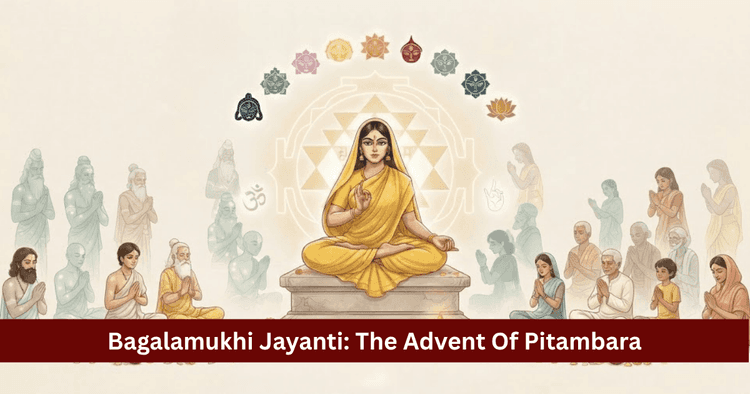
Table of Contents
Panchang Description And The Astrological Dimensions Of Bagalamukhi Jayanti
Within classical predictive astrology, the Shakta Tantras, the Svatantra Tantra, the Bagalamukhi Rahasya and the Rudrayamala, the eighth lunar day of the waxing fortnight in Vaishakha-Vaishakha Shukla Ashtami-is celebrated throughout the Indian subcontinent as Maa Bagalamukhi Jayanti. Revered as the eighth great cosmic wisdom goddess (Ashtama Mahavidya) among the celebrated Dasa Mahavidyas, she is known as Pitambara (the golden goddess adorned in yellow vestments), Brahmastra Vidya and the supreme power of cosmic immobilization (Stambhana Karini).
From an astronomical perspective, Vaishakha Shukla Ashtami marks a potent convergence of fiery solar thermodynamics and decisive lunar energy. Lord Surya Deva transits through his sign of deep exaltation in cardinal fiery Aries (Mesha), infusing the earth with intense solar prana. The eighth tithi (Ashtami) is governed directly by the primordial feminine power (Shakti). Astrologically, Goddess Bagalamukhi represents the synthesis of Mars (Mangala - physical courage, dynamic action, victory and defense) and Jupiter (Brihaspati - golden radiance, discriminating intellect, divine law and truth). While Mars grants the resolve to neutralize negativity, Jupiter provides steady discernment to discipline speech and anchor the mind. Engaging in mindful contemplation during the midnight window using a sanctified turmeric rosary (Haridra Mala) dissolves adversarial friction, calms unwarranted litigation and stabilizes personal boundaries.
| Astrological Factor | Scriptural, Astrological and Tantric Detail |
|---|---|
| Sacred Liturgical Station | Vaishakha Month | Shukla Paksha Ashtami (8th Waxing Lunar Day) | Mahanisha Kala |
| Mahavidya Classification | The 8th Great Cosmic Wisdom Goddess (Ashtama Mahavidya) |
| Canonical Titles | Pitambara, Brahmastra-Rupini, Shatru-Stambhana-Karini |
| Sacred Advent Sanctuary | Haridra Sarovara (Saurashtra region) | Major Seats: Nalkheda, Datia, Bankhandi |
| Planetary Synthesis | Mars (Courage, dynamic drive, protection) and Jupiter (Yellow hue, wisdom, dharma) |
| Elemental Modulation | Deploying the Fire Element (Tejas) to immobilize turbulent Air and Water currents |
| Ritual Color (Varna) | Pure Yellow (Yellow robes, yellow seat, yellow blossoms, turmeric paste) |
| Prescribed Rosary | Sanctified Haridra Mala (108 knotted dried turmeric roots) |
| Bestowed Spiritual Fruit | Protection against adversarial harm, clarity in conflicts, disciplined speech, peace |
To attune to the protective and stabilizing grace of Mother Bagalamukhi, an aspirant should observe disciplined scriptural decorum:
- Awaken before sunrise during Brahma Muhurta, bathing in ambient cool water mixed with drops of sacred Ganga water and a pinch of ground turmeric.
- Dress exclusively in clean, unstitched yellow cotton or silk garments, refraining from black or dark blue colors during the observance.
- Prepare a dedicated altar by covering a wooden platform with clean yellow silk, installing a consecrated Bagalamukhi Yantra or an image of the goddess.
- Anoint the sacred matrix with yellow sandalwood paste, offering fresh yellow blossoms (such as yellow oleander or marigolds), turmeric roots and unbroken rice.
- Present seasonal yellow offerings-such as chickpea flour sweets (Besan Laddu), saffron rice pudding or honeyed sweetmeats.
- Seat oneself facing east or north on a yellow mat during the evening or night hours (ideally between 09:00 PM and midnight).
- Kindle a lamp fueled by pure cow ghee or sesame oil, adding a pinch of whole yellow mustard seeds to the vessel.
- Recite the core formula with focused attention using a consecrated turmeric-root rosary (Haridra Mala) for at least 108 repetitions.
- Maintain complete self-restraint, truthfulness and celibacy, avoiding personal resentment, malice or the misuse of spiritual practices for harmful ends.
Puranic Lore: Haridra Sarovara And The Immobilization Of Madanasura
In the Svatantra Tantra and the Narada Pancharatra, the appearance of Mother Bagalamukhi is chronicled through an ancient cosmic event:
In early antiquity, a devastating cosmic tempest swept across the manifest universe. The violent convergence of elemental winds and torrential waters threatened to uproot mountain ranges, submerge planetary systems and dissolve the terrestrial foundation of life.
The Penance of Lord Vishnu at the Golden Lake
Witnessing the imminent dissolution of creation, the Preserver of the cosmos, Lord Sri Hari Vishnu, sought an enduring sanctuary of protection. He retreated to the secluded shores of the sacred Haridra Sarovara (the Golden Lake of Turmeric Waters) in ancient Saurashtra:
- Lord Vishnu entered sustained meditation, directing his contemplation toward the supreme primordial power (Mahatripurasundari).
- Moved by his sincere dedication, at the stroke of midnight on Vaishakha Shukla Ashtami, a radiant column of golden light arose from the turmeric waters.
- From the heart of this effulgence stepped Mother Bagalamukhi, four-armed, adorned in luminous yellow garments, holding a golden mace (Mudgara).
- Through her focused will, she immobilized the cosmic tempest in an instant, restoring stability, balance and quiet across the worlds.
The Confrontation with Madanasura and the Seizing of the Tongue
Later, an aggressive being named Madanasura undertook austerities to secure the boon of unfailing speech (Vak-Siddhi) from Lord Brahma:
- Whatever words crossed his lips manifested immediately, allowing him to harm scholars, disturb hermitages and spread disruption.
- When Mother Bagalamukhi intervened, the demon opened his mouth to utter destructive curses. Before the sound could form, the goddess reached forward, seized his tongue with her hand and immobilized his speech, subduing his aggression with her mace.
- The act of holding the tongue is a profound metaphysical symbol: it represents the quiet mastery of erratic speech, pride and false argument, centering the consciousness in quiet truth.
| Sacred Symbol | Physical Iconography | Metaphysical Interpretation |
|---|---|---|
| Seizing the Tongue | Hand holding the demon's tongue | Disciplining unbridled speech, slander and chaotic mental noise |
| The Golden Mace | Celestial club (Mudgara) | Shattering hard ego, arrogance and moral confusion |
| Yellow Attire | Golden-yellow silk (Pitambara) | Radiance of conscious awareness, stability and intellectual purity |
| The Turmeric Lake | Haridra Sarovara waters | Cleansing past karmic impressions; cooling turbulent emotion |
Astrological Analysis: The Synthesis Of Mars And Jupiter
In predictive Vedic astrology, the archetype of Mother Bagalamukhi represents the dynamic balance between two influential planetary energies:
1. Mars (Mangala) - Executive Drive, Protection and Resolve
- Mars governs physical strength, dynamic action, tactical strategy and the ability to confront adversity without panic.
- The protective mace held by Mother Bagalamukhi embodies the constructive expression of Martian force-using strength to uphold ethical order rather than inflict harm.
2. Jupiter (Brihaspati) - Golden Wisdom and Mental Composure
- Jupiter corresponds to the golden color, discernment, legal ethics and steady intellect.
- Mother Bagalamukhi's yellow iconography reflects Jupiter's capacity to illuminate delusion, turning erratic impulses into steady purpose.
When Mars and Jupiter or Mars and the Lunar Nodes (Rahu/Ketu) are afflicted in a personal chart, an individual may experience impulsive anger, legal complications or anxiety regarding unseen adversaries. Cultivating the quiet presence of Mother Bagalamukhi on this tithi calms planetary volatility, grounding the seeker in inner stability.
Canonical Liturgical Protocol And Sacred Chants
Adoring Mother Bagalamukhi during the evening window of Vaishakha Shukla Ashtami should be conducted with simplicity, cleanliness and sincere devotion:
1. The Contemplative Hymn (Dhyana Shloka)
Seated upon a yellow mat, hold yellow blossoms in cupped hands and meditate upon her form:
Sauvarnamrita-kumbhineem trinetram peetambaralankritam,
Hastair-mudgara-pasha-patra-rasanam sambibhrateem suprabham.
Shree-kanchee-pada-kankanangada-dharam peeta-prabha-bhasineem,
Deveem bhakta-vipatti-bhanjana-kareem vande-aham-ugreshvareem.
2. The Single-Syllabled Seed Formula (Bija Mantra)
For daily personal reflection, this foundational formula is traditionally recommended:
Om Hleem Bagalamukhyai Namah.
3. The Core Eighteen-Syllabled Formula (Mula Mantra)
For clearing persistent obstacles and resolving legal or emotional strife, recite this classical formula using a turmeric rosary:
Om Hleem Bagalamukhi sarva-dushtanam vacham mukham padam stambhaya jihvam keelaya buddhim vinashaya Hleem Om Svaha.
Essence of the Formula:
"O Divine Mother Bagalamukhi! O embodiment of the primordial sound Hleem! Settle the harmful speech, chaotic actions and negative intentions of all disruptive influences; stabilize their confusion and establish the victory of truth and moral integrity."
Three Historical Sanctuaries Of Bagalamukhi
The subcontinent preserves three historic pilgrim centers dedicated to Mother Bagalamukhi:
- Nalkheda (Shajapur, Madhya Pradesh): Situated on the banks of the Lakhundar River, this ancient shrine is associated with the Mahabharata. Tradition records that King Yudhishthira prayed here under the guidance of Lord Krishna prior to the Kurukshetra war to cultivate victory and moral resolve.
- Pitambara Peeth (Datia, Madhya Pradesh): Founded by the ascetic Swami Ji Maharaj, this center is renowned as a focus of spiritual dedication and national protection during critical border crises in 1962 and 1965.
- Bankhandi (Kangra, Himachal Pradesh): Nestled within the foothills of the Himalayas, this tranquil sanctuary provides a secluded setting for dedicated meditation and self-reflection.
Philosophical Essence: The True Meaning Of Stambhana
Approaching Mother Bagalamukhi merely to harm an external opponent misses the spiritual depth of this wisdom tradition:
The primary adversary a human being encounters is not an external person but the restless mind, unbridled speech and hidden resentments within oneself.
When a seeker surrenders before Mother Bagalamukhi, her grace immobilizes personal reactive habits, silencing inner chatter and restless impulses. When chaotic thoughts are brought to stillness, the mind settles naturally into unconditioned awareness.
On Vaishakha Shukla Ashtami, let us remember Mother Pitambara by speaking with care, practicing restraint in moments of disagreement and relying upon truth, patience and ethical courage as our enduring shield.
FAQ
When is Bagalamukhi Jayanti observed in the Vedic calendar?
Bagalamukhi Jayanti is celebrated annually on the eighth lunar day of the waxing fortnight of Vaishakha (Vaishakha Shukla Ashtami).
What position does Bagalamukhi hold among the Dasa Mahavidyas?
She is venerated as the eighth great cosmic wisdom goddess (Ashtama Mahavidya).
Why is Bagalamukhi designated as 'Pitambara'?
She manifested from the golden waters of Haridra Sarovara, is adorned in yellow vestments and ornaments and her practices emphasize the yellow color.
What is the symbolic meaning of the goddess holding an adversary's tongue?
It represents the power of divine truth to master erratic speech, halt malicious words and quiet destructive mental habits.
Which rosary is traditionally used for chanting Bagalamukhi mantras?
Mantras dedicated to Mother Bagalamukhi are traditionally chanted using a Haridra Mala (a rosary crafted from 108 knots of dried, polished turmeric root).
Get your accurate Kundali
Generate KundaliDid you like it?
Author

Pt. Suvrat Sharma (63)
Experience: 20
Consults About: Family Planning, Career
Clients In: Punjab, Haryana, Delhi
Share this article with friends and family
WELCOME TO
ZODIAQ
Right Decisions at the right time with ZODIAQ
