What Is The Significance Of Baisakhi: Mesha Sankranti, Harvest and The Khalsa Panth?
By Pt. Abhishek Sharma
Mesha Sankranti Astronomy, Golden Harvest Joy, 1699 Khalsa Inception And Panj Pyare Philosophy
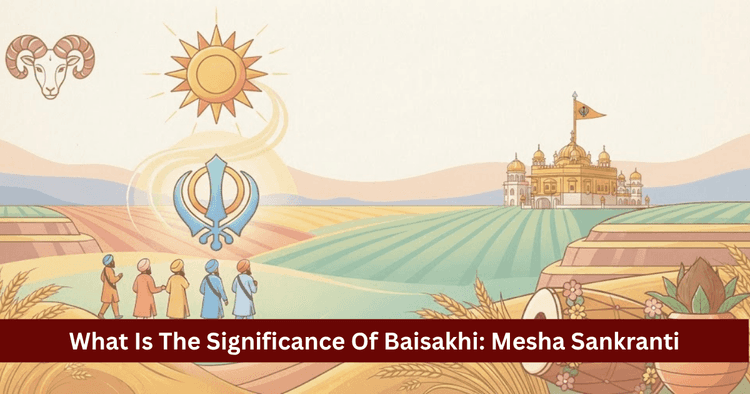
Table of Contents
Panchang Description And The Astrological Dimensions Of Baisakhi
Within the classical taxonomy of the Vedic calendar, solar astronomical treatises and the rich agrarian traditions of the Indian subcontinent, the festival of Baisakhi (Vaishakhi) represents a momentous convergence of cosmic mechanics, agricultural celebration and spiritual history. Falling annually on April 13th or 14th of the Western Gregorian calendar, this sacred day marks the precise astronomical instant when Lord Surya Deva transits out of the mutable watery sign of Pisces (Meena) to enter 0° of the cardinal fiery sign of Aries (Mesha). This solar ingress is canonically celebrated as Mesha Sankranti.
Mesha Sankranti inaugurates the Solar New Year across regional calendars and marks the opening of the solar month of Vaishakha. As the Sun achieves deep exaltation in Aries, solar thermodynamic energy peaks across the northern hemisphere, dispelling winter stagnation and filling the earth with vibrant prana. Across the fertile plains of northern and central India, the primary winter rabi crop-most notably the golden wheat-matures for harvest. Baisakhi honors the culmination of months of patient agricultural labor. Historically and spiritually, on Baisakhi day in 1699 CE (Samvat 1756), the tenth Sikh preceptor, Guru Gobind Singh Ji, instituted the sacred order of the Khalsa Panth at Anandpur Sahib, transforming socio-spiritual consciousness through ethical courage, equality and righteousness.
| Astrological Factor | Scriptural, Astrological and Historical Detail |
|---|---|
| Festival Designation | Baisakhi / Vaishakhi (Annually April 13/14 / Inception of Solar Vaishakha) |
| Solar Astronomical Ingress | Sun entering 0° Aries from Pisces (Mesha Sankranti / Mahavishuva Cusp) |
| Agrarian Significance | Harvesting the winter rabi crop (Wheat, Barley, Gram, Mustard) |
| Historical Spiritual Anchor | Inception of the Khalsa Panth by Guru Gobind Singh Ji (Anandpur Sahib, 1699 CE) |
| Presiding Sovereign Divinities | Lord Surya Narayana, Mother Annapurna, Waheguru, The Panj Pyare |
| Traditional Consecrated Foods | Karah Prasad, Makki di Roti with Sarson da Saag, Sattu, Raw Mango Panna |
| Core Cultural Observances | Sacred river dips, Nagar Kirtan processions, Bhangra/Giddha folk dances, Amrit Sanchar |
| Pan-Indian Cultural Manifestations | Satuani (Bihar), Poila Baisakh (Bengal), Bohag Bihu (Assam), Puthandu (Tamil Nadu), Vishu (Kerala) |
| Bestowed Spiritual Fruit | Agrarian abundance, ethical courage against injustice, social unity, renewed vitality |
To welcome the Solar New Year, honor the gift of grain and reflect upon the courage of the Khalsa, an aspirant should observe disciplined daily habits from early dawn:
- Awaken before sunrise during Brahma Muhurta, bathing in a sacred river, community stepwell or ambient water consecrated with Ganga drops.
- Offer three continuous water libations mixed with red vermilion, unbroken raw rice and blossoms to Lord Surya Narayana from a copper vessel.
- Roast freshly harvested wheat stalks over domestic or communal embers, presenting the first grains (Navanna) to the Divine and lineage ancestors before home cooking begins.
- Visit the Gurdwara to bow before the Guru Granth Sahib, listening to sacred kirtan and partaking of consecrated Karah Prasad.
- Distribute unground wheat flour, roasted barley flour (sattu), unglazed clay water pitchers, woven fans and seasonal fruits to laborers and the elderly.
- Participate in community langar service, preparing and serving meals to all visitors regardless of social background.
- Cultivate internal courage, resolving to stand against injustice and protect vulnerable living beings with compassion and dignity.
Astronomy And Meteorology: Mesha Sankranti And The Solar Year
In classical Vedic predictive astrology, Mesha Sankranti is recognized as the astronomical anchor of the Maha Vishuva Sankranti:
- Solar Exaltation Zenith: The Sun's transit into Aries marks the commencement of its maximum planetary dignity. Solar radiation strikes the earth at steep angles, infusing the atmosphere with thermodynamic heat.
- Biological Revitalization: The lethargy of colder months dissipates completely. Cellular metabolic activity, blood circulation and physical stamina elevate naturally, supporting focused exertion.
- The Satuani Celebration (Eastern India): In Bihar, Jharkhand and eastern Uttar Pradesh, Mesha Sankranti is celebrated as Satuani. Families consume roasted chickpea and barley sattu, refreshing raw green mango panna and donate clay water pitchers and hand fans to laborers.
| Region / State | Regional Festival Name | Defining Spiritual & Cultural Custom |
|---|---|---|
| Punjab & Haryana | Baisakhi | Gurdwara congregations, Nagar Kirtan, Bhangra dances, harvesting wheat |
| Bihar & Purvanchal | Satuani & Jur Sital | Consuming sattu and mango panna, water-pitcher charity, cooling rituals |
| West Bengal | Poila Baisakh | Bengali Solar New Year, opening new business ledgers (Haalkhata), Lakshmi Puja |
| Assam | Bohag Bihu (Rongali Bihu) | Assamese New Year, cattle blessing rites, folk dancing with dhol and pepa |
| Kerala | Vishu | Viewing the auspicious display (Vishukkani), gifting ceremonial coins (Vishu Kaineettam) |
| Tamil Nadu | Puthandu | Tamil Solar New Year, viewing auspicious items, consuming neem-mango pachadi |
Agrarian Culture: The Golden Harvest And Annapurna's Bounty
Baisakhi reflects the agricultural foundation of Indian civilization, which honors consecrated food as life itself: Annam vai pranah (Food, indeed, is the vital breath of creation).
- The Wheat Harvest (Kanak): Wheat sown in late autumn ripens into golden amber by late spring. For agrarian communities, seeing mature wheat ready for harvest represents the reward of six months of early mornings and rigorous labor.
- The First Fruits Ceremony (Navanna): Prior to mechanical harvesting, farmers traditionally cut a sheaf of wheat by hand, roasting the tender kernels over an open flame to offer the very first portion to Mother Earth and domestic altars.
- Folk Celebrations (Bhangra and Giddha): Across the villages of Punjab, the rhythmic beating of the dhol drum inspires community folk dancing. Farmers dance with vitality to the call "Jatta aayi Baisakhi", expressing communal joy and gratitude to the living earth.
Baisakhi 1699: The Historic Inception Of The Khalsa Panth
In the spiritual and social history of the subcontinent, April 13, 1699 CE (Baisakhi day) stands as a transformative milestone. On this day, at Sri Keshgarh Sahib in Anandpur Sahib, the tenth master, Guru Gobind Singh Ji, gathered thousands of devotees.
The Call for Five Heads and the Emergence of the Panj Pyare
During this period, society suffered under autocratic oppression, religious persecution and rigid caste stratifications.
- Stepping before the assembly with a drawn steel sword, Guru Gobind Singh Ji issued a bold challenge: "I require the head of a dedicated soul who is ready to give their life for righteousness!"
- Silence fell across the gathering. Then Daya Ram, a Khatri from Lahore, stepped forward and offered his head without hesitation. The Guru led him into an adjoining tent, emerging moments later with his sword stained with blood.
- The Guru repeated the call four more times. In succession, Dharam Das (a farmer from Hastinapur), Himmat Rai (a water-carrier from Puri), Mohkam Chand (a tailor from Dwarka) and Sahib Chand (a barber from Bidar) stepped forward, offering their lives for justice.
The Nectar of Steel: Khande Di Pahul and Amrit Sanchar
The Guru emerged from the tent accompanied by the five devotees, alive, dignified and dressed in clean saffron robes, presenting them as the Panj Pyare (The Five Beloved Ones).
- Sweet sugar crystals (patashas) were placed into an iron bowl of fresh water by Mata Jito Ji and the Guru stirred the water with a double-edged steel sword (Khanda) while reciting the Five Sacred Prayers.
- This consecrated nectar-Amrit-was administered to the Five Beloved Ones, transforming fear into quiet resolve and conferring upon them the name Singh (Lion).
- The Guru then knelt before the Panj Pyare, requesting that they administer the same Amrit to him, establishing an enduring standard of spiritual equality: Waho waho Gobind Singh aape guru chela (Wondrous is Guru Gobind Singh, who is simultaneously the master and the disciple).
| Beloved One | Original Name | Social Background | Geographical Origin | Conferred Spiritual Name |
|---|---|---|---|---|
| First Beloved | Daya Ram Ji | Khatri / Merchant | Lahore (Punjab) | Bhai Daya Singh Ji |
| Second Beloved | Dharam Das Ji | Jat / Farmer | Hastinapur (Uttar Pradesh) | Bhai Dharam Singh Ji |
| Third Beloved | Himmat Rai Ji | Jheer / Water Carrier | Jagannath Puri (Odisha) | Bhai Himmat Singh Ji |
| Fourth Beloved | Mohkam Chand Ji | Chheemba / Tailor | Dwarka (Gujarat) | Bhai Mohkam Singh Ji |
| Fifth Beloved | Sahib Chand Ji | Nai / Barber | Bidar (Karnataka) | Bhai Sahib Singh Ji |
The Five Ks (Kakars): The Disciplines Of A Saint-Soldier
With the inauguration of the Khalsa, Guru Gobind Singh Ji established five structural symbols (Kakars) for every initiated member, representing core ethical commitments:
- Kesh (Uncut Hair): Respect for the natural form bestowed by the Divine, symbolizing commitment to ethical discipline.
- Kangha (Wooden Comb): Maintained within the hair, representing personal cleanliness order and mental clarity.
- Kara (Iron Bangle): Worn upon the wrist as a physical reminder to engage only in honest, compassionate and constructive actions.
- Kachera (Cotton Undergarment): Symbolizing personal self-restraint, moral integrity and readiness for service.
- Kirpan (Curved Defensive Blade): Derived from Kripa (mercy) and Aan (honor), carried not for aggression but to defend the vulnerable against oppression.
Philosophical Essence: Labor, Equality and Moral Courage
The festival of Baisakhi weaves three foundational human ideals into a cohesive way of living:
1. The Dignity of Honest Work (Kirat Karo): Like the farmer working the soil, living through sustained effort and viewing the harvest as a blessing to be shared.
2. Universal Social Equality (Recognizing the Human Race as One): By bringing together five individuals from diverse regions and backgrounds to share a common vessel of nectar, the Guru cleared artificial social divisions, affirming shared human dignity.
3. The Saint-Soldier Ideal (Miri-Piri): Balancing inner devotion and contemplative peace with the practical courage to stand against injustice and support those in need.
As Baisakhi arrives with the Sun entering Aries, let us welcome this seasonal transition: honoring the food that sustains our communities, celebrating the labor of agrarian workers and cultivating the quiet courage to live with integrity, service and compassion.
FAQ
Why does Baisakhi consistently fall on April 13th or 14th?
Baisakhi follows solar calendrical calculations, aligning with the Sun's transit from Pisces into Aries (Mesha Sankranti), an astronomical event that occurs annually on April 13th or 14th.
When and where was the Khalsa Panth established?
The Khalsa Panth was established on Baisakhi day, April 13, 1699 CE, at Sri Keshgarh Sahib in Anandpur Sahib, Punjab, by the tenth Sikh preceptor, Guru Gobind Singh Ji.
Who were the Panj Pyare and what is their historical significance?
The Panj Pyare were five dedicated disciples from diverse regions and backgrounds across India who answered the Guru's call to defend righteousness, representing social equality and unified purpose.
What are the Five Ks (Kakars) of the Sikh faith?
The Five Ks are Kesh (uncut hair), Kangha (wooden comb), Kara (iron bracelet), Kachera (cotton undergarment) and Kirpan (ceremonial blade for justice).
How is Baisakhi observed in eastern India?
In Bihar and eastern Uttar Pradesh, it is celebrated as Satuani, marked by consuming roasted grain flour (sattu), drinking raw green mango coolers and donating earthen water pots and hand fans to laborers.
Get your accurate Kundali
Generate KundaliDid you like it?
Author

Pt. Abhishek Sharma (63)
Experience: 20
Consults About: Family Planning, Career
Clients In: Punjab, Haryana, Delhi
Share this article with friends and family
WELCOME TO
ZODIAQ
Right Decisions at the right time with ZODIAQ
