What Is The Spiritual Significance Of Chardham Yatra Portal Openings On Akshaya Tritiya?
By Pt. Suvrat Sharma
Akshaya Tritiya Portal Openings, Palanquin Processions, Badrinath Akhanda Jyoti And Sacred Order
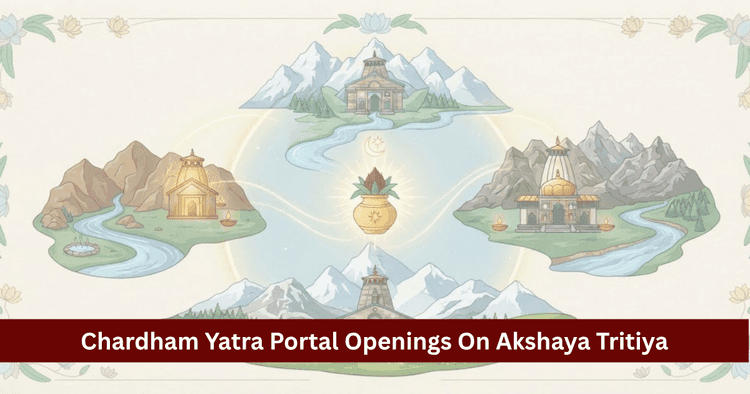
Table of Contents
Panchang Description And The Astrological Dimensions Of The Himalayan Pilgrimage
Within classical predictive astrology, the Skanda Purana (specifically the Kedarakhanda and Manasakhanda) and the sacred liturgical traditions of Uttarakhand, the ingress of Vaishakha Month is revered as the golden dawn of Himalayan pilgrimage. The third lunar day of the waxing fortnight-Akshaya Tritiya-marks the official opening of the sacred portals for the venerated Chota Chardham sanctuaries (Yamunotri, Gangotri, Kedarnath and Badrinath) nestled in the Garhwal Himalayas.
From an astronomical perspective, Akshaya Tritiya represents the annual double-exaltation dynamic: Lord Surya Deva transits at 10° Aries (Mesha), while Chandra Deva occupies 3° Taurus (Vrishabha). This balance of solar heat and lunar coolness initiates the spring thaw across high-altitude glaciers, clearing mountain trails after six months of harsh winter isolation. On the morning of Akshaya Tritiya, the sanctuaries of Yamunotri (source of the Kalindi River) and Gangotri (source of the Bhagirathi River) reopen amidst Vedic chants. Shortly thereafter, the portals of Sri Kedarnath (the highest of the twelve Jyotirlingas) and Sri Badrinath (the northern seat of Lord Vishnu) welcome pilgrims for the summer pilgrimage season.
| Astrological Factor | Scriptural, Astrological and Geographic Detail |
|---|---|
| Sacred Inaugural Window | Vaishakha Month | Shukla Paksha Tritiya (Akshaya Tritiya) |
| Geographic Territory | Garhwal Himalayas (Uttarakhand), altitudes spanning 3,100 m to 3,584 m |
| First Sanctuaries Reopened | Yamunotri Dham (Kalindi River) and Gangotri Dham (Bhagirathi River) |
| Ensuing Major Openings | Sri Kedarnath Dham (Rudraprayag) and Sri Badrinath Dham (Chamoli) |
| Winter Abodes of Deities | Kharsali (Yamuna), Mukhba (Ganga), Ukhimath (Kedarnath), Joshimath (Badrinath) |
| The Living Flame Phenomenon | The unbroken ghee lamp (Akhanda Jyoti) burning inside sealed Badrinath |
| Elemental Harmonization | Water (Ganga-Yamuna), Fire/Energy (Kedarnath Lingam), Space/Truth (Badrinarayana) |
| Bestowed Spiritual Fruit | Purification of deep karmic burdens, liberation, inner endurance, divine grace |
To connect with the spiritual merit of this sacred pilgrimage, an aspirant should observe disciplined scriptural decorum:
- Awaken before sunrise during Brahma Muhurta, adding consecrated Ganga drops to ambient water for morning ablutions while meditating on the Himalayan peaks.
- Offer three continuous water libations mixed with red vermilion, unbroken raw rice and blossoms to Lord Surya Narayana from a copper vessel.
- Kindle four ghee lamps at the domestic altar, dedicating each to one of the four sanctuaries (Yamunotri, Gangotri, Kedarnath and Badrinath).
- Anoint the icon of Lord Vishnu with cooling white sandalwood paste, offering fresh tulsi leaves and a mixture of churned butter and rock sugar.
- Offer cool water over the sacred Shiva Lingam, reciting the Rudrashtakam or chanting Om Namah Shivaya 108 times.
- Take a sip of sacred Ganga and Yamuna water, resolving to cleanse speech, thought and conduct of negative habits.
- Support pilgrims undertaking the journey by contributing toward public drinking water, trail shelters or medical supplies along the route.
- Maintain complete satvic discipline, practicing non-violence and mindfulness to protect the fragile ecology of the Himalayas.
Winter Seats And The Festive Palanquin (Doli) Processions
During late autumn (around Diwali and Bhai Dooj), heavy snowfall seals the high mountain passes. The sacred icons of the deities are then carried down to their winter seats for six months of dedicated worship:
1. The Festive Palanquins of Yamuna and Ganga
- Goddess Yamuna: Spends the winter in the village of Kharsali (Khushimath). On Akshaya Tritiya morning, the ceremonial palanquin carrying Mother Yamuna departs Kharsali accompanied by traditional drums (Dhol-Damau) to return to Yamunotri.
- Mother Ganga: Resides through the winter in Mukhba village near Harsil. On the eve of Akshaya Tritiya, her ceremonial palanquin travels through Bhairav Ghati, reaching the Gangotri temple for formal reconsecration on Akshaya Tritiya morning.
2. The Five-Faced Palanquin of Kedarnath
The movable five-faced bronze icon (Panchamukhi Murti) of Lord Kedarnath departs its winter seat at the Omkareshwar Temple in Ukhimath. Borne upon the shoulders of dedicated attendants, the palanquin ascends through Phata and Gaurikund, reaching Kedarnath before the shrine opens to the call of Har Har Mahadev.
3. The Oil-Pitcher Rite (Gadu Ghada) of Badrinath
The icons of Uddhava, Kubera and Sage Narada travel from the Narasimha Temple in Joshimath through Pandukeshwar to Badrinath.
- The Gadu Ghada (Sesame Oil Pitcher): Sesame oil pressed by the royal priests of the Tehri Raj Darbar is carried in a consecrated clay pitcher (Gadu Ghada) to anoint the black stone icon of Lord Badrinarayana throughout the summer season.
| Holy Sanctuary | Elevation (Meters) | Presiding Sovereign Divinity | Winter Abode / Gaddi Sthal | Formal Portal Opening Time |
|---|---|---|---|---|
| Yamunotri Dham | 3,293 m | Mother Yamuna (Daughter of Surya) | Kharsali Village (Khushimath) | Akshaya Tritiya (Morning) |
| Gangotri Dham | 3,100 m | Mother Ganga (Bhagirathi Form) | Mukhba Village (Uttarkashi) | Akshaya Tritiya (Mid-morning) |
| Kedarnath Dham | 3,584 m | Lord Sadashiva (Svayambhu Lingam) | Omkareshwar Temple (Ukhimath) | Vaishakha Shukla 5th / 6th |
| Badrinath Dham | 3,133 m | Lord Badrinarayana (Vishnu) | Narasimha Temple (Joshimath) | Vaishakha Shukla Fortnight |
The Living Flame (Akhanda Jyoti) And Ghee-Blanket Rite Of Badrinath
The reopening of the Badrinath shrine offers one of the most revered sights in Himalayan pilgrimage tradition:
1. The Six-Month Unbroken Flame (Akhanda Jyoti)
When the sanctuary is sealed in autumn, the chief priest (the Rawal) kindles a large lamp filled with pure cow ghee inside the inner sanctum. For six months, the temple remains locked beneath heavy snow in sub-zero conditions (-20°C).
- According to Puranic lore, the celestial sage Narada maintains the daily worship of Lord Vishnu during these winter months.
- When the heavy brass doors are unlocked on Akshaya Tritiya, the flame is consistently found burning steadily in the dark sanctuary.
- Witnessing this Akhanda Jyoti on opening day is held to dispel ignorance and bring deep clarity to the seeker's mind.
2. The Consecrated Ghee Blanket (Ghrita Kambala)
Prior to winter closure, the black stone icon of Lord Badrinarayana is wrapped in a raw woolen blanket woven by local mountain women and coated in pure clarified butter. When this blanket is removed six months later, it carries a delicate, natural fragrance. Small threads of this consecrated wool and ghee are distributed among pilgrims as a blessing for well-being.
Spiritual Progression: The Four Stages Of Himalayan Pilgrimage
Vedic tradition establishes a deliberate order for the pilgrimage: Yamunotri -> Gangotri -> Kedarnath -> Badrinath. This sequence reflects an intentional path of inner purification:
1. First Stage: Yamunotri (Purification of Karma and Fear)
Yamuna is the daughter of the Sun and the sister of Yama (the lord of transitions). Bathing in the hot sulfur springs of Surya Kund at Yamunotri soothes deep anxieties regarding mortality, loosening the hold of past mistakes.
2. Second Stage: Gangotri (Purification of Mind and Ascetic Resolve)
Along the banks of the Bhagirathi, King Bhagiratha engaged in deep penance to bring the sacred river to earth. Immersion in the cold waters of Gangotri clears mental turbulence, cultivating determination and focus.
3. Third Stage: Kedarnath (Surrender of Ego and Union with Shiva)
Carrying a calm mind, the seeker undertakes the demanding climb along the Mandakini River to the Kedarnath valley. Physical exertion softens personal pride. Standing before the ancient, triangular stone lingam, personal ego yields to quiet humility before the vastness of the mountains.
4. Fourth Stage: Badrinath (Integration and Abiding Peace)
Having surrendered pride, the pilgrim arrives at the serene meadows along the Alaknanda River at Badrinath-the ancient hermitage of Nara and Narayana. Here, the seeker experiences quiet peace, finding completion at the feet of Lord Badrinarayana.
| Pilgrimage Stage | Associated River | Spiritual Energy Center (Chakra) | Inner Realization |
|---|---|---|---|
| 1. Yamunotri | Yamuna (Kalindi) | Muladhara and Svadhisthana | Calming existential anxiety; clearing past debts |
| 2. Gangotri | Bhagirathi (Ganga) | Manipura Chakra | Cultivating determination; purifying mental habits |
| 3. Kedarnath | Mandakini River | Anahata and Vishuddha | Dissolving pride; discovering inner stillness |
| 4. Badrinath | Alaknanda River | Ajna and Sahasrara | Experiencing deep peace; returning to simplicity |
Ethical Disciplines And Environmental Stewardship
The Himalayas are an ecologically delicate mountain ecosystem. Pilgrims are expected to honor traditional guidelines of environmental care:
- Physical and Mental Readiness: Practice daily walking and breathwork (Pranayama) prior to departure to adapt smoothly to lower oxygen levels at high altitudes.
- Preserving River Purity: Refrain from using chemical soaps or washing clothes directly in mountain streams. Carry all plastic and waste out of the valleys to preserve the land.
- Satvic Lifestyle: Avoid non-vegetarian food, alcohol and tobacco throughout the pilgrimage area, maintaining simple, light meals of fruits, flatbreads and lentils.
- Compassion for Working Animals: Support fellow travelers who may feel unwell along the trail. Ensure pack horses and mules are treated with kindness and not overburdened.
- Quiet Contemplation: Replace casual social chatter with periods of quiet reflection, keeping the mind centered on sacred hymns or silent mantra repetition.
Philosophical Essence: The Journey From External To Internal Shrines
The demanding journey through the Himalayas imparts an enduring spiritual truth: The path to peace is not an easy, passive road; it requires patience, resilience and steady effort over rugged terrain.
As a pilgrim ascends steep trails amidst cold winds, shifting weather and thin mountain air, superficial worldly titles, wealth and status lose their weight. What remains is simple human presence meeting the vast silence of nature.
The opening of the temple doors in Vaishakha represents the opening of the human heart after periods of cold indifference and distraction. Standing with reverence beneath the high Himalayan peaks as the Sun and Moon attain their dignity, the seeker is reminded that the ultimate sanctuary resides within a quiet, humble and compassionate mind.
FAQ
Which two Himalayan sanctuaries open their portals on Akshaya Tritiya?
The portals of Yamunotri Dham and Gangotri Dham traditionally reopen on the morning of Akshaya Tritiya, inaugurating the summer pilgrimage season.
When do Kedarnath and Badrinath open in relation to Akshaya Tritiya?
Kedarnath reopens shortly after Akshaya Tritiya (around Vaishakha Shukla Panchami or Shashthi), while Badrinath's opening date is set according to traditional calculations during the bright fortnight of Vaishakha.
What is the significance of the unbroken flame (Akhanda Jyoti) at Badrinath?
The ghee lamp kindled in the inner sanctum before winter closure remains burning steadily through six months of snow, symbolizing unwaning spiritual presence.
What is the traditional geographical sequence for the Chardham Yatra?
The classical sequence proceeds from west to east: Yamunotri, followed by Gangotri, then Kedarnath and concluding at Badrinath.
Where are the sacred icons worshipped during the winter months?
Goddess Yamuna is worshipped at Kharsali, Goddess Ganga at Mukhba, Lord Kedarnath at Ukhimath and Lord Badrinarayana at Joshimath.
Get your accurate Kundali
Generate KundaliDid you like it?
Author
Pt. Suvrat Sharma (63)
Experience: 20
Consults About: Family Planning, Career
Clients In: Punjab, Haryana, Delhi
Share this article with friends and family
WELCOME TO
ZODIAQ
Right Decisions at the right time with ZODIAQ
