What Is The Spiritual Lore Of Kurma Jayanti: The Tortoise Incarnation On Vaishakha Purnima?
By Pt. Suvrat Sharma
Vaishakha Purnima Kurma Jayanti, Ocean Churning Lore, Saturn Balance & Sri Kurmam Temple
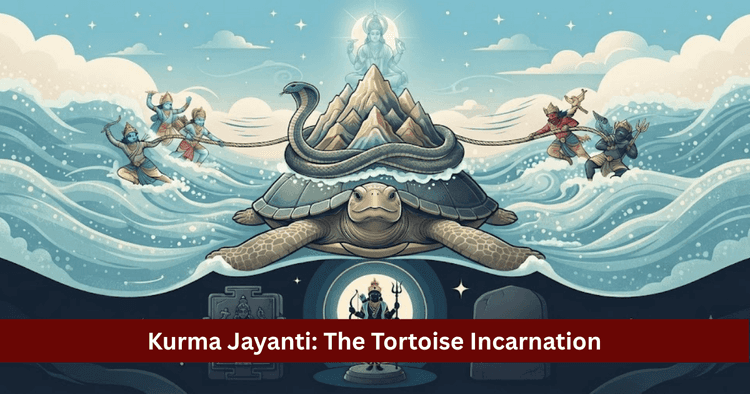
Table of Contents
Panchang Description And The Astrological Dimensions Of Kurma's Advent
According to the classical Vedic calendar (Panchanga), the Linga Purana, the Padma Purana, and the Eighth Canto of the Srimad Bhagavata Mahapurana, the full moon day of the bright fortnight in the month of Vaishakha—Vaishakha Purnima—is reverently observed as Kurma Jayanti. This auspicious tithi commemorates the divine descent of Lord Sri Hari Vishnu’s second incarnation: Lord Kurma (The Tortoise Avatar). Embodying patient, unyielding fortitude, Lord Kurma descended to the bottom of the cosmic ocean during the epic churning (Samudra Manthan) to bear the colossal, sinking Mount Mandara upon his diamond-hard shell, stabilizing the cosmic endeavor for universal welfare.
From an astronomical and astrological standpoint, Vaishakha Purnima represents a state of energetic equilibrium between solar and lunar polarities. During this alignment, Lord Surya Deva transits near the final degrees of his deep exaltation in fiery Aries (Mesha), while the Moon shines with all 16 kalas across the asterisms of Vishakha (ruled by Jupiter) or Anuradha (ruled by Saturn). In Vedic astrology, Lord Kurma is revered as the presiding sovereign deity governing Saturn (Shani Deva - the karaka of endurance, longevity, patience, discipline, and karmic stability). Just as a tortoise withdraws its limbs to remain poised, centered, and long-lived, honoring Lord Kurma pacifies an agitated Saturn, stills internal restlessness, counteracts business volatility, and provides an enduring foundation to life.
| Astrological & Advent Factor | Scriptural, Astrological, and Puranic Detail |
|---|---|
| Sacred Tithi & Timing | Vaishakha Month | Shukla Paksha Purnima (15th Lunar Day) | Pradosha Vyapini |
| Lunar & Solar Alignment | Vishakha / Anuradha Nakshatra | Sun in Aries, Full Moon in Libra/Scorpio axis |
| Avataric Sequence | Lord Vishnu's 2nd Major Incarnation (Kurma / Kachhapa Avatar) |
| Presiding Planetary Deity | Saturn (Shani Deva — governor of perseverance, longevity, and balance) |
| Manifest Divine Form | Vast cosmic tortoise spanning hundreds of thousands of yojanas with a vajra-hard shell |
| Central Historical Event | Churning of the Ocean of Milk (Kshirasagara), stabilizing Mount Mandara, advent of 14 treasures |
| Sacramental Media | White/yellow sandalwood, tulsi leaves, holy Ganga water, panchamrita, black sesame, barley, durva grass |
| Principal Sacred Sanctuary | Sri Kurmam Temple (Srikakulam, Andhra Pradesh — the only ancient Kurma peetham) |
| Bestowed Spiritual Fruit | Pacification of Saturn afflictions (Sade Sati, Dhaiya), Vastu rectification, commercial and emotional stability, longevity |
To align with the stabilizing grace of Lord Kurma on this sacred day, an aspirant should observe the following classical disciplines from dawn:
- Awaken before sunrise during Brahma Muhurta, bathing in ambient water infused with sacred Ganga water.
- Don clean white or yellow garments, offering a water libation (Arghya) of raw rice and water from a copper vessel to the rising Sun.
- Arrange a sacred altar on a clean wooden platform covered with yellow silk, installing a metal tortoise icon (cast in brass, copper, or silver) or a Shaligram shila.
- Place the metal tortoise inside a shallow copper or bronze vessel filled with fresh water, ensuring its lower shell rests in water to honor its aquatic nature.
- Consecrate the icon with Panchamrita, Ganga water, and rose water; anoint it with white sandalwood paste, yellow blossoms, fresh durva, and tulsi leaves.
- Offer cooling, grounding summer delicacies to soothe cosmic exertion—such as sweetened cow’s milk kheer (payasam), roasted barley sattu sweets, butter with rock sugar, and hydrating melons.
- Visit a natural reservoir, river, or pond to feed wheat-dough balls to fish and living tortoises.
- Recite the Kurma Dwadashanama Stotram, the Vishnu Sahasranama, or the Kurma Mula Mantra for at least 108 repetitions using a tulsi or rudraksha mala.
- Light a four-wick mustard oil lamp beneath a Peepal tree or before Lord Shani in the evening.
- Practice inward sensory withdrawal throughout the day—eschewing anger, rash decisions, and untruthful speech to emulate the patience of the tortoise.
Puranic Lore: The Churning Of The Ocean And The Sinking Of Mandara
According to the Srimad Bhagavata Purana (Canto 8), the Kurma Purana, and the Vishnu Purana, when Indra and the devas were stripped of their divine majesty due to the curse of Sage Durvasa, the asuras established dominance over the celestial realms.
The Sinking of Mount Mandara and the Despair of the Gods
Acting upon Lord Vishnu’s counsel, the devas and asuras established a temporary truce to churn the Ocean of Milk (Kshirasagara) to extract the nectar of immortality (Amrita):
- Mount Mandara was uprooted to serve as the churning rod (mathani), and the serpent king Vasuki was coiled around it to act as the churning rope (neti).
- However, as the intense churning began, the oceanic abyss offered no solid bedrock to support the colossal mass. The heavy mountain began sinking rapidly into the depths of Patala (the nether regions).
- Panic seized both celestial and demonic hosts; if the mountain vanished into the abyss, the churning would collapse, rendering the revelation of Amrita and vital cosmic medicines impossible.
- The devas clasped their palms in desperate prayer, calling out to Lord Vishnu: "Save us, O Lotus-Eyed Sovereign! Uphold the cosmos, O Lord of the Universe!"
Lord Vishnu's Vast Tortoise Manifestation
Moved by their earnest surrender, Lord Sri Hari assumed the form of an immense, magnificent cosmic tortoise (Kurma) spanning one hundred thousand yojanas, endowed with a carapace harder than celestial diamond (vajra):
- Diving into the primordial ocean, Lord Kurma submerged himself beneath the vortex and effortlessly hoisted the sinking mountain upon his broad back.
- As Mount Mandara spun violently during the churning, the grinding friction of its rocky base against the Lord’s impenetrable shell felt merely like a soothing scratch to him: "Kanduyanena sukhinah kurutat kurmamurttih."
- Anchored firmly upon this divine bedrock, the churning resumed safely, leading to the emergence of the lethal Kalakuta poison, Kamadhenu, Airavata, Uccaihshravas, Kalpavriksha, the Kaustubha gem, Goddess Mahalakshmi, and ultimately Dhanvantari bearing the fourteen divine gems and the vessel of Amrita.
Astrological Analysis: Pacifying Saturn, Sade Sati, And Vastu Dynamics
In Vedic astrology, worshipping Lord Kurma represents the quintessential remedy for establishing balance during turbulent planetary cycles:
1. The Living Archetype of Saturn (Shani Deva)
- Saturn governs deliberate pacing, protracted effort, perseverance, discipline, humility, and enduring service.
- The tortoise moves slowly yet consistently, reaching its destination through steady persistence. Its extraordinary lifespan mirrors Saturn's qualities of longevity (Ayush) and steadfast endurance.
- Those undergoing Shani Sade Sati, Kantaka Shani, Ashtama Shani, or experiencing Saturn’s debilitation in Aries will find mental calm, psychological groundedness, and relief from chronic delay by taking refuge in Lord Kurma.
2. The 'Kurma Prishta' Principle in Vastu Shastra
In structural and architectural science (Vastu Shastra), the energetic bedrock of a dwelling is likened to Kurma Prishta (Tortoise Foundation):
- Just as Lord Kurma bore the weight of Mount Mandara, positioning a metal or crystal tortoise in a shallow bowl of water in the North or East quadrant stabilizes the energetic aura of the home.
- This placement counteracts commercial downturns, cushions against sudden monetary losses, and preserves accumulated assets by grounding chaotic energies.
| Astrological & Vastu Domain | Connection to Lord Kurma | Spiritual & Material Fruit |
|---|---|---|
| Saturn Pacification | Embodiment of slow pace, endurance, and longevity | Alleviation of Sade Sati distress, freedom from deep fatigue and despondency |
| Vastu Harmonization | Archetype of the universal support and foundation | Dissipation of structural flaws, induction of positive flow, financial stabilization |
| Commercial Protection | The unyielding carapace principle | Resistance to market volatility, protection of capital and commercial ventures |
| Sensory Restraint | Retraction of limbs within the protective shell | Quelling of mental restlessness, deepening of dhyana and contemplative awareness |
Liturgical Protocol: Sacred Hymns And The Kurma Mantras
Engaging with Lord Kurma during the Pradosha window of Vaishakha Purnima should be observed with composed mindfulness:
1. Contemplative Verse (Dhyana Shloka)
Offer yellow petals and raw rice while visualizing the vast, tranquil form of the Lord:
Mandare bhramati kshire kacchapam roopamasthitah.
Dhritavan prishthato bhoomim kurmaroopaya te namah.
Achalaya vishalaya lokakalyanakarine.
Narayanaya shantaya kurmatmane namo namah.
2. The Sacred Kurma Formulas (Mula Mantras)
For removing persistent instability and mitigating severe Saturnian afflictions, recite either of these classical mantras using a tulsi or sandalwood mala:
Om Aam Hreem Krom Kurmasanaya Namah.
or
Om Namo Bhagavate Kurmaya Dharanidharaya Swaha.
Philosophical Meaning:
"Salutations to the Supreme Sovereign manifesting as the divine Tortoise, the steadfast bedrock of all creation, who bore Mount Mandara upon his back. May You dissolve all volatility within my life and bless my mind with unshakable peace and grounded strength."
Sacred Sanctuary: The Mysteries Of Sri Kurmam Temple
Located in the Srikakulam district of Andhra Pradesh, India, the historic Sri Kurmam Temple is the world’s most prominent ancient sanctuary exclusively consecrated to Lord Vishnu’s Kurma avatar:
- Sanctum Iconography: Rather than an anthropomorphic deity, the inner sanctum enshrines a large, fossilized black stone representing the carapace (back) of the tortoise.
- Dual Flag-Posts (Dhwaja-Stambhas): Unlike standard Hindu temple architecture that features a single flag-post, Sri Kurmam houses two distinct Dhwaja-Stambhas, representing the dual balance of supreme cosmic forces.
- Tortoise Conservation: The temple complex features a sacred lake (Swetha Pushkarini) and a dedicated habitat where hundreds of living tortoises are actively conserved and fed by visiting pilgrims seeking ancestral peace.
Philosophical Essence: Sensory Withdrawal As The Key To Equilibrium
In the second chapter of the Srimad Bhagavad Gita, Lord Krishna invokes the analogy of the tortoise when delineating the character of the enlightened, steady-minded sage (Sthitaprajna):
Yada samharate chayam kurmo'nganiva sarvashah.
Indriyanindriyarthebhyastasya prajna pratishthita.
Meaning: When an aspirant withdraws the senses completely from sensory objects—just as a tortoise pulls all its limbs safely beneath its hard carapace—their spiritual awareness becomes firmly anchored in wisdom.
Kurma Jayanti serves as a timeless spiritual reminder that whenever the storms of life intensify and external circumstances grow turbulent, the path to triumph lies not in restless reaction, but in centered self-containment. By building internal patience and an unyielding core, an individual can support great responsibilities and emerge from life's churnings with poise and clarity.
FAQ
On which lunar date is Kurma Jayanti observed?
Kurma Jayanti is observed annually on the full moon day of the waxing fortnight of the month of Vaishakha (Vaishakha Purnima).
Why did Lord Vishnu take the Kurma (Tortoise) incarnation?
During the churning of the ocean (Samudra Manthan), Mount Mandara lacked a solid base and began sinking into the cosmic abyss; Lord Vishnu assumed the Kurma form to dive beneath the ocean and uphold the mountain upon his back.
Which planetary influence is associated with Lord Kurma in Vedic astrology?
Lord Kurma is the presiding deity of Saturn (Shani Deva), embodying patience, endurance, groundedness, and longevity.
Where is the world-renowned temple dedicated to Lord Kurma located?
The most prominent historic shrine is the Sri Kurmam Temple, located in the Srikakulam district of Andhra Pradesh, India.
What is the spiritual significance of feeding tortoises on Kurma Jayanti?
Feeding living tortoises and aquatic life on this day helps placate afflictions related to Saturn, neutralizes karmic imbalances, fosters peace of mind, and invokes blessings for longevity and stability.
Get your accurate Kundali
Generate KundaliDid you like it?
Author
Pt. Suvrat Sharma (63)
Experience: 20
Consults About: Family Planning, Career
Clients In: Punjab, Haryana, Delhi
Share this article with friends and family
WELCOME TO
ZODIAQ
Right Decisions at the right time with ZODIAQ
