What Is The Spiritual Lore And Astrological Science Of Marriages And Auspicious Rites In Vaishakha?
By Pt. Nilesh Sharma
Vaishakha Wedding Muhurtas, Akshaya Tritiya Nuptials, Tribala Shuddhi Science & Griha Pravesha Rites
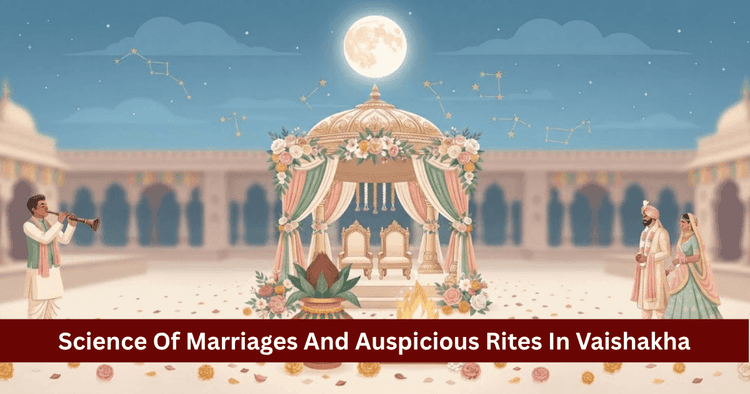
Table of Contents
Panchang Description And The Astrological Dimensions Of Vaishakha Nuptials
Within classical predictive astrology, Maharishi Narada's Narada Samhita, the Muhurta Chintamani and the canonical liturgical directives of the Jyotirvidabharana, the sacred lunar month of Vaishakha is celebrated as the foremost and most fertile season of the year for solemnizing the supreme rite of passage-the Panigrahana Samskara (Sacred Marriage)-alongside domestic housewarmings (Griha Pravesha), sacred thread ceremonies and commercial inaugurations. As the thirty-day solar hiatus of Kharmas (the Sun's transit through Jupiterian Pisces) concludes with the Aries ingress (Mesha Sankranti), auspicious celebrations resume across the Indian subcontinent.
From an astronomical perspective, the astrological primacy of Vaishakha for nuptial rites stems from the harmonic positioning of the Sun and Jupiter. Throughout this month, Lord Surya Deva transits his sign of deep exaltation in cardinal fiery Aries (Mesha), infusing the terrestrial sphere with vitality, moral conviction and physical stamina. Concurrently, the two foundational planetary guardians of marital longevity-Jupiter (Brihaspati), the indicator of the husband (Pati-karaka) for a bride and Venus (Shukra), the indicator of the wife (Patni-karaka) for a groom-stand uncombust and direct in the heavens, ensuring relational stability and domestic peace. Above all, the third waxing lunar day, Akshaya Tritiya, is revered across Vedic astronomy as a self-proven, unobstructed window (Abujha Muhurta), wherein marriages solemnized need no conventional chart scrutiny to bestow lasting harmony and enduring family welfare.
| Astrological Factor | Scriptural, Astrological and Liturgical Detail |
|---|---|
| Prescribed Liturgical Window | Throughout Vaishakha (Particularly Shukla Tritiya, Panchami, Saptami, Navami, Ekadashi, Trayodashi) |
| Solar Celestial Alignment | Sun exalted in Aries (Fiery cardinal transit generating supreme vitality) |
| Paramount Self-Proven Festival | Vaishakha Shukla Tritiya (Akshaya Tritiya / Akhateej - Unobstructed Muhurta) |
| Presiding Sovereign Divinities | Lakshmi-Narayana, Uma-Maheshvara (Lord Shiva & Parvati) and Prajapati |
| Mandatory Planetary Strengths | Solar strength (for groom), Jupiterian strength (for bride) and Venusian grace |
| Core Prescribed Auspicious Rites | Panigrahana Samskara, Griha Pravesha, Upanayana, foundational stone-laying |
| Auspicious Lunar Asterisms | Rohini, Mrigashira, Magha, Hasta, Swati, Anuradha, Mula, Uttara Ashadha |
| Classical Purity Checks | Tribala Shuddhi (Sun, Moon, Jupiter transit strength), 8th House vacancy |
| Bestowed Spiritual Fruit | Enduring marital harmony, virtuous progeny, steady prosperity, health |
To ensure that marriages and auspicious beginnings are solemnized according to classical protocols, families and practitioners should observe disciplined traditional guidelines:
- Commission a detailed assessment of Tribala Shuddhi (verifying favorable transits of the Sun, Moon and Jupiter) for both the bride and groom from an experienced practitioner.
- Ensure the chosen marriage ascendant (Lagna) is free from afflictions, keeping the critical eighth house entirely unoccupied (Ashtama Shuddhi) to protect health and longevity.
- Present the formal wedding invitation (Peeli Chitthi) reverently before the lineage deity (Kuladevata), village guardians and ancestors prior to public distribution.
- Even on an unobstructed day like Akshaya Tritiya, perform traditional remedial offerings to settle major compatibility frictions (Nadi, Bhakoot or Gana Dosha).
- Perform ancestral peace libations (Nandimukha Shraddha), matrika worship and Vedic fire ceremonies (Navagraha Homa) before setting up the wedding altar.
- Provide shaded seating, cool water stations, woven hand fans and cooling refreshments like sattu and fruit sharbat for wedding guests to balance summer heat.
- Offer meaningful gifts of clean textiles, copper water pitchers and honest support to the newly married couple during the solemn giving of the bride (Kanyadana).
- Direct the newlyweds to visit a shrine of Lord Shiva and Goddess Parvati following the ceremonies to seek blessings of mutual devotion and balance.
- Maintain complete satvic decorum throughout wedding celebrations, excluding intoxicants and upholding Vedic hymns and ethical conduct.
Akshaya Tritiya: The Unobstructed Window And Nuptial Immortality
In Sanatana tradition, the third lunar day of the waxing fortnight in Vaishakha is celebrated as Akshaya Tritiya (colloquially termed Akha Teej). It stands as the single most celebrated wedding day across the calendar year:
1. The Astronomical Foundation of the Abujha Window
- On this day, the primary cosmic luminaries-the Sun and the Moon-both occupy their respective signs of deep exaltation simultaneously.
- The Sun transits through Aries, while the Moon transits through Taurus (Vrishabha).
- The simultaneous exaltation of both luminaries clears minor temporal flaws (Doshas) across the celestial sphere. Every hour of this day and night is traditionally regarded as an inherently balanced window for solemnizing vows.
2. Enduring Marital Continuity
The word Akshaya translates as "that which never decays".
- According to the Bhavishya Purana and the Narada Purana, commitments made on Akshaya Tritiya carry lasting stability. Couples joining in marriage on this day receive blessings of enduring mutual respect, domestic peace and emotional support.
- Historical tradition also honors this day as the advent of Lord Parashurama, the beginning of Satya and Treta Yugas and the descent of the sacred Ganga upon earth.
| Auspicious Window | Planetary Alignment | Practical and Spiritual Significance |
|---|---|---|
| Akshaya Tritiya | Exalted Sun in Aries + Exalted Moon in Taurus | Self-proven window; universally auspicious for marriage |
| Vaishakha Shukla Panchami | Moon in Gemini/Cancer, Sun in Aries | Supports intellectual harmony, stability and family welfare |
| Vaishakha Shukla Ekadashi | Aligns with the grace of Mohini Ekadashi | Clears obstacles; ideal for domestic housewarmings and vows |
| Vaishakha Shukla Trayodashi | Pradosha window under Shiva-Parvati grace | Fosters longevity, relief from debt and deep marital affection |
Tribala Shuddhi: The Three Planetary Pillars Of Nuptial Harmony
In the Muhurta Chintamani, the foundational compatibility of a prospective marriage rests upon the transit strength of three specific planets:
1. Solar Strength (Surya Bala - Essential for the Groom)
The Sun represents the groom's vitality, physical health and social responsibility. A favorable transit of the Sun through the 3rd, 6th, 10th or 11th houses from the groom's natal Moon sign indicates physical stamina and professional clarity. The Sun's exalted status in Vaishakha naturally supports solar strength across many birth charts.
2. Jupiterian Strength (Guru Bala - Essential for the Bride)
Jupiter signifies the bride's marital happiness, mutual respect and family continuity. Favorable transits of Jupiter through the 2nd, 5th, 7th, 9th or 11th houses from the bride's natal Moon sign indicate relational balance and emotional maturity.
3. Lunar Strength (Chandra Bala - Common to Both)
The Moon governs the emotional harmony and psychological rapport between the couple. Ensuring the Moon does not transit the difficult 4th, 8th or 12th houses from either partner's natal Moon on the wedding day protects peace of mind. The waxing Moon of Vaishakha Shukla Paksha brings natural optimism and emotional warmth to new beginnings.
Housewarmings (Griha Pravesha) And Commercial Inceptions
Vaishakha's favorable alignments extend beyond wedding ceremonies to include the consecration of newly constructed homes and the launch of professional enterprises:
- New Home Consecration (Apurva Griha Pravesha): The Matsya Purana identifies Vaishakha as one of the three prime months (alongside Magha and Phalguna) for entering a new residence, ensuring physical comfort and household peace.
- Business Openings and Gold Acquisitions: Commencing a trade registry, purchasing gold or opening a business on Akshaya Tritiya is traditionally believed to attract lasting commercial stability and ethical prosperity.
- Vastu Protocol: During housewarmings in Vaishakha, placing a fresh water urn filled with cool spring water and rose petals in the North-East (Ishanya) quadrant helps cool structural heat, inviting balanced energy into the home.
Philosophical Essence: The Spiritual Union Of Two Souls
The observation of marriages and auspicious rites during Vaishakha reflects a core principle of Sanatana philosophy regarding household life (Grihastha Dharma):
"Marriage is not a commercial transaction or a temporary convenience; it is a sacred partnership between two souls dedicated to walking the paths of duty, prosperity and spiritual growth together."
The intense summer heat of Vaishakha offers an enduring metaphor: just as seasonal heat tests nature, daily life brings unexpected challenges, financial pressures and emotional trials. A resilient marriage is built on cooling that external heat through patience, understanding and mutual respect.
The wedding hymns of Akshaya Tritiya remind us that when two individuals unite their lives with honesty, kindness and devotion, their partnership transcends temporary ups and downs, becoming an enduring sanctuary of peace and love.
During this sacred month of Vaishakha, let us honor the ethical traditions of marriage, offer sincere blessings to newly married couples, establish our households upon principles of hospitality and kindness and keep the living values of our heritage alive in daily life.
FAQ
Why is Vaishakha considered an ideal month for weddings and auspicious rites?
Because the solar hiatus of Kharmas concludes and the Sun enters its exaltation sign in Aries, bringing vitality and favorable planetary transits for both the bride and groom.
Why is Akshaya Tritiya termed an 'Abujha Muhurta'?
Because on this day both the Sun (in Aries) and the Moon (in Taurus) are exalted simultaneously, creating a rare cosmic harmony where every moment is naturally auspicious without complex calendar calculations.
What is 'Tribala Shuddhi' in wedding astrology?
Tribala Shuddhi refers to verifying favorable planetary transits of the Sun for the groom, Jupiter for the bride and the Moon for both partners to ensure physical health, mutual respect and emotional harmony.
Is it auspicious to conduct a housewarming (Griha Pravesha) during Vaishakha?
Yes. Classical Vastu treatises and the Matsya Purana designate Vaishakha as one of the three most auspicious months of the year for entering a new residence.
Which lunar asterisms (Nakshatras) are preferred for marriages in Vaishakha?
The most favorable asterisms include Rohini, Mrigashira, Hasta, Swati, Anuradha, Uttara Ashadha and Uttara Bhadrapada.
Get your accurate Kundali
Generate KundaliDid you like it?
Author

Pt. Nilesh Sharma (63)
Experience: 20
Consults About: Family Planning, Career
Clients In: Punjab, Haryana, Delhi
Share this article with friends and family
WELCOME TO
ZODIAQ
Right Decisions at the right time with ZODIAQ
