What Is The Spiritual Essence Of Mohini Ekadashi In Vaishakha Month?
By Pt. Abhishek Sharma
Vaishakha Shukla Ekadashi, Nectar Distribution Lore, Dhrishtabuddhi Redemption & Fasting Protocol
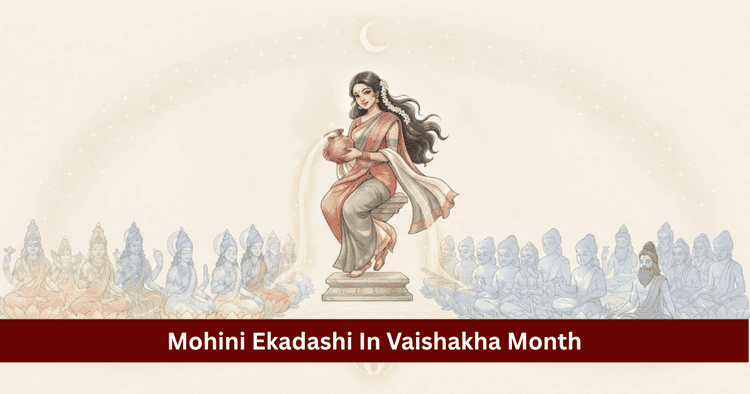
Table of Contents
Panchang Description And The Astrological Dimensions Of Mohini Ekadashi
Within classical predictive astrology, the Kurma Purana, the Padma Purana and the liturgical guidelines of the Nirnayasindhu, the eleventh lunar day of the waxing fortnight in the month of Vaishakha is canonically celebrated as Mohini Ekadashi. Among the twenty-four annual Ekadashi observances, this sacred day is uniquely associated with dissolving compulsive attachments, refining the senses and soothing deep emotional agitation.
From an astronomical perspective, Mohini Ekadashi occurs as Lord Surya Deva approaches the concluding degrees of his deep exaltation in cardinal fiery Aries (Mesha). Concurrently, the Moon transits through discerning asterisms, encouraging practitioners to quiet the senses and regain inner focus. During this intense dry season, physical dehydration and environmental heat can amplify cognitive restlessness and instinctual cravings. The Sanskrit designation Mohini translates as "that which enchants and dissolves delusion". According to classical Puranic history, following the churning of the cosmic ocean (Samudra Manthana), Lord Sri Hari Vishnu assumed the enchanting feminine form of Mohini on this exact lunar date to recover the vessel of nectar from turbulent forces, restoring cosmic equilibrium. Observing this fast clears worldly attachment, refines mental discrimination and aligns the seeker with enduring spiritual freedom.
| Astrological Factor | Scriptural, Astrological and Liturgical Detail |
|---|---|
| Calendrical Station | Vaishakha Month | Shukla Paksha Ekadashi (11th Waxing Lunar Day) |
| Solar Celestial Position | Sun concluding its exaltation in Aries (Mesha) |
| Presiding Sovereign Divinity | Lord Sri Hari Vishnu (Manifested in the divine feminine Mohini form) |
| Fasting Modality | Complete fast (Nirjala), water fast or satvic fruit diet |
| Puranic Milestones | Churning of the Ocean, Nectar distribution, subduing Bhasmasura |
| Primary Sacramental Media | Yellow sandalwood paste, white lotus, fresh tulsi leaves, seasonal fruits |
| Concluding the Fast (Parana) | Following the passage of Hari Vasara on Dvadashi morning |
| Bestowed Spiritual Fruit | Dissolution of compulsive attachment (Moha), mental clarity, liberation |
To assimilate the transformative grace of Mohini Ekadashi, an aspirant should observe disciplined daily habits from early dawn:
- Consume a single, light satvic meal before sunset on the eve of the tenth lunar day (Dashami); strictly avoid lentils, chickpeas, honey, heavy oils and grains prepared by strangers.
- Awaken before sunrise during Brahma Muhurta, bathing in ambient cool water consecrated with sacred Ganga drops while mentally reciting: Om Namo Bhagavate Vasudevaya.
- Dress in clean white or unstitched yellow cotton attire, offering three continuous water libations mixed with red vermilion, unbroken raw rice and blossoms to Lord Surya Narayana from a copper pitcher.
- Cleanse the domestic altar, draping a wooden platform in clean yellow silk to install an icon of Lord Vishnu in his Mohini or Lakshminarayana form.
- Consecrate the deity with Panchamrita and fresh water, applying fragrant white sandalwood paste, unbroken rice, yellow blossoms and fresh tulsi leaves.
- Hold kusha grass, unbroken rice and water in the right palm, making a solemn vow (Sankalpa) to spend the day in self-restraint and mindfulness.
- Refrain from divisive arguments, deceitful speech and daytime slumber throughout the observance.
- Kindle a ghee lamp at dusk, maintaining nocturnal vigil through devotional reading of the Vishnu Sahasranama or chapters of the Srimad Bhagavatam.
- On Dvadashi morning, bathe early, feed a deserving person, gift an unglazed terracotta water pot and grains and conclude the fast within the approved astrological window.
Puranic Lore: The Nectar Theft And The Advent Of Mohini
In the Eighth Canto of the Srimad Bhagavata Purana and the Vishnu Purana, the churning of the milk ocean (Samudra Manthana) reaches its turning point when Lord Dhanvantari emerges bearing the golden vessel of nectar (Amrita Kalasha):
The Seizure of the Nectar by Demonic Forces
The moment the nectar appeared, chaotic forces seized the vessel by sheer physical strength. A fierce internal struggle erupted over who should drink first. Seeing this, the guardian deities turned toward Lord Sri Hari Vishnu, realizing that if destructive forces attained immortality, balance throughout the cosmic order would collapse.
The Divine Incarnation of Mohini
Responding to their prayers on Vaishakha Shukla Ekadashi, Lord Vishnu assumed the form of Mohini-an enchanting maiden radiating divine grace:
- Adorned in saffron silks, with delicate lotus eyes, a gentle smile and golden anklets chiming with every step, she stepped into the gathering holding the nectar pitcher.
- Captivated by her composure and beauty, the assembled forces set aside their weapons and rivalries.
- The assembly willingly handed the vessel into her care, declaring: "O beautiful one! Whatever division you determine shall be accepted by us without objection. Distribute the nectar with your own hands."
Preserving Cosmic Balance and the Legend of Rahu-Ketu
Mohini seated the gathering into two separate rows: the celestial guardians on one side and the demonic forces on the other.
- Through her commanding presence and gentle gaze, she held the attention of the turbulent forces while systematically pouring the nectar among the guardians of cosmic order.
- During the distribution, an entity named Svarbhanu disguised himself and sat among the celestials. The Sun and Moon quickly noticed the deception and signaled the Divine.
- The Lord deployed the Sudarshana Chakra, severing the impostor's neck; yet having tasted a drop of the nectar, the divided being survived across subtle realms as Rahu and Ketu.
- Once the distribution concluded, the Lord resumed his four-armed form. Order was restored across the worlds, demonstrating how divine wisdom guides raw strength toward balance.
| Symbolic Element | Narrative Manifestation | Underlying Philosophical Meaning |
|---|---|---|
| The Amrita Pitcher | Golden vessel of immortality | Enduring self-realization and spiritual liberation |
| The Asuras' Distraction | Captivated by external form | Losing higher purpose through sensory infatuation |
| Mohini's Presence | Divine grace and maya | The cosmic power that tests discernment |
| Sudarshana Chakra | Flaming discus of truth | The decisive cut of wisdom that severs illusion |
The Redemption Of Dhrishtabuddhi: Sage Kaundinya's Guidance
In the Padma Purana, Sage Vasishtha recounts the narrative of King Dyutiman and the merchant's son to Lord Sri Ramachandra, illustrating the redemptive power of this observance:
Along the banks of the Saraswati River lay the city of Bhadravati, governed by King Dyutiman. Within this city resided a wealthy merchant named Dhanapala, known for establishing public wells, shaded rest houses and drinking water stations.
The Downfall of Dhrishtabuddhi
Dhanapala had five sons, the youngest being Dhrishtabuddhi:
- Dhrishtabuddhi fell into compulsive gambling, drunkenness and profligate habits, squandering his family's wealth on fleeting indulgences.
- When advice failed to correct his behavior, his family eventually severed ties with him.
- Cast out of his community, he drifted into the wilderness, hunting animals and living as a desperate wanderer.
Sanctuary at the Ashram of Sage Kaundinya
One afternoon during the heat of Vaishakha, exhausted by hunger, thirst and illness, Dhrishtabuddhi stumbled into the forest hermitage of Sage Kaundinya:
- Sage Kaundinya was returning from his midday bath in the sacred river. Drops of water falling from the sage's garments brushed against Dhrishtabuddhi's brow.
- The touch of that consecrated water cleared his mental fog, awakening deep remorse for his wasted years.
- Weeping at the sage's feet, he pleaded: "Revered Sage! My life has been consumed by reckless actions. Please instruct me in a discipline that can cleanse this burden and bring peace to my heart."
Moved by his sincere remorse, Sage Kaundinya instructed him:
"Observe with complete sincerity the sacred fast of Mohini Ekadashi during the waxing fortnight of Vaishakha. This discipline dissolves accumulated karmic burdens like fire clearing dry brush."
Dhrishtabuddhi followed the sage's counsel, observing a complete fast on Mohini Ekadashi, keeping quiet vigil through the night and concluding his vows on Dvadashi morning. Through this dedicated practice, his compulsive tendencies quieted, his mind stabilized and he returned to an ethical, purposeful life.
Classical Liturgical Protocol For Worship
Worshipping Lord Vishnu on Mohini Ekadashi should be conducted with simplicity, cleanliness and sincere devotion:
- Altar Arrangement: Cover a clean wooden platform with unstitched yellow silk. Form an eight-petaled lotus with raw rice, placing a consecrated copper pitcher upon it topped with mango leaves and a coconut.
- Installation of the Deity: Seat an icon of Lord Vishnu in his Mohini or Lakshminarayana form or place the sacred Shaligram stone upon the platform.
- Anointing and Consecration: Bathe the icon with Panchamrita, followed by clear Ganga water. Apply fragrant white sandalwood paste, saffron and natural attar to cool the seasonal heat.
- Tulsi Offerings: Offer 108 fresh tulsi leaves. (Because tulsi leaves are not plucked on Ekadashi, gather them on the preceding day or collect naturally fallen unblemished leaves).
- Seasonal Offerings: Offer cooling summer foods-such as sweet muskmelons, watermelons, ripe mangoes, churned butter with rock sugar and roasted grain flour (sattu).
- Sacred Chanting: Kindle an unbroken ghee lamp, reciting the Vishnu Sahasranama and reading the traditional lore of Mohini Ekadashi.
- Concluding Prayers: Wave a camphor lamp before the altar, distributing consecrated water (Charanamrita) and seasonal fruits among family and visitors.
Metaphysics And Psychology: Transmuting Attachment Into Clarity
The deeper teaching of Mohini Ekadashi addresses human psychological tendencies:
1. The Nature of Delusion (Moha)
In classical philosophy, Moha refers to mistaking the transient for the eternal-attaching one's sense of self-worth to temporary wealth, youthful looks or passing social titles.
- On Mohini Ekadashi, the practitioner reflects on this dynamic: just as the chaotic forces were distracted by outer form and lost the nectar of immortality, a person pursuing sensory indulgence loses touch with inner peace.
- Observing this fast is a conscious practice in stepping back, calming cravings and reclaiming inner clarity.
2. Pacifying Mental Restlessness
In predictive Vedic astrology, the eleventh lunar tithi (Ekadashi) correlates with the influence of the Moon over the human nervous system. Fasting on this day rests the digestive tract, allowing metabolic energy to support mental clarity. For individuals experiencing anxiety, restless desires or emotional instability, this observance functions as a natural spiritual reset.
| Psychological Condition | Influence of Mohini Ekadashi | Resulting Inner Benefit |
|---|---|---|
| Compulsive Attachment | Recognition of transience | Healthy emotional detachment and poise |
| Restless Sensory Craving | Fasting and conscious self-restraint | Steady focus, stamina and self-command |
| Reactive Impulses | Contemplating divine poise | Patience, gentle speech and forgiveness |
| Guilt Over Past Mistakes | Dedication to ethical renewal | Clean conscience and renewed purpose |
Classical Guidelines For Breaking The Fast (Parana)
The spiritual benefit of an Ekadashi fast is integrated by concluding it within the approved astrological window on Dvadashi morning:
- Observing Dvadashi: The fast must be concluded on the morning of the twelfth lunar day (Dvadashi), following sunrise and before the tithi expires.
- Avoiding Hari Vasara: The first quarter (first six hours) of the Dvadashi tithi is designated as Hari Vasara. Partaking of regular meals during Hari Vasara is traditionally avoided; conclude the fast only after this period concludes.
- Concluding the Fast: On Dvadashi morning, bathe early, worship Lord Vishnu, feed an impoverished person or ascetic, gift an earthen water pot and grains and conclude the fast by taking a sip of sacred tulsi water followed by a light satvic meal.
Philosophical Essence: Recognizing The True Nectar
The celebration of Mohini Ekadashi offers an enduring spiritual reflection:
"Passing sensory pleasures are like mirages in the desert; the true nectar of life is found in quiet integrity, ethical clarity and self-knowledge."
The chaotic forces held the golden pitcher of nectar in their hands, yet turned away because their attention was caught by external appearance. Similarly, human beings possess the rare gift of conscious awareness, yet often squander their days pursuing hollow rivalries and fleeting validations.
On Vaishakha Shukla Ekadashi, let us look beyond superficial appearances. Let us quiet compulsive desires, speak with kindness and rediscover the calm, inexhaustible nectar of an open, peaceful heart.
FAQ
On which lunar date is Mohini Ekadashi observed?
Mohini Ekadashi is observed annually on the eleventh lunar day of the waxing fortnight of Vaishakha (Vaishakha Shukla Ekadashi).
Why did Lord Vishnu manifest in the feminine form of Mohini?
Following the churning of the ocean, Lord Vishnu manifested as Mohini to peacefully recover the vessel of nectar from destructive forces, ensuring balance and cosmic order.
What was the outcome of the fast for Dhrishtabuddhi in the Puranic narrative?
Under the guidance of Sage Kaundinya, Dhrishtabuddhi observed Mohini Ekadashi, which quieted his compulsive habits, cleared his past mistakes and restored his life to peace and dignity.
What special food offerings are traditionally presented on Mohini Ekadashi?
Offerings emphasize cooling summer hydration, including churned butter with rock sugar, roasted barley flour sweets, sweet melons, watermelons and fresh mangoes.
Why is breaking the fast during 'Hari Vasara' avoided?
The first quarter of the Dvadashi tithi is considered sacred to Lord Vishnu (Hari Vasara); breaking the fast during this specific window is traditionally avoided to maintain the full discipline of the observance.
Get your accurate Kundali
Generate KundaliDid you like it?
Author

Pt. Abhishek Sharma (63)
Experience: 20
Consults About: Family Planning, Career
Clients In: Punjab, Haryana, Delhi
Share this article with friends and family
WELCOME TO
ZODIAQ
Right Decisions at the right time with ZODIAQ
