What Is The Spiritual Lore And Sacred Practice Of Pitri Tarpana In Vaishakha?
By Pt. Sanjeev Sharma
Vaishakha Secret Ancestral Season, Skanda Purana Lore, Kusha-Sesame Science & Sun-Rahu Balance
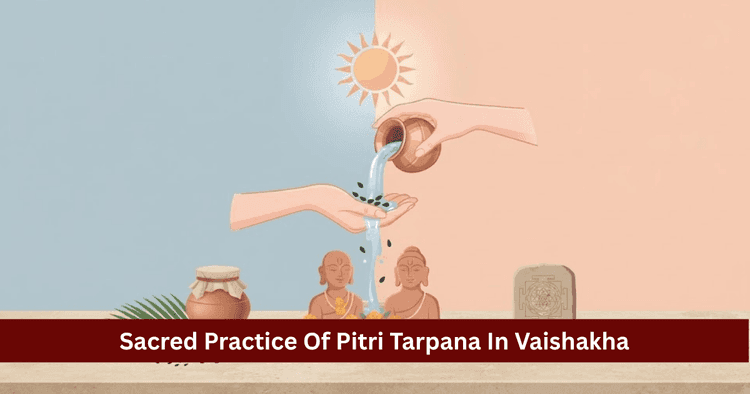
Table of Contents
Panchang Description And The Astrological Dimensions Of Vaishakha Pitri Tarpana
Within classical predictive astrology, the Garuda Purana, the Matsya Purana and the Vaishakha Mahatmya of the Skanda Purana, although the autumn Mahalaya fortnight (Pitru Paksha) during Ashvina is widely known, the month of Vaishakha is celebrated as the Secret Season for Ancestral Deliverance (Gupta Pitru Kaal). According to Sanatana spiritual manuals, during the northern solar course (Uttarayana) when intense summer heat envelops the physical world, departed ancestors (Pitris) navigating the subtle intermediate realms experience a heightened need for cooling libations, restorative shade and peace.
From an astronomical perspective, Vaishakha marks the transit of Lord Surya Deva through his sign of deep exaltation in cardinal fiery Aries (Mesha). Aries is an intense fire sign governed by Mars (Mangala). This celestial convergence amplifies the Fire Element (Tejas Tattva) across both physical and subtle dimensions. As external atmospheric temperatures peak, the subtle vehicles of departed ancestors are said to experience environmental drying. Scriptural texts observe that during this seasonal transition from winter to peak summer, ancestors turn toward their earthly descendants, hoping for cooling offerings of water, sacred black sesame seeds and dedicated charity. Offering libations facing south during the midday window-especially on the new moon (Amavasya), the eleventh waxing day (Ekadashi) and the full moon (Purnima) of Vaishakha-soothes ancestral heat, clears lingering lineage debts (Pitri Rina) and supports domestic peace.
| Astrological Factor | Scriptural, Astrological and Liturgical Detail |
|---|---|
| Prescribed Timeframe | Throughout Vaishakha | Focus on Amavasya, Ekadashi and Purnima |
| Canonical Daily Window | Midday (Kutapa and Rauhina Muhurta - approx. 11:30 AM to 01:30 PM) |
| Solar Celestial Alignment | Sun exalted in Aries (Fiery cardinal transit generating extreme heat) |
| Presiding Sovereign Divinities | Lord Janardana (Vishnu), Lord Yama and Aryama (Sovereign of Ancestors) |
| Primary Sacramental Media | Cool spring water, raw cow milk, black sesame seeds (Krishna Tila), white blossoms |
| Elemental Implements | Sacred kusha grass ring (Pavitri), copper, brass or bronze basin |
| Orientation and Gesture | Facing south | Pitri-Tirtha Mudra (Releasing water along the thumb root) |
| Scriptural Equivalent Merit | Equal to performing ancestral rites at Gaya; redeems 21 generations |
| Bestowed Spiritual Fruit | Protection of the lineage, domestic harmony, health, clearing of ancestral debts |
To assimilate the spiritual merit of Pitri Tarpana during Vaishakha, an aspirant should observe disciplined daily habits from dawn:
- Awaken before sunrise during Brahma Muhurta, bathing in ambient cool water consecrated with sacred Ganga drops and dress in clean white, unstitched cotton garments.
- Begin the ancestral rites during the midday window (Kutapa Muhurta), when solar energy directly aligns with the southern quadrant.
- Form a sacred ring (Pavitri) from unblemished stalks of kusha grass, wearing it upon the ring finger of the right hand.
- Fill a clean copper or brass basin with cool spring water, blending in a splash of raw cow's milk, black sesame seeds, Ganga water and white fragrant blossoms.
- Turn to face southward, lowering the posture onto the right knee or seating oneself comfortably with knees bent.
- Gather water into cupped palms, tilting the hands so the stream pours out smoothly between the index finger and the thumb (the Pitri-Tirtha).
- Recite the names and lineage affiliations (Gotra) of three generations of departed ancestors-both paternal and maternal-offering three continuous libations for each.
- Follow the libations by gifting an unglazed terracotta water pot filled with cool water, roasted grain flour (sattu), a hand fan, an umbrella and summer melons to an ascetic, laborer or person in need.
- Maintain composure throughout the day, refraining from anger, deceitful speech and heavy, tamasic meals.
Puranic Lore: The Skanda Purana And The Secret Ancestral Season
In the Vaishakha Mahatmya of the Skanda Purana, Sage Narada instructs King Ambarisha on the unique spiritual necessity of offering water to ancestors during the peak of summer:
Vaishākhe maline māsi trishārtāh pitaro nripa.
Ambudhārām prateekshante putrānām-ūrdhva-chetasām.
Tila-mishrena toyena yo dadyāt pitri-tarpanam.
Gayā-pinda-pradānena samam phalam-avāpnuyāt.
Meaning: O King! During the scorching weeks of Vaishakha, departed ancestors experience deep thirst in their subtle realms. They wait for their noble-minded descendants upon earth to pour forth cooling streams of consecrated water. Whoever offers ancestral libations with water blended with black sesame seeds during this month attains spiritual merit equal to offering sacred pinda balls at Gaya.
The Garuda Purana: Ancestral Transition from Winter to Summer
The Garuda Purana notes that the subtle body (Sukshma Sharira) after physical departure does not partake of coarse material foods but receives nourishment through subtle scents, water and focused devotional intention (Tanmatras):
- During the cooler months of the year, ambient moisture keeps subtle environments balanced.
- As the Sun enters Aries during Vaishakha, ambient heat intensifies across subtle dimensions as well.
- When descendants offer cool water with sincere remembrance, that water reaches the subtle realms as refreshing nourishment, clearing residual distress and fatigue.
The Subtle Science Of Kusha, Black Sesame and The Pitri-Tirtha
Traditional ancestral libations rely on natural materials and bodily channels designed to focus subtle intention:
1. The Kusha Grass Ring (Darbha Pavitri)
- Kusha grass is an organic bio-energetic insulator with a resilient cellular structure.
- Worn as a ring upon the ring finger, it helps ground the practitioner's bio-magnetic field, allowing focused meditative intention to project clearly into subtle realms without energetic depletion.
2. Black Sesame Seeds (Krishna Tila)
- Puranic texts describe black sesame seeds as sacred botanical elements linked to the cosmic presence of Lord Vishnu.
- Rich in dense natural oils and trace minerals, black sesame seeds absorb ambient negative vibrations and carry subtle nourishing qualities favored in traditional ancestral rites.
3. The Pitri-Tirtha Mudra (Pouring Through the Thumb Root)
- Classical palmistry and sacred anatomy recognize four spiritual channels in the human hand: the fingertips (Deva-Tirtha), the base of the little finger (Rishi-Tirtha), the palm center (Brahma-Tirtha) and the junction between the thumb and index finger (Pitri-Tirtha).
- The thumb relates energetically to the fire element and focused will. Releasing water over this threshold directs the energetic stream southward toward the subtle realm of the ancestors.
| Sacramental Component | Physical Material | Practical Function and Subtle Effect |
|---|---|---|
| Kusha Grass (Darbha) | Dried natural Darbha grass | Stabilizes the practitioner's energy; grounds intent |
| Black Sesame Seeds | Pure unhulled black sesame | Transmits subtle nourishment; dispels negative influences |
| Cool River Water | Pristine spring water & Ganga drops | Calms subtle thermal fatigue; brings lasting peace |
| Pitri-Tirtha Mudra | Base of thumb and index finger | Channels libations along the traditional southern axis |
Classical Mantras And Step-By-Step Libation Protocol
When performing Pitri Tarpana at midday during Vaishakha, follow this traditional protocol:
1. Invoking the Ancestral Presence
Hold water, black sesame seeds and kusha grass in cupped palms, reciting:
Om āgacchantu me pitara imam grihnantv-apo'njalim.
Asmat-kule mritā ye cha ye chānye jñātayo mama.
2. The Universal Ancestral Hymn (Pitri Gayatri)
Om devatābhyah pitribhyashcha mahā-yogibhya eva cha.
Namah svāhāyai svadhāyai nityameva namo namah.
3. Personal Ancestral Dedication
Pouring water smoothly over the thumb root three times for each individual ancestor, chant:
(Ancestor's Name) Gotra (Gotra Name) Vasu-roopas-tripyatām-idam sa-tilam jalam tasmai svadhā namah, tasmai svadhā namah, tasmai svadhā namah.
4. Universal Libation for Unremembered Souls
Conclude by offering a final libation for departed beings who have no living descendants to remember them:
Ye bāndhavā-'bāndhavā vā ye'nya-janmani bāndhavāh.
Te triptim makhilām yāntu yashchāsmatto'bhivāñchati.
Astrological Analysis: Harmonizing The Sun, Rahu and Lineage Influences
In predictive Vedic astrology, honoring ancestors during Vaishakha provides a steady remedy for deep-seated familial and karmic tensions:
1. Pacifying Sun-Rahu Afflictions (Pitri Dosha)
- When the Sun (signifying the father, soul and vital self) is shadowed by Rahu or Ketu, a person may experience self-doubt, strained relations with mentors or chronic professional delays.
- Performing ancestral libations while the Sun is exalted in Aries clears these shadow influences, strengthening self-respect, moral clarity and purposeful action.
2. Fostering Lineage Peace and Family Harmony
- The fifth house of a birth chart relates to children and creative continuity. Lingering ancestral debts often manifest as recurring domestic misunderstandings or obstacles in raising a family.
- Offering cool water and sesame seeds during Vaishakha brings ancestral blessings of peace, stability and family unity.
| Planetary Factor | Typical Household Expression | Remedial Result of Vaishakha Tarpana |
|---|---|---|
| Sun-Rahu Shadows | Career delays, friction with elders | Restores vitality, professional clarity and confidence |
| Fifth House Tensions | Challenges in family continuity | Supports domestic stability, child welfare and peace |
| Recurring Domestic Strife | Unresolved arguments, household friction | Harmonizes family dynamics, clears lingering resentment |
| Persistent Financial Drag | Stagnant savings despite steady work | Grounds financial decisions; preserves generational resources |
Recommended Sacramental Gifts Dedicated To Ancestors
Following the midday water libations, scriptures recommend offering five cooling gifts to those in need, dedicated to the memory of departed ancestors:
- Unglazed Water Pitchers (Udakumbha): Gifting fresh earthenware pots filled with cool drinking water, topped with ripe summer fruit.
- Roasted Grain Flour (Sattu): Sharing wholesome barley and chickpea flour to nourish travelers during the hot season.
- Woven Hand Fans (Vyajana): Giving bamboo or palm-leaf fans to provide cooling relief from summer heat.
- Umbrellas and Footwear (Chhatra & Upānaha): Providing sturdy umbrellas and shoes to manual laborers walking on sun-baked roads.
- Hydrating Melons: Gifting sweet watermelons and muskmelons to refresh and hydrate the body during summer.
Philosophical Essence: Gratitude As The Bridge Across Generations
Pitri Tarpana in Vaishakha reflects an essential spiritual truth:
"Our lives do not begin in isolation; we are the living expression of generations of sacrifice, dedication and care."
To forget those whose efforts built the foundation of our present lives is to sever our connection with our roots. True remembrance is not fear or superstition; it is an act of genuine gratitude (Kritajnata) that grounds the human heart.
When we pause beneath the summer sun to pour out a simple stream of cool water in memory of our ancestors, we remember that we are part of an ongoing continuum of life. Honoring those who came before us inspires us to live with integrity, kindness and stewardship for those who will follow.
During this sacred month of Vaishakha, let us turn southward with humility. Let us offer cool water and black sesame seeds in quiet remembrance, share shade and sustenance with those in need and walk our path supported by the enduring goodwill of our lineage.
FAQ
Why is Pitri Tarpana in Vaishakha called the 'Secret Ancestral Season'?
Because while the autumn Pitru Paksha is widely recognized, Vaishakha is the quiet, essential season when peak summer heat creates a subtle need for cooling water libations among departed ancestors.
What is the ideal time of day to perform Pitri Tarpana?
It should always be conducted during the midday window (Kutapa and Rauhina Muhurta - between 11:30 AM and 01:30 PM); ancestral libations are traditionally avoided at dawn, dusk or night.
Why are black sesame seeds necessary during ancestral libations?
Black sesame seeds carry subtle purifying properties, absorbing negative environmental vibrations and transmitting focused devotional intention to subtle dimensions.
What is the 'Pitri-Tirtha' in the human hand?
The Pitri-Tirtha is the energetic channel situated between the base of the thumb and the index finger, through which consecrated water is released toward the southern quadrant.
What charitable gifts are traditionally dedicated to ancestors in Vaishakha?
Traditional offerings include fresh clay water pots (Udakumbha), roasted barley-gram flour (Sattu), woven hand fans, umbrellas, sturdy shoes and sweet summer melons.
Get your accurate Kundali
Generate KundaliDid you like it?
Author

Pt. Sanjeev Sharma (63)
Experience: 20
Consults About: Family Planning, Career
Clients In: Punjab, Haryana, Delhi
Share this article with friends and family
WELCOME TO
ZODIAQ
Right Decisions at the right time with ZODIAQ
