What Is The Spiritual Lore And Sacred Practice Of Establishing Water Stations (Prapa) In Vaishakha?
By Pt. Narendra Sharma
Vaishakha Prapadana Lore, Skanda Purana Rites, Evaporative Cooling Science & Astrological Balance
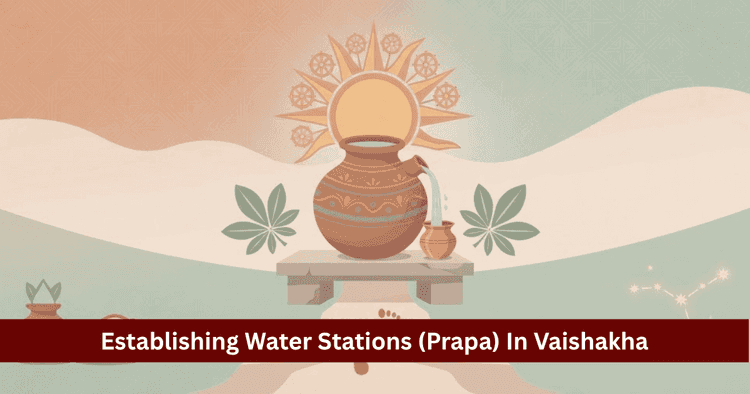
Table of Contents
Panchang Description And The Astrological Dimensions Of Prapadana
Within classical predictive astrology, the Vaishakha Mahatmya of the Skanda Purana, the Bhavishya Purana and the canonical directives of Hemadri's Danakhanda, the philanthropic establishment of free public drinking water stations-canonically termed Prapādāna or colloquially known as Pyau (Prapā)-is celebrated as the foremost among all charitable acts, fire offerings and pilgrim disciplines during the month of Vaishakha.
From an astronomical perspective, Vaishakha coincides with the transit of Lord Surya Deva through his sign of deep exaltation in cardinal fiery Aries (Mesha). Aries is an intense fire sign governed by Mars (Mangala). This celestial convergence radiates intense thermodynamic heat across the terrestrial plane, depleting aquifers, scorching unshaded walkways and causing severe dehydration among manual laborers, travelers and foraging animals.
In human physiology, this sharp seasonal shift leads to rapid fluid loss and metabolic exhaustion, depleting the cosmic Water Element (Apas Tattva). The Skanda Purana explicitly observes that during the height of Vaishakha, offering a single cup of clean, cool water to a parched traveler yields greater spiritual merit than offering thousands of elaborate meals during temperate seasons. By setting up shaded earthen water stations along busy pedestrian routes, temple approaches and village intersections, a householder not only mitigates personal and familial karmic debts but also provides cooling relief to ancestral lineages (Pitris) navigating the subtle realms.
| Astrological Factor | Scriptural, Astrological and Practical Detail |
|---|---|
| Prescribed Timeframe | Throughout the month of Vaishakha (Pratipada to Purnima) | Peak summer focus |
| Solar Celestial Alignment | Sun exalted in Aries (Fiery cardinal transit generating extreme heat) |
| Presiding Sovereign Divinities | Lord Sri Hari Vishnu (Madhava Form), Lord Varuna (Lord of Waters), Pitris |
| Primary Sacramental Media | Fresh porous terracotta pitchers (Kumbha), cool spring water, kusha grass |
| Ancillary Service Equipment | Breathable thatched awning, long-handled copper ladle, jaggery, unrefined sugar |
| Scriptural Equivalent Merit | Surpasses Ashvamedha and Vajapeya sacrifices; redeems 21 ancestral generations |
| Planetary Balance | Strengthens the Moon (Chandra - Water & Mind) and Jupiter (Brihaspati - Virtue) |
| Remediated Astrological Doshas | Sun-Mars Angaraka Dosha, Rahu-induced anxiety, Pitri Dosha, financial stagnation |
| Bestowed Spiritual Fruit | Pacification of mental and physical agitation, radiant health, freedom from fear |
To assimilate the physical and spiritual merit of Prapadana during Vaishakha, an aspirant should observe disciplined daily habits from dawn:
- Awaken before sunrise during Brahma Muhurta, bathing in ambient cool water consecrated with sacred Ganga drops while meditating upon Lord Varuna and Lord Vishnu.
- Offer three continuous water libations mixed with red vermilion, unbroken raw rice and blossoms to Lord Surya Narayana from a copper vessel.
- Select a clean, accessible public site-such as a shaded roadside, pilgrim walkway, village square or temple entrance-where pedestrians frequently pass.
- Erect a light awning made of bamboo thatch, palm fronds or unbleached cotton to shelter the water vessels from direct afternoon sunlight.
- Acquire fresh, unglazed earthenware pitchers; wash them thoroughly with clean water, mark their exteriors with auspicious vermilion symbols and tie sacred cotton cords around their necks.
- Fill the pitchers with pure, potable spring or well water, infusing the water with small amounts of dried vetiver roots (khus), white sandalwood paste or fresh tulsi leaves.
- Bed the pitchers upon a thick layer of clean river sand, keeping the sand moist throughout the day to support natural evaporative cooling.
- Provide a clean, long-handled copper or brass ladle so that water can be drawn hygienically without hands contacting the reservoir.
- Keep a supply of unrefined raw jaggery (Gur) or roasted chickpeas beside the station to offer travelers a small restorative bite before they drink.
- Replenish the pitchers attentively throughout the day, ensuring the vessels never sit empty and maintaining a humble spirit of service.
Puranic Lore: The Skanda Purana And The Inexhaustible Merit Of Prapadana
In the Vaishakha Mahatmya of the Skanda Purana, Sage Narada instructs King Ambarisha on the unique spiritual primacy of offering water during the summer heat:
Prapā kāryā vaishākhe yatnena prithiveepate.
Na hi toyapradānāddhi dānamanyadvishishyate.
Vastram dhānyam hiranyam cha yatkinchid deeyate bhuvi.
Tatsarvam triptaye naiva yāvattoyam na labhyate.
Meaning: O King! One should exert every effort to establish water stations (Prapā) during the month of Vaishakha; for within the three worlds, no charity surpasses the gift of cool water. Even if one gifts fine textiles, heaps of grain, land or precious gold, none of these gifts bring genuine peace to a human being who is burning with unquenched thirst until water touches their lips.
Freedom from Yamadutas and Ancestral Liberation
Both the Bhavishya Purana and the Skanda Purana recount the subtle spiritual effects of sustaining a public water station:
- When a laborer, ascetic or weary traveler pauses under a shaded awning, drinks cool water from an earthen pitcher and exhales a quiet sigh of relief, that sincere moment of comfort generates profound spiritual merit for the provider.
- Scriptural texts observe that quenching the thirst of living beings during peak summer dissolves deep-seated negative karmic imprints, clearing historical missteps and ethical lapses.
- Those who maintain public water stations are said to walk peaceful, shaded paths in their journey beyond this life, freed from the harsh trials traditionally associated with the realm of Yama.
The Biophysics And Practical Science Of Traditional Water Stations
Setting up an earthenware water station is an effective application of natural evaporative cooling and seasonal hygiene:
1. Porous Terracotta Pitchers (Evaporative Cooling)
- Clay pitchers contain microscopic pores throughout their walls, allowing trace amounts of water to seep through to the exterior surface.
- As warm summer breezes sweep across the moist outer clay, the water evaporates. This phase change absorbs latent heat from the vessel itself, naturally cooling the water within without electricity or artificial refrigerants.
2. Wet River Sand Bedding
- Bedding the rounded bases of the pitchers in clean, moist river sand creates a cool thermal barrier against the baking ground, insulating the water from ambient surface heat.
3. Therapeutic Aromatics and Herbal Infusions
- Infusing the water with Vetiver roots (Khus / Ushira) or Tulsi leaves naturally cools bodily heat (Pitta), imparting a refreshing aroma while providing gentle antimicrobial protection.
- Offering a small piece of jaggery before the water is an ancient Ayurvedic practice. Consuming cold water immediately after walking under intense sun can shock the throat; partaking of jaggery stimulates digestive saliva, provides natural electrolytes and prevents sudden temperature shocks.
| Equipment Component | Physical Material | Practical Function and Biophysical Effect |
|---|---|---|
| Unglazed Clay Pitchers | Porous, kiln-fired red or black clay | Natural evaporative cooling; alkalizes and clarifies the water |
| Moist Sand Foundation | Clean, washed river sand | Creates an insulated thermal bed, keeping the base chilled |
| Herbal Infusions | Vetiver root (khus), fresh tulsi | Calms gastric heat, reduces acidity, provides gentle antisepsis |
| Jaggery & Roasted Gram | Raw cane sugar, roasted chickpeas | Replenishes electrolytes; prevents sudden metabolic shock |
Astrological Analysis: Harmonizing The Moon, Jupiter and Fiery Planets
In predictive Vedic astrology, public water service is regarded as one of the most effective non-ritualistic remedies for difficult planetary transits:
1. The Moon (Chandra) - Water Element and Mental Tranquility
- The Moon governs the human nervous system, emotional balance and bodily fluids.
- When the Moon is debilitated, shadowed by the lunar nodes (Rahu or Ketu) or afflicted in a birth chart, the individual may experience anxiety, insomnia or emotional instability. Establishing or funding a water station during Vaishakha strengthens lunar energy, restoring emotional composure.
2. Jupiter (Brihaspati) - Dharma and Lasting Prosperity
- Unconditional public service without expectation of return is ruled by Jupiter.
- For individuals facing professional stagnation or financial delays, participating in water charity expands Jupiter's expansive, protective influence, supporting ethical success and social goodwill.
3. Pacifying Fiery Transits (Sun and Mars)
- The Sun's transit through Aries elevates internal fire and irritability. Offering cool water to thirsty travelers balances excessive solar and Martian heat, softening impulsive anger and easing domestic friction.
| Planetary Factor | Typical Challenge in Personal Chart | Remedial Benefit of Prapadana |
|---|---|---|
| The Moon (Chandra) | Chronic anxiety, mood swings, restless sleep | Deep emotional grounding, cognitive calm, inner peace |
| Jupiter (Brihaspati) | Obstacles in higher learning, financial blockage | Expands wisdom, invites ethical prosperity, social respect |
| Sun-Mars Afflictions | High blood pressure, sharp anger, disputes | Replaces volatile aggression with patient, constructive focus |
| Ancestral Lineage Debt | Recurring domestic obstacles, persistent delays | Brings cooling relief to ancestors, restoring household peace |
Canonical Liturgical Protocol And Dedication Formula
When dedicating a public water station during Vaishakha, follow this traditional protocol:
- Purifying the Site: Cleanse the immediate ground around the station with fresh water and sacred Ganga drops.
- Consecrating the Pitchers: Mark the clay pots with sacred vermilion and sandal paste, offering fresh blossoms.
- Invoking Lord Varuna: Meditate upon Lord Varuna, the celestial guardian of waters:
Namo namaste sphatika-prabhāya sushveta-hārāya sumangalāya.
Supāsha-hastāya jhashāsanāya jalādhināthāya namo namaste. - The Dedication Vow (Sankalpa): Hold water, raw rice and kusha grass in the right palm, reciting:
Mama sakala-duritopashamanārtham, Shri-Vishnu-preety-artham cha,
Vaishākha māse trishārtānām jeevānām triptaye prapādānam karishye. - The Spirit of Service: Serve each passerby with quiet humility, remembering that honoring the physical thirst of a fellow traveler is a direct offering to the Divine residing within all beings.
Philosophical Essence: Universal Thirst And Selfless Service
The sacred practice of Prapadana in Vaishakha reflects an enduring insight into common humanity:
"Thirst knows no boundary of creed, status or identity; cool water brings comfort to every living being equally."
It is easy to confine one's care to personal ambitions and immediate circles. But when a person stands beneath the summer sun to hand a cup of cool water to a tired, dust-covered stranger, they participate in an ancient, unifying tradition of service.
The simple earthenware pitcher reminds us that true nobility is found in humility, accessibility and practical care for others.
During this sacred month of Vaishakha, let us look beyond our own comfort. Let us set up earthen water stations along busy walkways, share cool water and restorative sweets with weary travelers and live the timeless truth that caring for another is the highest expression of faith.
FAQ
Why is establishing a public water station (Prapa) considered the highest charity in Vaishakha?
Because extreme summer heat causes severe dehydration and physical distress; providing immediate, cooling relief to a parched person brings instant comfort, which classical texts praise above all material gifts.
Why is wet sand placed beneath the earthenware pitchers at a water station?
Moist river sand provides an insulated thermal bed, preventing ambient surface heat from warming the bases of the pitchers and supporting natural evaporative cooling.
What is the benefit of offering a small piece of jaggery along with water?
Consuming jaggery before drinking prevents sudden temperature shock to the digestive system, stimulates healthy digestive enzymes and provides natural energy and electrolytes.
Which planetary influences are balanced by maintaining a water station?
It strengthens the Moon (governing mental peace and bodily fluids) and Jupiter (governing ethical virtue and prosperity), while calming the fiery intensity of the Sun and Mars.
What spiritual fruit is promised in the Skanda Purana for this service?
The texts state that the provider is protected from untimely distress, brings spiritual relief to twenty-one generations of ancestors and attains lasting peace in the realm of Vishnu.
Get your accurate Kundali
Generate KundaliDid you like it?
Author
Pt. Narendra Sharma (63)
Experience: 20
Consults About: Family Planning, Career
Clients In: Punjab, Haryana, Delhi
Share this article with friends and family
WELCOME TO
ZODIAQ
Right Decisions at the right time with ZODIAQ
