What Is The Spiritual Essence Of Sant Surdas Jayanti On Vaishakha Shukla Panchami?
By Pt. Narendra Sharma
Vaishakha Shukla Panchami, Vallabhacharya Lore, Sovereign Of Vatsalya Rasa & Bhramargeet
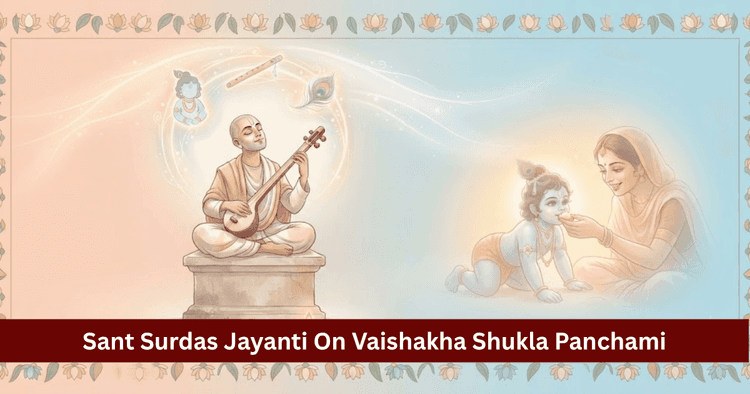
Table of Contents
Panchang Description And The Astrological Dimensions Of Surdas's Advent
Within classical predictive astrology, the Pushtimargiya Vaishnava tradition, the Chaurasi Vaishnavan ki Varta and the literary history of Braj, the fifth lunar day of the waxing fortnight in Vaishakha-Vaishakha Shukla Panchami-is celebrated as the advent day of Mahakavi Sant Surdas. This sacred tithi commemorates two towering spiritual figures of Sanatana heritage: Jagadguru Adi Shankaracharya, who revived the non-dual path of knowledge (Jnana Marga) and Sant Surdas, who reached the pinnacle of devotional love (Prema Bhakti) and parental affection (Vatsalya Rasa).
From an astronomical perspective, Vaishakha Shukla Panchami occurs during the exaltation of the Sun in cardinal fiery Aries (Mesha), while the Moon transits through communicative, devotional lunar mansions influenced by Mercury and Jupiter. This alignment fosters an integration of higher intellect and heartfelt devotion. Born around Samvat 1535 (1478 CE) in the village of Seehi near Delhi (or Runkata near Agra) to a modest Saraswat family, Surdas was blind from birth. Lacking physical eyesight, he was blessed through Lord Krishna's grace with divine inner vision (Divya Drishti). Through this inner sight, he composed detailed, intimate descriptions of the childhood pastimes of Lord Krishna, capturing maternal affection and childhood psychology in a manner that remains singular in world literature. As the preeminent poet among the celebrated Ashtachhap guild, he dedicated his life to liturgical kirtan at the Sri Nathji Temple in Govardhan under the guidance of Mahaprabhu Vallabhacharya.
| Astrological Factor | Scriptural, Sectorial and Literary Detail |
|---|---|
| Calendrical Station | Vaishakha Month | Shukla Paksha Panchami (5th Waxing Lunar Day) |
| Historical Nativity | Samvat 1535 (1478 CE) | Seehi (Faridabad) or Runkata (Agra) |
| Monastic Lineage | Pushtimarg (The Path of Grace / Vallabha Sampradaya) | Chief of Ashtachhap |
| Spiritual Preceptor | Jagadguru Mahaprabhu Sri Vallabhacharya Ji Maharaj |
| Primary Aesthetic Mood | Vatsalya Rasa (Sovereign Master), Sringara (Sweet Devotion) and Dasya |
| Canonical Compositions | Sursagar, Sursaravali and Sahitya-Lahari |
| Sacred Field of Practice | Gaughat (Agra), Sri Nathji Temple (Govardhan) and Parasoli (Chandra Sarovar) |
| Literary Dialect | Pure, lyrical and melodious classical Brajbhasha |
| Bestowed Spiritual Fruit | Awakening of intimate devotion, emotional calm, inner vision, freedom from ego |
To connect with the devotional mood of Sant Surdas on his appearance day, an aspirant should observe disciplined daily habits:
- Awaken before sunrise during Brahma Muhurta, bathing in ambient cool water consecrated with drops of sacred Yamuna or Ganga water.
- Dress in clean white or yellow cotton attire, seating an icon of Laddu Gopal or young Krishna at the domestic altar.
- Cleanse the deity with Panchamrita and fresh water, applying a mark of fragrant Gopi Chandana and presenting fresh tulsi leaves.
- Offer cooling summer foods-such as fresh churned butter (Makhan), rock sugar crystals, roasted barley sattu sweets and chilled raw mango coolers.
- Recite or listen to classical compositions of Surdas, such as Maiya Mori Main Nahin Makhan Khayo or Maiya Kabahin Badhaigi Choti.
- Keep the mind centered through the day with the repetition of Sri Krishna Sharanam Mama or the Maha Mantra.
- Extend practical support, clothing or cool drinking water to visually impaired or physically vulnerable individuals.
- Release personal pride and critical thoughts, cultivating gentle humility and loving care in daily interactions.
Encounter With Vallabhacharya: Transmuting Servitude Into Divine Intimacy
The transformative milestone in the life of Surdas occurred at Gaughat, an ancient landing along the Yamuna River between Agra and Mathura, where he met Mahaprabhu Vallabhacharya, the master of Shuddhadvaita (pure non-dualism).
"Why Do You Weep When Your Name Means Valor?"
Prior to meeting the master, Surdas lived in deep humility, singing songs of remorse and distant servitude, viewing himself as an unworthy sinner: "Prabhu hau sab patitan kau teeko" (O Lord, I am the foremost among the fallen).
Hearing these laments, Vallabhacharya addressed him directly:
"Sur hvai kai aiso ghighiyat kahe kau hai? Kachhu bhagavad-leela varnan kari."
(Meaning: Bearing the name Sur-which signifies courage-why do you weep in helpless despair? Sing instead of the joyful pastimes of the Divine!)
Vallabhacharya initiated Surdas into the Path of Grace (Pushtimarg), revealing the esoteric beauty of the Tenth Canto of the Srimad Bhagavatam-the path of divine favor (Anugraha). Through this instruction, Surdas's inner perspective expanded. The burden of guilt lifted, replaced by sweet affection for Krishna as a playful child, companion and loving protector. Surdas accompanied the master to Mount Govardhan, becoming the principal poet-singer of the Ashtachhap at the Sri Nathji shrine, composing spontaneous verses suited to the deity's daily service throughout the seasons.
Sovereign Of Vatsalya: Portraying The Heart Of Childhood
Literary scholars and spiritual masters recognize Sant Surdas as the unmatched master of Vatsalya Rasa (the aesthetic of parental love). The critic Acharya Ramchandra Shukla observed:
"Surdas has explored every quiet corner of parental affection."
Without physical vision, Surdas captured the micro-movements, innocent logic and gentle emotions of early childhood with startling precision:
1. Childhood Curiosity and Maternal Persuasion
When young Krishna resists drinking warm milk, he looks up at Mother Yashoda, posing a sweet, impatient question:
Maiya, kabahin badhaigi choti?
Kiti baar mohin doodh piyat bhai, yah ajahun hai chhoti...
(Mother, when will my braid finally grow long? You told me it would become thick like Balarama's if I drank milk, yet it remains so short!)
2. The Butter Theft and Innocent Defense
Caught with his hands inside a fresh butter pot, young Krishna invents a creative, earnest defense that disarms his mother's discipline:
Maiya mori, main nahin makhan khayo.
Bhor bhaye gaiyan ke pachhe, Madhuban mohin pathayo.
Chari pahar bansibat bhatkau, saanjh pare ghar aayo.
Main balak bahiyan ko chhoto, chheenko kis bidhi payo?
(Mother, I did not eat the butter! At dawn you sent me to the forest after the cows; I wandered all day and returned only at dusk. My arms are small; how could I reach the high hanging shelf? My friends must have smeared it upon my lips out of mischief!)
Mother Yashoda sets aside her small disciplinary stick, laughing through her tears as she gathers her son into her arms. This tender interaction elevates human affection into a meditation on divine closeness.
| Sacred Composition | Narrative Setting & Mood | Underlying Psychological Truth |
|---|---|---|
| "Maiya Kabahin Badhaigi Choti" | Impatience over slow hair growth | Captures how a child navigates parental encouragement |
| "Maiya Mori Main Nahin Makhan Khayo" | Discovered during butter play | Innocent defense in the face of discovery |
| "Jasoda Hari Palane Jhulavai" | Lullaby and sleep pastimes | The quiet tender bond between parent and infant |
| "Kahat Kat Pardesi Ki Baat" | The Bhramargeet (Gopi dialogue) | Direct personal devotion transcending abstract debate |
The Bhramargeet: Sincere Devotion Transcending Abstract Philosophy
The philosophical core of Surdas's masterpiece, the Sursagar, is preserved within the Bhramargeet (Song of the Black Bee). Following Krishna's departure for Mathura, his companion Uddhava-an intellectual scholar-journeys to Vrindavan to comfort the grieving cowherd maidens (Gopis).
- Uddhava's Abstract Philosophy: Uddhava instructs the maidens to abandon physical attachment, offering discourses on formless meditation, breath control and intellectual non-duality.
- The Gopis' Simple Devotion: Pointing toward a wandering black bee (Bhramara), the maidens respond with unvarnished, heartfelt love:
Uddhav, man na bhaye das-bees.
Ek hutau so gayau Shyam sang, ko avradhai ees.
(O Uddhava! We do not possess ten or twenty minds. We had only one heart and it departed with Krishna to Mathura; with what remaining mind can we meditate upon your formless Absolute?) - The Transformation of Intellect: Confronted with their unreserved dedication, Uddhava's scholarly distance softens into humility. Setting aside dry dialectic, he bows before their sincere love, returning to Mathura transformed. The Bhramargeet demonstrates that humble devotion touches the Divine more directly than distant intellectual argument.
Departure At Parasoli: "The Eyes Of A Wagtail Filled With Grace"
Toward the close of his life, Surdas retired to Parasoli (Chandra Sarovar) near Govardhan, the meadow celebrated as the setting of Krishna's autumn circle dance (Rasa Lila).
Realizing the poet was preparing to depart, Goswami Vitthalnath Ji remarked to the gathering:
"Pushtimarg ko jahaj jaat hai, jakau kachhu leno hoy so leu."
(The great vessel of the Path of Grace is setting sail; whoever wishes to gather spiritual treasure, let them do so now.)
When asked where his awareness rested in his final moments, Surdas touched his tanpura and sang his concluding verse:
Khanjan nain roop ras maate.
Atisai charu chapal aniyare, pal pinjara na samate.
(My eyes have become like wagtail birds, intoxicated by the beauty of the Divine; restless and wide with wonder, they can no longer be held within the cage of these eyelids.)
With these words, Surdas completed his earthly journey, merging his awareness into the divine presence he had celebrated throughout his life.
Philosophical Essence: Inner Vision Beyond Sensory Perception
The life of Sant Surdas offers an enduring spiritual truth: The Divine is perceived not through physical eyes but through the quiet sight of a sincere, loving heart.
Many live with physical vision yet remain blind to kindness, trapped in self-absorption, resentment and ambition. Surdas, without external sight, perceived the delicate movements of the Divine with extraordinary clarity. He showed that when human consciousness empties itself of calculation and turns toward simple, affectionate care, the Divine ceases to be a distant concept, becoming an immediate, living presence.
On Vaishakha Shukla Panchami, let us remember Sant Surdas by looking beyond superficial appearances, speaking with warmth and cultivating the quiet vision of a compassionate heart.
FAQ
When is Sant Surdas Jayanti observed in the traditional calendar?
Sant Surdas Jayanti is celebrated annually on the fifth lunar day of the waxing fortnight of Vaishakha (Vaishakha Shukla Panchami).
Who was the spiritual preceptor of Sant Surdas?
His preceptor was Jagadguru Mahaprabhu Sri Vallabhacharya Ji Maharaj, the founder of Pushtimarg and the philosophy of Shuddhadvaita.
Which aesthetic mood (Rasa) is Surdas most renowned for in literature?
Surdas is recognized as the supreme master of Vatsalya Rasa (parental affection) and early childhood psychology.
What are the primary literary compositions attributed to Surdas?
His foundational works include the Sursagar (containing the celebrated Bhramargeet), the Sursaravali and the Sahitya-Lahari.
What famous declaration did Goswami Vitthalnath make upon Surdas's departure?
He declared: "Pushtimarg ko jahaj jaat hai, jakau kachhu leno hoy so leu" (The vessel of the Path of Grace is setting sail; whoever wishes to receive spiritual treasure, let them gather it now).
Get your accurate Kundali
Generate KundaliDid you like it?
Author
Pt. Narendra Sharma (63)
Experience: 20
Consults About: Family Planning, Career
Clients In: Punjab, Haryana, Delhi
Share this article with friends and family
WELCOME TO
ZODIAQ
Right Decisions at the right time with ZODIAQ
