What Is The Spiritual Significance Of Sita Navami: The Inception Of Janaki?
By Aparna Patni
Vaishakha Shukla Navami, Pushya Nakshatra, King Janaka Golden Furrow Lore And Sacred Ethics
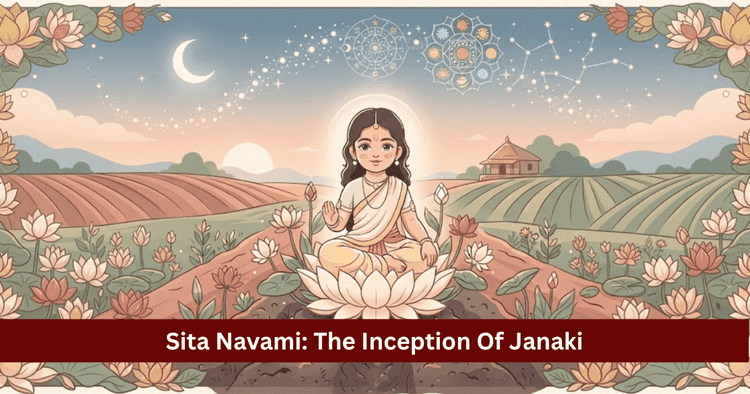
Table of Contents
Panchang Description And The Astrological Dimensions Of Sita Navami
Within classical predictive astrology, the Bala Kanda of Valmiki's Ramayana, the Shatapatha Brahmana and the liturgical guidelines of the Nirnayasindhu, the ninth lunar day of the waxing fortnight in the month of Vaishakha-Vaishakha Shukla Navami-is celebrated throughout the Indian subcontinent as Sita Navami (also revered as Janaki Navami or Sita Jayanti). Occurring exactly one lunar month following Sri Rama Navami (celebrated during Chaitra), this sacred day marks the appearance of Mother Sita, the primordial divine consort and direct embodiment of Goddess Mahalakshmi.
From an astronomical perspective, Vaishakha Shukla Navami aligns with intense solar dignity and stable lunar nourishment. Lord Surya Deva transits through his sign of deep exaltation in cardinal fiery Aries (Mesha), infusing the cosmos with vital warmth. Concurrently, the Moon aligns with Pushya Nakshatra, traditionally revered as the sovereign of lunar asterisms, governed by Saturn and presided over by Brihaspati (Jupiter). This celestial alignment grounds the earth element (Prithvi Tattva), fostering fertility, endurance and quiet strength. According to Valmiki's Ramayana, when King Janaka of Videha ploughed the sacrificial field with a golden plough during a severe drought, the tip of the blade (Seeta) unearthed a golden coffer containing infant Mother Janaki.
| Astrological Factor | Scriptural, Astrological and Liturgical Detail |
|---|---|
| Sacred Liturgical Station | Vaishakha Month | Shukla Paksha Navami (9th Waxing Lunar Day) | Midday Window |
| Asterism & Solar Position | Pushya Nakshatra | Exalted Sun in Aries |
| Avataric Classification | Direct Incarnation of Goddess Mahalakshmi (The Inherent Power of Rama) |
| Place of Appearance | The sacred soil of Mithila (Modern Janakpur Dham / Sitamarhi region) |
| Foster Parents | Queen Sunayana and Videharaja King Janaka (Daughter of the Earth) |
| Elemental Manifestation | The Earth Element (Prithvi Tattva - Bhumija, Parthivi, Kshama-Rupini) |
| Sacramental Media | Red/yellow silk, sacred vermilion, unblemished rice, lotus blossoms, sattu, fruits |
| Classical Devotional Hymns | Janaki Stotram, Sri Sita Ashtottara Shatanamavali, Ramacharitmanas verses |
| Bestowed Spiritual Fruit | Marital harmony, dissolution of domestic conflict, patience, moral fortitude |
To align with the virtues of Mother Sita and Lord Sri Rama on Sita Navami, an aspirant should observe disciplined daily habits from early dawn:
- Awaken before sunrise during Brahma Muhurta, bathing in ambient cool water consecrated with sacred Ganga drops while meditating upon Mother Janaki.
- Dress in clean red or yellow cotton attire, offering three continuous water libations mixed with red vermilion, unbroken raw rice and blossoms to Lord Surya Narayana.
- Prepare a dedicated altar by covering a wooden platform with clean red or yellow silk, installing an icon of Lord Sri Rama and Mother Sita in their united form (Yugala Swarupa).
- Perform Shodashopachara worship honoring Mother Sita with turmeric, sacred vermilion, white sandalwood paste, unbroken rice, fragrant blossoms and auspicious adornments (such as red bangles, vermilion and bindi).
- Present cooling summer offerings-such as roasted barley sattu sweets, saffron-scented rice pudding, sweet melons and raw mango coolers.
- During the midday window (between 11:00 AM and 01:00 PM), when the earth revealed the infant goddess, offer heartfelt prayers and flower petals at the domestic altar.
- Recite the classical Janaki Stotram or the Sri Sita Chalisa with contemplative focus.
- Recite the sacred formula Om Sri Sitayai Namah or Sri Janaki-Ramabhyam Namah at least 108 times using a rosary of tulsi beads.
- Gift auspicious articles, food, yellow clothing and an unglazed earthen water pot to a married woman, an ascetic or someone in need.
- Practice patience, gentle speech and forgiveness throughout the day, refraining from arguments, criticism or divisive speech.
Puranic Lore: The Drought Of Mithila And The Golden Furrow
In the sixty-sixth chapter of the Bala Kanda of Valmiki's Ramayana, King Janaka recounts the sacred appearance of Mother Sita to Sage Vishvamitra:
Atha me krishatah kshetram langalad-utthita maya.
Kshetram shodhayata labdha namna Seeteti vishruta.
Bhutalad-utthita sa tu vyavardhata mamatmaja.
Veerya-shulketi me kanya sthapiteyam-ayonija.
In ancient times, the kingdom of Mithila experienced a severe twelve-year drought. Parched fields yielded no grain and water reservoirs dried up under unyielding heat. Seeking relief for the citizens, royal preceptor Sage Shatananda advised King Janaka to perform a sacred earth sacrifice by ploughing the soil personally alongside Queen Sunayana using a golden plough.
The Emergence of the Golden Coffer and the Name 'Sita'
The philosopher-king Janaka accepted the instruction of the sages. On the ninth lunar day of the waxing fortnight of Vaishakha, under the auspicious asterism of Pushya, he guided the golden plough across the dry field:
- As the pointed blade of the plough-known in Sanskrit as Seeta-cut through the hardened soil, it struck a buried object.
- Clearing the earth away, King Janaka unearthed a radiant golden chest (Svarna Manjusha).
- Opening the casket, the king found a radiant infant maiden smiling peacefully upon a bed of lotus fibers.
- The moment King Janaka lifted the child into his arms, thunder rolled across the skies, releasing torrential rains across the parched plains of Mithila.
- Because she emerged from the furrow created by the plough blade, King Janaka named her Sita. She became celebrated as Janaki (daughter of Janaka), Maithili (princess of Mithila), Bhumija (born of the earth) and Ayonija (she who is not born of a mortal womb).
An Enduring Standard Of Patience, Dignity and Moral Courage
In Sanatana culture, Mother Sita represents far more than an ancient queen; she embodies the highest standard of quiet endurance, moral dignity and compassionate strength:
1. Choosing Hardship Over Regal Luxury
When Lord Rama was exiled to the Dandaka forest for fourteen years, Mother Sita set aside the comforts and attendants of the Ayodhya palace without hesitation. She recognized that true commitment remains steadfast through changing circumstances, walking the thorny forest trails beside her husband.
2. Unwavering Resolve Within Ashoka Vatika
Held captive in Lanka under constant threat, Mother Sita sat beneath the Ashoka tree, maintaining inner composure and moral clarity. Placing a simple blade of grass between herself and Ravana, she demonstrated that inner purity and moral rectitude hold greater power than physical force or imperial authority.
3. The Grace of Unconditioned Forgiveness
Like Mother Earth, who patiently endures physical burdens while providing nourishment to all beings, Mother Sita responded to life's trials with deep patience. Following the liberation of Lanka, when Hanuman sought permission to punish her former captors, she intervened, declaring that a noble heart responds to cruelty with understanding and grace.
| Spiritual Virtue | Scriptural Expression | Living Application |
|---|---|---|
| Commitment & Simplicity | Entering fourteen years of forest exile | Remaining faithful to ethical bonds during difficult times |
| Inner Fortitude | Holding steady resolve in Ashoka Vatika | Preserving dignity and character in the face of adversity |
| Unconditioned Grace | Forgiving her captors after the conflict | Releasing resentment and breaking cycles of hostility |
| Returning to the Earth | Returning to Mother Earth at Valmiki's hermitage | Resting in inner truth beyond the need for external validation |
Liturgical Protocol: Contemplation And Sacred Formulas
Worshipping Lord Sri Rama and Mother Sita on Sita Navami should be approached with cleanliness, sincerity and steady devotion:
- Contemplation (Dhyana): Visualize Mother Sita seated to the left of Lord Rama upon a golden throne, adorned in silk, radiating serene grace and holding a blue lotus:
Udbhava-sthiti-samhara-karineem klesha-harineem.
Sarva-shreyaskareem Seetam nato-aham Rama-vallabham. - Consecration and Anointing: Cleanse the icons of Sri Sita-Rama with Panchamrita and sacred water. Anoint the deities with cooling white sandalwood paste and vermilion.
- Offering Auspicious Adornments: Present sacred vermilion, green glass bangles, fragrant garlands and red silk to Mother Sita. Apply a touch of this consecrated vermilion to the forehead as a blessing of peace.
- Hydrating Food Offerings: Offer cooling summer foods, including roasted barley flour (sattu), saffron-infused milk sweets, sweet muskmelons and raw mango coolers.
- Recitation of the Janaki Stotram: Recite the classical hymn to dissolve household anxiety and cultivate inner patience:
Janaki namastestu namaste Raghu-nandane.
Namaste Mithiladheeshe namaste Janakatmaje.
Tvam mata sarva-lokanam tvam hi Narayana-priya.
Akhilanda-jagad-dhatri pahi mam sharanagatam.
Astrological Perspective: Harmonizing Marital And Relational Energies
In predictive Vedic astrology, Mother Sita embodies the harmonizing qualities of the Earth Element, the Moon (mental tranquility) and Venus (grace, beauty and devotion):
- Easing Marital Discord: When the seventh house of partnership is strained by Rahu, Ketu or Mars, observing the fast of Sita Navami and offering sacred vermilion to Mother Sita softens relational friction, restoring mutual respect.
- Softening Mars Afflictions: The fiery drive of Mars is balanced by the calming, grounded endurance associated with Mother Sita.
- Blessings of Longevity and Peace: Sincere observance on this day supports household stability, emotional maturity and mutual care within relationships.
Philosophical Essence: The Synthesis Of Strength And Duty
The observance of Sita Navami conveys an enduring truth: Where Lord Rama represents cosmic order (Maryada), Mother Sita embodies the living spirit of devotion, patience and conscious energy (Shakti).
Neither exists in isolation; ethical order and compassionate strength complement and complete one another. Mother Sita illustrates that enduring strength does not rely on aggressive dominance; it lives within patience, truthfulness and the courage to remain grounded during life's storms.
Sita Navami is an invitation to look inward-clearing away impatience, reactive anger and superficial judgment to cultivate the quiet dignity, generosity and inner peace that define Mother Sita's example.
FAQ
On which lunar date and asterism is Sita Navami observed?
Sita Navami is observed on the ninth lunar day of the waxing fortnight of Vaishakha (Vaishakha Shukla Navami), typically coinciding with the auspicious Pushya Nakshatra.
How did Mother Sita manifest on earth?
She appeared from the sacred soil of Mithila inside a radiant golden coffer, discovered by King Janaka while ploughing a sacrificial field to alleviate a severe drought.
Why is Mother Sita addressed as 'Ayonija'?
She is called Ayonija because she was not born of a mortal womb; she manifested directly from Mother Earth as an embodiment of divine grace.
Which classical hymn is traditionally recited on Sita Navami?
The Janaki Stotram, the Sri Sita Chalisa and verses from Valmiki's Ramayana and the Ramacharitmanas are traditionally recited on this day.
What spiritual benefits are associated with the observance of Sita Navami?
Observing the day with sincerity fosters marital harmony, dissolves domestic friction and cultivates patience, resilience and inner peace.
Get your accurate Kundali
Generate KundaliDid you like it?
Author

Aparna Patni (63)
Experience: 20
Consults About: Family Planning, Career
Clients In: Punjab, Haryana, Delhi
Share this article with friends and family
WELCOME TO
ZODIAQ
Right Decisions at the right time with ZODIAQ
