What Is The Spiritual Science Of Tulsi Seva And The Galantika Rite In Vaishakha?
By Pt. Nilesh Sharma
Vaishakha Dharapatra Rites, Shiva Lingam Cooling Science, Tulsi Summer Care & Astrological Balance
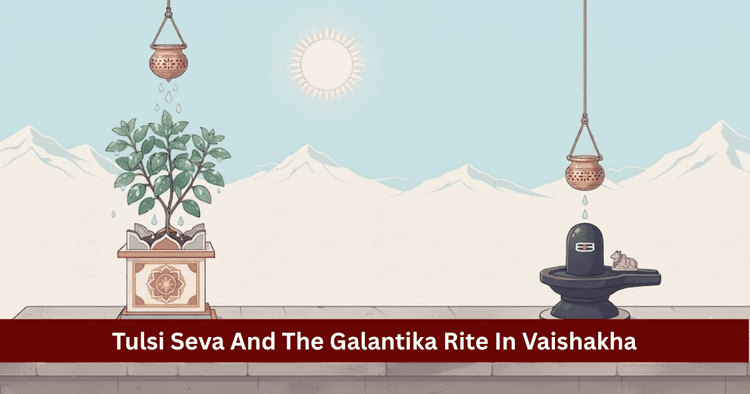
Table of Contents
Panchang Description And The Astrological Dimensions Of The Galantika Rite
Within classical predictive astrology, the Vidyeshvara Samhita of the Shiva Purana, the Padma Purana and the Vaishakha Mahatmya of the Skanda Purana, the month of Vaishakha is celebrated as the supreme period for aquatic charity, cooling therapies and botanical reverence. As Lord Surya Deva transits through his sign of deep exaltation in cardinal fiery Aries (Mesha), environmental heat across the northern plains reaches peak intensity. In this dry season, physical biology, flora and sacred temple icons all experience thermal strain.
From an astronomical and metaphysical perspective, Vaishakha represents the expansion of the Fire Element (Tejas Tattva) and the contraction of the Water Element (Apas Tattva). To offer cooling comfort to the sacred Shiva Lingam and the revered Tulsi plant, traditional manuals prescribe the installation of the Galantika (also known as the Dharapātra). A Galantika is a consecrated terracotta, copper or bronze pitcher suspended directly above the deity, equipped with a tiny aperture at its base threaded with sacred kusha grass or unbleached cotton cord. Through this mechanism, cool water drips drop by drop, day and night, over the stone lingam and the roots of the holy basil. This continuous stream calms the residual cosmic heat of the Halahala poison resting in Lord Shiva's throat, while shielding the Tulsi plant from scorching winds to preserve domestic peace and vitality.
| Astrological Factor | Scriptural, Astrological and Liturgical Detail |
|---|---|
| Prescribed Timeframe | Throughout the month of Vaishakha (Pratipada to Purnima) | Midday focus |
| Solar Celestial Alignment | Sun exalted in Aries (Peak solar radiation across the terrestrial plane) |
| Presiding Sovereign Divinities | Lord Sadashiva (The Shiva Lingam) and Mother Tulsi (Vrinda / Haripriya) |
| Core Sacramental Instrument | The Galantika / Dharapatra (Perforated clay or copper pitcher) |
| Primary Elemental Medium | The Water Element (Apas - Consecrated river water, milk, sandalwood, kusha) |
| Revered Botanical Species | The Holy Basil (Ocimum sanctum / Tulsi) |
| Foundational Puranic Lore | The cooling of the Halahala poison; Vrinda's steadfast devotion |
| Scriptural Equivalent Merit | Equal to 100,000 Mahamrityunjaya recitations and extensive philanthropic charity |
| Bestowed Spiritual Fruit | Protection against sudden mortality, soothing of mental anxiety, health |
To assimilate the cooling grace of the Galantika rite and honor Mother Tulsi during Vaishakha, an aspirant should observe disciplined daily habits from dawn:
- Awaken before sunrise during Brahma Muhurta, bathing in ambient cool water consecrated with sacred Ganga drops while meditating upon Lord Shiva and Mother Tulsi.
- Dress in clean white or unstitched cotton garments, offering three continuous water libations mixed with red vermilion, unbroken raw rice and blossoms to Lord Surya Narayana from a copper vessel.
- Select a fresh unglazed terracotta water pitcher (or copper vessel), drilling a small, delicate aperture in the center of its base.
- Thread a stalk of sacred kusha grass or natural cotton cord through the aperture so that water releases in a steady, drop-by-drop rhythm rather than a continuous stream.
- Suspend the vessel securely above the Shiva Lingam using a wooden tripod or cotton ropes, ensuring the drops fall directly upon the center of the lingam.
- Fill the vessel with cool spring water, a few drops of consecrated river water, raw milk, white sandalwood paste and fragrant vetiver root (khus).
- Suspend a similar small cooling pot above the domestic Tulsi plant or erect a light cotton awning (Mandapa) to protect its delicate leaves from harsh sunlight.
- Maintain quiet contemplation during the rite, silently repeating the sacred formula Om Namah Shivaya or the Mahamrityunjaya Mantra.
- Anoint the base of the Tulsi plant with cool water each morning, circumambulating it seven times and kindle a lamp of cow ghee at dusk.
- Refrain from cutting living foliage during the season, maintaining drinking water stations for birds, animals and weary travelers.
The Biophysics And Metaphysics Of Continuous Libation Upon The Shiva Lingam
In the Shiva Purana, it is recounted that during the churning of the cosmic ocean, when the lethal Halahala poison emerged, threatening all living beings, Lord Sadashiva gathered the venom into his palm and held it within his throat out of boundless compassion:
1. Soothing the Inner Flame of Halahala
The poison turned his throat a deep blue, earning him the name Nilakantha and generated intense internal heat throughout his physical form:
- During Vaishakha, as the exalted Sun generates peak heat, this internal thermal intensity is traditionally remembered as rising again.
- Devotees suspend the Dharapatra above the stone lingam to offer steady, cooling comfort.
- Classical manuals affirm:
Vaishakhe masi yo dadyat dharapatram Maheshvare.
Na tasya durlabham kinchit ihaloke paratra cha.
Meaning: Whoever suspends a cooling stream-pitcher over Lord Maheshvara during the month of Vaishakha finds nothing unobtainable in this world or the next.
2. Equivalent Merit of 100,000 Mahamrityunjaya Mantras
Sage Vyasa records in the Skanda Purana that maintaining a steady stream of water over the Shiva Lingam throughout Vaishakha yields spiritual merit equal to reciting the Mahamrityunjaya Mantra one hundred thousand times. This sustained libation acts as a traditional spiritual remedy against sudden accidents, chronic fatigue and underlying anxiety.
| Liturgical Element | Prescribed Sacramental Material | Physical and Spiritual Effect |
|---|---|---|
| The Vessel | Fresh unglazed clay or pure copper | Natural evaporative cooling; grounding earth energy |
| Kusha Grass Wick | Root and stem of sacred Darbha grass | Natural purification; regulates steady water drops |
| Aromatic Water | Sandalwood, vetiver, rose water, Ganga water | Calms fiery heat; fills the environment with soothing scent |
| Drop-by-Drop Flow | Unbroken, rhythmical dripping | Calms mental agitation; induces meditative focus |
Caring For Mother Tulsi: Protection And The Summer Canopy
In the Padma Purana, Tulsi is revered as the living embodiment of pure devotion and the beloved consort of Lord Vishnu. Serving the sacred basil during peak summer is considered deeply meritorious:
1. The Summer Awning (Harita Mandapa)
The intense heat and dry winds of Vaishakha can scorch delicate Tulsi leaves:
- Traditional practice prescribes constructing a light bamboo frame covered with breathable unbleached cotton or palm fronds above the plant to shield it from harsh afternoon sun.
- Suspending a small clay Galantika above the soil keeps the roots cool and evenly moist throughout the day.
2. Daily Disciplines of Care
- Morning Watering: Pour cool water at the base of the plant at dawn, reciting the traditional protective verse:
Vrinda Vrindavani Vishvapujita Vishvapavani.
Pushpasara Nandini cha Tulasi Krishna-jeevani. - Harvesting Overgrown Seed Spikes (Manjari): If the plant has produced an abundance of dry seed spikes, carefully remove them and offer them upon the Shaligram stone. Removing this weight helps the plant channel its energy into fresh, green foliage.
- Evening Lamp: Kindle a single lamp fueled by cow ghee near the plant at twilight, maintaining a peaceful atmosphere around the home.
Astrological Perspective: Soothing Fiery Planetary Transits
In predictive Vedic astrology, this gentle water practice balances challenging planetary influences in a birth chart:
1. Calming the Solar-Martian Axis (Angaraka Dosha)
- In Vaishakha, the Sun transits Aries, a fiery sign ruled by Mars. When Mars and the Sun align or form challenging aspects, individuals may experience irritability, high blood pressure, inflammation or domestic disputes.
- The steady water stream over the Shiva Lingam strengthens the soothing water element, transmuting aggressive heat into grounded, productive vitality.
2. Supporting the Lunar Nervous System
- The steady, rhythmic dripping of water over stone mirrors the calming of the Moon (governing mental poise).
- For individuals experiencing restless sleep, sensory overload or anxieties related to Rahu transits, participating in this practice brings a quiet sense of stability.
| Planetary Condition | Typical Emotional Expression | Remedial Influence of the Galantika |
|---|---|---|
| Sun-Mars Heat | Impatience, anger, inflammatory strain | Cultivates composure, measured speech, patience |
| Sudden Vulnerability | Anxiety regarding mortality or health | Conveys protective grace and physical stamina |
| Moon-Rahu Restlessness | Insomnia, mental fog, scattered thoughts | Sharpens focus; induces deep mental quiet |
| Lineage Debts | Family discord, persistent stagnation | Honors ancestors; restores domestic harmony |
Classical Protocol For Assembling The Dharapatra
To assemble a Galantika at a home altar or community shrine, follow these traditional steps:
- Preparing the Vessel: Select a clean, unused earthen pitcher. Use a fine needle or drill bit to create a tiny, centered opening in the base.
- Inserting the Kusha Wick: Pass a stalk of kusha grass through the opening, securing it with a small knot on the inside so water trickles slowly down the stem.
- Consecrating the Pot: Draw an auspicious mark with red vermilion upon the outside of the pitcher, tying a sacred red thread around its neck.
- Positioning the Vessel: Suspend the pitcher securely above the Shiva Lingam so that the drops land directly upon its center.
- Filling the Water: Add cool water, a few drops of sacred river water, a splash of raw milk, white sandalwood paste and fragrant vetiver.
- Dedication Prayer: Offer a simple prayer of intent:
Mama kayika-vachika-manasika papa-nivrittaye,
Shri Nilakantha preety-artham Vaishakha mase dharapatram samarpayami. - Maintaining the Flow: Check the pitcher periodically throughout the day, refilling it with cool water so the soothing stream remains uninterrupted.
Philosophical Essence: The Power Of Continuous, Patient Effort
The Galantika suspended above the stone lingam offers an enduring spiritual lesson:
"Genuine inner transformation is not achieved through sudden, aggressive effort; it unfolds through the quiet, unbroken consistency of daily practice."
Pouring an entire bucket of water over a stone accomplishes little, as the water runs off in moments. But a steady, patient stream falling drop by drop cools the stone to its core, eventually smoothing even the hardest rock. Similarly, true maturity in life does not arise from sporadic resolutions.
A few moments of quiet reflection, gentle speech and steady kindness practiced day after day dissolve lingering frustration, leading the mind to lasting peace.
During this sacred month of Vaishakha, let us maintain this steady stream of care-soothing physical heat, tending the living earth with reverence and cultivating a calm, compassionate heart.
FAQ
Why is a Galantika (Dharapatra) suspended over the Shiva Lingam during Vaishakha?
It is installed to provide continuous, cooling libation, soothing the symbolic residual heat of the Halahala poison resting in Lord Shiva's throat during the hottest weeks of the year.
What is the purpose of placing kusha grass in the base of the pitcher?
Kusha grass acts as a natural purifier and regulator, preventing water from gushing out and ensuring a steady, rhythmical drop-by-drop flow.
What spiritual benefit is traditionally attributed to this practice in the Puranas?
The Skanda Purana affirms that maintaining this continuous stream throughout Vaishakha confers spiritual merit equal to reciting the Mahamrityunjaya Mantra 100,000 times.
How should one care for the Tulsi plant during Vaishakha?
Erect a breathable cotton awning (Harita Mandapa) to shade the plant from intense sun, remove dry seed spikes (manjaris) and maintain moist, cool soil through gentle watering.
Which planetary influences are balanced through this practice?
The rite balances the intense fiery energies of the Sun and Mars, while soothing the nervous system and easing anxiety linked to the Moon and Rahu.
Get your accurate Kundali
Generate KundaliDid you like it?
Author

Pt. Nilesh Sharma (63)
Experience: 20
Consults About: Family Planning, Career
Clients In: Punjab, Haryana, Delhi
Share this article with friends and family
WELCOME TO
ZODIAQ
Right Decisions at the right time with ZODIAQ
