What Is The Panchang Secret Behind The Name 'Vaishakha': The Science Of Vishakha Nakshatra?
By Aparna Patni
The Astronomical Science Of Vishakha Asterism, Energy Of Indragni, Jupiterian Wisdom And Emblems
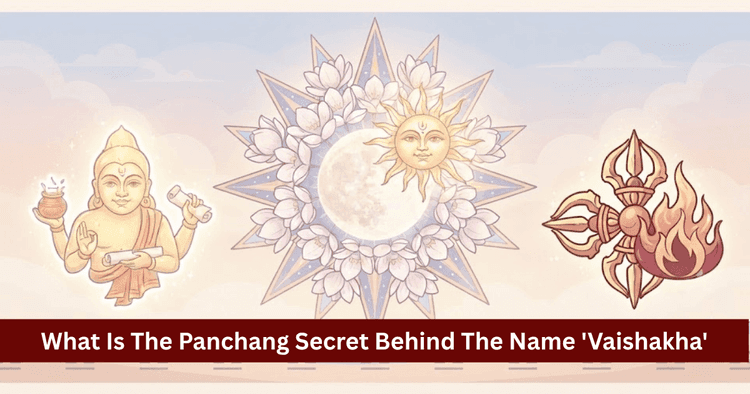
Table of Contents
Panchang Description And The Astrological Dimensions Of Vishakha Nakshatra
Within the classical taxonomy of the Vedic calendar, Vedanga Jyotisha and the computational guidelines of the Surya Siddhanta, the nomenclature of each lunar month is scientifically determined by the specific stellar asterism in which the full moon (Purnima) attains complete illumination. The second lunar month is canonically designated as Vaishakha because, on the night of its full moon, the Moon transits in exact conjunction with the 16th lunar mansion of the zodiac, Vishakha Nakshatra.
From an astronomical perspective, Vishakha spans the transitional threshold between the signs of Libra (Tula: 20°00') and Scorpio (Vrishchika: 03°20'). It occupies a sensitive celestial boundary connecting Venus's airy, balanced sign with Mars's watery, intense domain. The first three quarters (padas) of Vishakha fall within Libra, while the fourth quarter enters Scorpio. The governing planetary lord of this asterism is Jupiter (Brihaspati), the archetype of divine wisdom and expansion, while its presiding dual deities are Indragni-the cosmic synthesis of Lord Indra (divine sovereignty and rain) and Agni Deva (transformative fire). This celestial configuration infuses human awareness with single-pointed determination, ethical discernment and the drive to accomplish noble goals.
| Astrological Factor | Scriptural, Astrological and Astronomical Detail |
|---|---|
| Calendrical Placement | Second Lunar Month | Named after the Moon's transit through Vishakha on Purnima |
| Zodiacal Span | 16th Nakshatra | 20°00' Libra to 03°20' Scorpio (4 Padas) |
| Planetary Ruler (Dasha Lord) | Jupiter (Brihaspati: Higher Wisdom, Discrimination, Dharma) |
| Presiding Dual Deities | Indragni (Lord Indra: Willpower and Rulership + Agni: Fire of Purification) |
| Canonical Emblems | The Triumphal Archway (Torana) and the Potter's Wheel |
| Stellar Temperament | Mixed/Sharp (Mishra/Sadharana), Rakshasa Gana, Tiger Yoni, Fiery Nature |
| Elemental Synthesis | Harmonious junction of Air (Libra: Padas 1-3) and Water (Scorpio: Pada 4) |
| Core Energetic Power (Shakti) | Vyapana Shakti (The Power to Achieve Broad and Definite Results) |
| Bestowed Spiritual Fruit | Sharp Intellect, Grounded Resolution, Spiritual Stamina, Sense Control |
To assimilate the clarifying qualities of Vishakha Nakshatra, honor Jupiterian wisdom and channel the transformative energy of Indragni, an aspirant should observe disciplined scriptural decorum:
- Awaken before sunrise during Brahma Muhurta, bathing in ambient spring water enriched with black sesame seeds and consecrated river drops.
- Mentally recite the sacred formula Om Vishakhayai Namah or Om Brihaspataye Namah during morning ablutions.
- Offer three continuous libations of fresh water mixed with red vermilion, unbroken raw rice and yellow flowers to Lord Surya Narayana from a copper pitcher.
- Kindle a lamp of indigenous cow clarified butter before the domestic altar, contemplating the dual powers of Indra and Agni.
- Recite the Guru formula or chant Om Aim Kleem Brihaspataye Namah at least 108 times with steady concentration.
- Eliminate lethargy, heavy processed foods and unconstructive speech, focusing mental energy upon purposeful actions.
- Honor the symbol of the potter's wheel by adopting, using and donating unglazed terracotta water vessels throughout the month.
- Distribute yellow fruits, split chickpeas, turmeric root and cool drinking water to underprivileged individuals to harmonize Jupiterian and solar energies.
Semantic Meaning, Emblems and The Metaphysics Of Vishakha
In Vedic Sanskrit etymology, the term Vishakha holds layered significance:
- Vi + Shakha = Vishakha: Translates as "Branched" or "Forked". It represents a sturdy tree trunk dividing into two flourishing branches, embodying the complementary powers of Indra and Agni.
- The Radha Asterism: In ancient Vedic texts, Vishakha is referred to as Radha (the star of success and focused devotion), standing directly before Anuradha (that which follows Radha).
The Two Canonical Emblems of Vishakha
- The Triumphal Archway (Torana): Represents victory, harvest and crossing thresholds. Just as an ancient ruler enters the city through an adorned archway following a campaign, Vishakha guides human consciousness across the bridge of self-discipline to internal clarity.
- The Potter's Wheel: Symbolizes continuous transformation, patient craftsmanship and the cyclical nature of effort. It illustrates how unformed human nature, like wet clay, can be shaped into a refined vessel through conscious practice, austerity and service.
| Sacred Symbol | Metaphysical Meaning | Expression in Daily Life |
|---|---|---|
| The Triumphal Arch | Culmination of effort; crossing into maturity | Steady focus to fulfill long-term aspirations |
| The Potter's Wheel | Cyclical discipline; shaping raw potential | Releasing rigid pride; refining character through service |
| The Forked Branch | Synthesis of temporal and spiritual life | Fulfilling duties while remaining anchored in contemplative truth |
The Dual Influence Of Indragni: Willpower And Transformative Energy
Classical Vedic hymns frequently invoke Indra and Agni as an inseparable pair-Indragni. In the Rigveda, their joint presence represents focused executive power paired with transformative energy:
1. The Energy of Lord Indra
Indra governs sovereign leadership, courage, the sensory faculties (Indriyas) and atmospheric nourishment. His influence on Vishakha supports:
- Sensory restraint and clear discernment.
- The capacity to organize resources and lead communal initiatives ethically.
- The ability to bring replenishment and relief to dry, exhausted environments.
2. The Energy of Agni Deva
Agni governs physical metabolism, spiritual purification and the fire of aspiration. His influence on Vishakha supports:
- Maintaining balanced metabolic digestion (Jatharagni) during summer heat.
- Burning through negative emotional patterns and mental attachments.
- Generating the endurance required to overcome obstacles.
When willpower (Indra) aligns with disciplined action (Agni), challenging undertakings become achievable. During Vaishakha, this combined energetic flow reaches its seasonal peak.
Governance Of Jupiter: Wisdom, Ethics and Discriminative Insight
The planetary ruler of Vishakha Nakshatra is Jupiter (Brihaspati). Although the asterism lies within the zodiacal signs of Venus (Libra) and Mars (Scorpio), its internal trajectory is guided by Jupiterian discernment:
- Padas 1, 2 and 3 in Libra (Venusian Domain): Libra represents balance, social order and diplomacy. Jupiter's influence here encourages social justice, ethical commerce and public service. The tradition of establishing water stations and charitable shelters during Vaishakha reflects this Libra-Jupiter harmony.
- Pada 4 in Scorpio (Martian Domain): Scorpio governs depth, focused inquiry and inner transformation. Jupiter's placement here directs awareness toward self-inquiry, contemplation and dedicated spiritual disciplines.
| Pada of Vishakha | Sign & Navamsha | Sub-Ruling Planet | Astrological Temperament |
|---|---|---|---|
| Pada 1 (20°00' - 23°20' Libra) | Libra / Aries Navamsha | Mars | High initiative, physical vitality, executive drive |
| Pada 2 (23°20' - 26°40' Libra) | Libra / Taurus Navamsha | Venus | Grounded stability, artistic appreciation, generosity |
| Pada 3 (26°40' - 30°00' Libra) | Libra / Gemini Navamsha | Mercury | Analytical precision, clear articulation, scholarly inquiry |
| Pada 4 (00°00' - 03°20' Scorpio) | Scorpio / Cancer Navamsha | Moon | Emotional depth, intuitive insight, transformative awareness |
Celestial Alignment: The Full Moon Conjunction
The astronomy of Vaishakha Month is marked by an exact 180° opposition between the Sun and Moon on the full moon night:
- Sun Exalted in Aries: The Sun transits its exaltation sign of Aries, moving through Krittika and Bharani, casting direct thermal and electromagnetic energy upon the northern hemisphere.
- Moon Full in Vishakha: Opposing the Sun, the full moon reflects this solar radiance across the Libra-Scorpio cusp within Vishakha, softening intense daytime heat into cool nighttime illumination.
- The Resulting Harmonic: This balance between solar fire and lunar coolness makes Vaishakha Purnima optimal for focused meditation. Traditionally, this full moon marks the descent of Lord Kurma and commemorates the enlightenment of Gautama Buddha.
Philosophical Essence: The Call To Unwavering Effort
The naming of Vaishakha after Vishakha Nakshatra echoes the timeless Upanishadic call: Uttishthata jagrata prapya varan nibodhata (Arise, awake and stop not until the goal is attained).
The focused energy of Vishakha acts like an arrow released toward its mark. It teaches that external heat and worldly difficulties need not derail internal purpose. Just as a potter works with clay upon the spinning wheel to produce a vessel that keeps water cool, we can use the disciplines, service and reflections of Vaishakha to steady the mind, offering calm and shelter to those around us.
FAQ
Why is this lunar month named Vaishakha?
The month is named after Vishakha Nakshatra, as the full moon reaches complete reflection within this asterism on Vaishakha Purnima.
Which planetary ruler and divine archetypes govern Vishakha Nakshatra?
The planetary ruler is Jupiter (Brihaspati) and its presiding dual deities are Indragni (Lord Indra and Agni Deva).
What are the primary emblems of Vishakha Nakshatra?
Its two canonical emblems are the Triumphal Archway (Torana), symbolizing victory and the Potter's Wheel, representing patient, cyclical transformation.
Across which two zodiac signs is Vishakha Nakshatra positioned?
Vishakha spans Libra (Padas 1, 2 and 3, ruled by Venus) and Scorpio (Pada 4, ruled by Mars).
How does Vishakha Nakshatra influence human awareness in Vaishakha?
It strengthens personal resolve, sharpens ethical discernment, encourages self-restraint and inspires service to the community.
Get your accurate Kundali
Generate KundaliDid you like it?
Author

Aparna Patni (63)
Experience: 20
Consults About: Family Planning, Career
Clients In: Punjab, Haryana, Delhi
Share this article with friends and family
WELCOME TO
ZODIAQ
Right Decisions at the right time with ZODIAQ
