What Is The Significance Of Varuthini Ekadashi In Vaishakha Month?
By Pt. Amitabh Sharma
Vaishakha Krishna Ekadashi, King Mandhata Lore, Kanyadana Merit, Ritual Protocol And Parana Rules
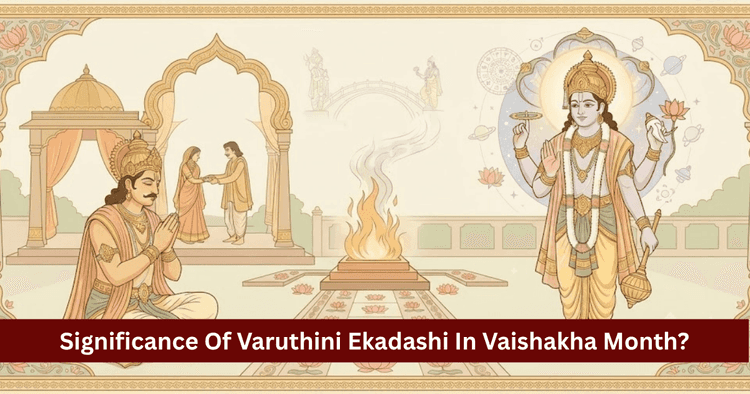
Table of Contents
Panchang Description And The Astrological Dimensions Of Varuthini Ekadashi
Within classical predictive astrology, the Bhavishyottara Purana and the Vratakhanda of Hemadri, the eleventh lunar day of the waning fortnight in the month of Vaishakha is canonically celebrated as Varuthini Ekadashi. In Sanskrit etymology, the designation Varuthini originates from the root Varutha, translating as 'a protective shield' (an impenetrable armor) or a protective phalanx shielding the individual from cosmic and environmental afflictions. Falling during the seasonal transit when Lord Surya Deva occupies his sign of deep exaltation in cardinal fiery Aries (Mesha), this sacred day acts as an energetic shield against physical, psychological and spiritual distress.
From an astronomical perspective, Varuthini Ekadashi occurs when the Moon transits across the constellations of Uttara Bhadrapada, Revati or Shatabhisha, positioned in Aquarius or Pisces. During this seasonal window, solar thermodynamic radiation rises while lunar cooling principles recede, causing bodily hydration to drop and systemic heat (Pitta) to accumulate. Observing an uncompromised fast on Varuthini Ekadashi while adoring the Vamana and Varaha incarnations of Lord Sri Hari Vishnu purifies cellular physiology, stabilizes cognitive fluctuations and neutralizes unresolved negative karmic impressions (Prarabdha).
| Astrological Factor | Scriptural, Astrological and Liturgical Detail |
|---|---|
| Calendrical Station | Vaishakha Month | Krishna Paksha (Waning Fortnight) |
| Lunar Tithi Coordinate | Ekadashi (11th Lunar Day) | Arunodaya Vyapini standard observed |
| Sovereign Presiding Deities | Lord Sri Hari Vishnu (Manifested as Lord Vamana and Lord Varaha) |
| Solar Celestial Coordinate | Sun Exalted in Aries (10° Paramochha Sector) |
| Canonical Designation | Varuthini (The Invincible Spiritual Armor) | Complete or Fruit Fast |
| Scriptural Equivalent Merit | 10,000 years of severe penance, solar eclipse gold charity, Kanyadana |
| Primary Sacramental Media | White/yellow sandalwood paste, fresh tulsi leaves, melons, sattu, rock sugar |
| Breaking the Fast (Parana) | Following the conclusion of Hari Vasara on the morning of Dvadashi |
| Bestowed Spiritual Fruit | Dissolution of misfortune, physical healing, ancestral peace, liberation |
To assimilate the full spiritual and physiological benefits of Varuthini Ekadashi, an aspirant should observe disciplined scriptural decorum beginning on the eve of the tenth lunar day (Dashami):
- Consume a single, light satvic meal before sunset on Dashami; strictly avoid bell metal (bronze) utensils, red lentils, chickpeas, honey, spinach and meals prepared by others.
- Awaken before sunrise during Brahma Muhurta, bathing in a sacred river, lake or ambient water consecrated with Ganga drops.
- Mentally recite the sacred formula Om Namo Narayanaya or Om Vamanaya Namah during morning ablutions.
- Dress in clean, unstitched white or saffron cotton garments, establishing an altar facing eastward dedicated to Lord Vamana or the sacred Shaligram stone.
- Consecrate the icon with Panchamrita and sacred water, applying cooling white sandalwood paste and offering fresh tulsi leaves and yellow blossoms.
- Take kusha grass, sesame seeds and water in the right palm, making a solemn vow (Sankalpa) to observe the day with mindful fasting and reflection.
- Avoid daytime slumber; maintain nocturnal vigil through devotional reading of the Vishnu Sahasranama or the Srimad Bhagavatam.
- On Dvadashi morning, bathe early, feed a deserving practitioner, gift a water-filled earthen pot and grain flour and conclude the fast during the approved astrological window.
The Sacred Puranic Lore: The Redemption Of King Mandhata
In the Bhavishyottara Purana, Lord Sri Krishna recounts the history of King Mandhata of the Ikshvaku dynasty to King Yudhishthira, illustrating the transformative power of Varuthini Ekadashi.
In ancient times, on the banks of the sacred Narmada River, King Mandhata ruled with righteousness, charity and self-restraint. Despite his royal authority, he frequently retired to the dense forest to engage in deep meditation on Lord Sri Hari. On one occasion, while the monarch was seated in quiet contemplation beneath a banyan tree, an aggressive wild bear emerged from the thickets.
The Attack and the King's Unconditional Surrender
The wild animal attacked the seated king, seizing one of his legs in its powerful jaws and dragging him toward the forest.
- Despite severe physical agony, King Mandhata refused to abandon his spiritual discipline.
- He reflected: "If I strike this creature in anger, my vows of non-violence will be compromised. The body is transient but the soul remains eternal."
- Rather than relying on physical strength, the king surrendered his heart to the Divine, calling out: "O Lord of the destitute! O wielder of the Discus! Protect your servant!"
Responding to the devotee's sincere call, Lord Sri Hari manifested with the brilliant Sudarshana Chakra, neutralizing the wild animal instantly and preserving the king's life.
The Divine Instruction to Visit Mathura
Although his life was saved, the king's leg was severely mutilated, leaving him disabled. Seeing his physical distress, Lord Vishnu smiled and gave this guidance:
"Grieve not, noble King. This physical affliction was the result of unresolved karmic debt from a past lifetime. Journey now to Mathura, my sacred city on the Yamuna. There, observe the sacred fast of Varuthini Ekadashi during the dark fortnight of Vaishakha, worshipping my Varaha and Vamana forms. Through the spiritual merit of that observance, your limb shall be restored to health and vitality."
King Mandhata followed the divine instruction. Arriving in Mathura, he observed a complete fast on Varuthini Ekadashi along the banks of the Yamuna, keeping nocturnal vigil and meditating upon Lord Varaha.
The Fruit of the Observance:
As the sun rose on Dvadashi and the king completed his vows, his mutilated leg was restored to health, strength and symmetry. Free from physical disability, King Mandhata returned to his realm and ultimately attained the spiritual abode of Vaikuntha.
Metaphysical And Spiritual Dimensions Of Varuthini Ekadashi
Scriptural authorities regard Varuthini Ekadashi as unique among monthly observances because it directly aids in healing physical distress while purifying deep-seated karmas:
1. Equivalent Merit to the Gift of a Daughter (Kanyadana)
In the Bhavishyottara Purana, Lord Sri Krishna compares the spiritual fruit of this observance with traditional forms of charity:
- The merit of a thousand royal sacrifices equals the gift of a horse (Ashvadana).
- A hundred horse gifts equal the gift of an elephant (Gajadana).
- A hundred elephant gifts equal the gift of gold (Suvarnadana).
- A hundred gold gifts equal the gift of food (Annadana), which sustains living beings.
- Greater than all forms of material giving is Kanyadana (consecrating a daughter in marriage to a noble soul).
The scriptures affirm that observing the sacred discipline of Varuthini Ekadashi yields spiritual merit equal to performing Kanyadana. For individuals unable to perform this sacred social duty, observing this fast is held to bestow its spiritual fruit.
2. The Merit of Ten Thousand Years of Penance
The spiritual benefit attained through gifting 40 kilograms of pure gold at Kurukshetra during a solar eclipse is said to be matched by observing a single, sincere fast on Varuthini Ekadashi. It grants strength to the physically frail, clarity to seekers and peace to families.
| Category of Charity / Austerity | Traditional Scriptural Comparison | Merit Bestowed by Varuthini Ekadashi |
|---|---|---|
| Gold Charity During a Solar Eclipse | Rare royal offering at Kurukshetra | Matched through a single sincere day of fasting and prayer |
| The Sacred Merit of Kanyadana | Revered as the highest social and familial offering | Conferred fully upon the dedicated practitioner |
| 10,000 Years of Forest Tapasya | Ancient ascetic penance of early epochs | Realized in the current age through sincere fasting and mantra |
| Relief from Somatic Afflictions | Resolving deep-seated physical distress | Restores vitality and well-being, as seen in King Mandhata's lore |
Classical Liturgical Protocol For Worship
Worshipping Lord Vishnu on Varuthini Ekadashi should be conducted with simplicity, cleanliness and sincere devotion:
- Altar Arrangement: Cover a clean wooden platform with unstitched yellow silk. Form an eight-petaled lotus using raw rice, placing a consecrated copper pitcher upon it. Install the icon of Lord Vamana, Lord Varaha or the sacred Shaligram stone.
- Consecration and Anointing: Bathe the icon with Panchamrita (milk, yogurt, ghee, honey and raw sugar), followed by clear water. Apply cooling white sandalwood paste to soothe the summer heat.
- Tulsi Offerings: Present fresh tulsi leaves to the deity. Because tulsi leaves are not plucked on Ekadashi, gather them on the preceding day (Dashami) or collect naturally fallen unblemished leaves.
- Hydrating Food Offerings: Offer seasonal summer fruits-such as sweet melons, watermelons, ripe mangoes and rock sugar crystals.
- Sacred Chanting: Kindle an unbroken lamp fueled by indigenous cow clarified butter, reciting the Vishnu Sahasranama, Narayana Kavacham or Gajendra Moksha. Share consecrated water (Charanamrita) and fruit with family and visitors.
Prohibited Actions And Strict Parana Rules
Maintaining the integrity of the fast requires observing traditional boundaries of conduct:
Ten Prohibited Actions on Ekadashi
- Consuming Grains (Especially Rice): Grains and rice are strictly avoided on Ekadashi to give complete digestive rest to the gastrointestinal tract.
- Gossip and Harsh Speech: Slander, deceit, harsh arguments and anger dispel the peaceful merit of the day.
- Using Bronze Utensils: Consuming food or water from bell-metal or bronze vessels is avoided in traditional manuals.
- Plucking Twigs for Dental Cleansing: Breaking living branches for dental twigs is avoided; rinse the mouth thoroughly with water instead.
- Daytime Slumber: Sleeping during the day is avoided; time should be directed toward study, service and reflection.
- Gambling and Idle Distractions: Engaging in speculation, betting or frivolous distractions is prohibited.
- Heating and Heavy Foods: Onions, garlic, red lentils, eggplant and non-vegetarian food are strictly excluded from the home.
- Compromising Personal Restraint: Celibacy in thought, speech and action is observed throughout the day.
- Cutting Hair and Nails: Grooming practices like cutting hair, trimming beards or clipping nails are avoided on Ekadashi.
- Consuming Food Prepared by Strangers: Eating meals prepared without spiritual awareness transfers negative emotional energy to the practitioner.
Guidelines for Breaking the Fast (Parana)
An Ekadashi fast is completed by breaking it within the approved astrological window on Dvadashi morning:
- Avoiding Hari Vasara: The first quarter (first one-fourth) of the Dvadashi tithi is designated as Hari Vasara. Breaking the fast during Hari Vasara is scripturally prohibited; conclude the fast only after this period passes.
- Concluding the Fast: On Dvadashi morning, bathe early, worship Lord Vishnu, offer food, a water pitcher and charity to a deserving person and conclude the fast by partaking of tulsi water and a light, satvic meal.
Philosophical Essence: Cultivating The Inner Armor
The enduring teaching of Varuthini Ekadashi extends far beyond fasting: The word 'Varutha' (shield) reminds us to cultivate an inner armor of spiritual wisdom, truthfulness and equanimity against life's emotional conflicts.
Just as King Mandhata chose surrender and patience over reactive violence when attacked, a balanced person relies on inner faith and dignity when confronted with illness, loss or adversity.
When the mind remains anchored in the Divine, external trials cannot disturb internal peace. Varuthini Ekadashi offers this quiet fearlessness, reminding us that sincere faith and ethical living serve as an enduring shield throughout life's journey.
FAQ
In which month and lunar fortnight is Varuthini Ekadashi observed?
Varuthini Ekadashi is observed during the Krishna Paksha (waning fortnight) of Vaishakha Month.
Which king was healed through the observance of Varuthini Ekadashi?
King Mandhata of the Ikshvaku dynasty had his mutilated leg restored after observing Varuthini Ekadashi in Mathura under Lord Vishnu's guidance.
Which classical act of charity is equated with the merit of Varuthini Ekadashi?
Scriptures state that observing Varuthini Ekadashi confers spiritual merit equal to performing Kanyadana (the sacred gift of a daughter in marriage) and donating gold at Kurukshetra during an eclipse.
Which forms of Lord Vishnu are honored on Varuthini Ekadashi?
The observance centers on the worship of Lord Vamana (the dwarf incarnation) and Lord Varaha (the divine boar incarnation).
What does the astrological term 'Hari Vasara' signify regarding Parana?
Hari Vasara refers to the first quarter (first six hours) of the Dvadashi tithi; breaking the fast during this specific window is traditionally avoided.
Get your accurate Kundali
Generate KundaliDid you like it?
Author
Pt. Amitabh Sharma (56 Years)
Experience: 20
Consults About: Family Planning, Career
Clients In: Punjab, Haryana, Delhi
Share this article with friends and family
WELCOME TO
ZODIAQ
Right Decisions at the right time with ZODIAQ
