What Is The Sacred Sheshanaga Avatar?
By Pt. Suvrat Sharma
Penance Of Earth Bearing Sheshanaga Vishnu Couch And Lakshmana
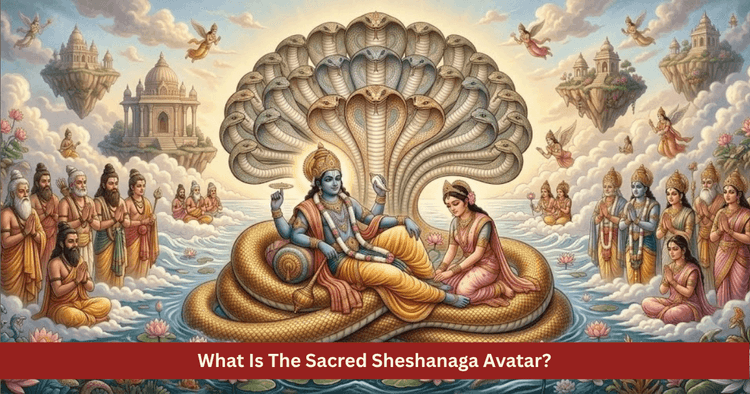
Table of Contents
Sacred Ananta Worship And Earth Grounding Ritual Guidelines
Within the sacred Vedic tradition Lord Sheshanaga is revered as the living embodiment of infinite patience, unshakable loyalty and cosmic balance. When an individual confronts mental restlessness, chronic indecision, conflicts over land and property or the adverse effects of Kalasarpa dosha, the dedicated worship of Ananta yields profound benefits. This sacred discipline subdues lower tamasic tendencies, stabilizes vital breath and establishes unbroken tranquility in human awareness. To perform this ritual properly ancient texts prescribe specific auspicious dates, pure offerings and disciplined spiritual conduct.
| Ritual Element | Vedic Mandate And Prescribed Directive |
|---|---|
| Auspicious Dates | Bhadrapada Shukla Chaturdashi or Shravana Shukla Panchami and every monthly Shukla Chaturdashi |
| Presiding Deities | Lord Ananta Sheshanaga and Lord Sri Hari Vishnu resting upon the ocean of milk |
| Potent Seed Mantra | Om Anantaya Namah or Om Sheshaya Namah |
| Sacred Materials | Fresh cow milk, sacred durva grass, turmeric, unbroken rice, tulsi leaves, white sandalwood and a serpent icon |
| Spiritual Benefits | Mental stability, pacification of Kalasarpa affliction, Kundalini awakening and land prosperity |
To begin this spiritual practice one must rise during the serene Brahma Muhurta before dawn, complete daily ablutions and put on clean white or yellow garments. Place a clean wooden altar covered with fresh white silk cloth and install a consecrated serpent icon crafted from copper or silver. Fill a clean copper pot with pure water and holy river water, adding fresh milk, unbroken rice grains and cooling white sandalwood paste.
- Bathe the sacred serpent icon with devotion using panchamrita and pure uncooked cow milk
- Cleanse the icon with pure water and offer auspicious turmeric, vermilion, unbroken rice grains and 21 blades of durva grass
- Chant the 12 sacred names of Sheshanaga peacefully along with the divine remembrance of Vishnu and Lakshmi
- Sit facing the east and recite the potent Ananta mantra 108 times using a rosary of tulsi or rudraksha beads
- Sleep upon the floor on this day, abstain from salt and offer a small measure of milk at the base of a sacred peepal tree
Observing this discipline regularly removes sudden panic, deep seated anxiety and worldly fear from the seeker. Household conflicts settle down and lasting stability enters the family atmosphere. This worship reminds human consciousness that no matter how turbulent external conditions become, the soul must remain steadfast upon the bedrock of righteousness.
The Lineage Of Kashyapa And Severe Austerities Upon Gandhamadana
During the dawn of creation Sage Kashyapa had two principal consorts named Kadru and Vinata. Kadru gave birth to 1000 serpents among whom the eldest and most brilliant was Sheshanaga. The younger brothers of Sheshanaga included formidable serpent chiefs such as Vasuki, Takshaka, Karkotaka and Pingala. As ages rolled by the serpent brothers became increasingly malicious, deceitful, arrogant and inclined toward wicked conduct. They deceived their aunt Vinata and her son Garuda, subjecting them to unfair servitude through dishonesty.
Sheshanaga was pure, righteous and devoted to the divine from his very origin. Observing the cruelty, deceit and arrogance of his biological brothers filled his heart with profound dispassion toward worldly existence. He felt intense grief over the sinful tendencies of his family. He realized that living among deceitful companions would compromise his spiritual integrity, leading him to renounce all mundane kinship.
Leaving his serpent brothers and maternal home behind, he embarked on a solitary pilgrimage across sanctified regions. He arrived at the secluded mountain slopes of Gandhamadana, Badrikashram, Gokarna and Pushkara. There he commenced severe spiritual penance. Consuming nothing but the surrounding air he brought all his sensory impulses under absolute control. Standing amidst blazing fires in the summer, enduring torrential downpours in the monsoon and meditating upon frozen glaciers during winter, he focused his entire awareness on Brahma. This unbroken, desireless discipline illuminated the three worlds with spiritual splendor.
What Is The Cosmic Burden Borne Upon A Thousand Hoods?
Pleased by the intense penance and peerless dispassion of Sheshanaga the cosmic creator Brahma appeared before him. Brahma addressed him with affection, declaring that the celestial beings were overjoyed by his pure focus, inviting him to seek any boon he desired.
Sheshanaga folded his hands and replied with deep humility, stating that he sought no material comfort, celestial sovereignty or physical immortality. His sole aspiration was that his mind would remain anchored in righteousness, truth, ascetic discipline and selfless service. He prayed that no malice, jealousy or deceit would ever taint his consciousness and that his life would serve the Supreme Lord unconditionally.
Moved by this pure devotion Lord Brahma expressed great joy. Brahma explained that the physical Earth was rocking dangerously, unstable under the shifting weight of mountains, forests and turbulent oceans. Without an unshakable foundation the living beings upon its surface remained in constant peril.
- Brahma commanded Sheshanaga to descend into the subterranean realms and support the trembling Earth upon his head
- Sheshanaga accepted the divine directive reverently and entered the deepest foundation of the netherworld
- He balanced the vast terrestrial globe upon his 1000 luminous hoods as effortlessly as a tiny mustard seed
- Whenever Sheshanaga shifts his posture slightly to ease the pressure, subtle seismic tremors ripple across the terrestrial crust
- Lord Brahma blessed him with absolute immortality, decreeing that even during cosmic dissolution he would remain indestructible
Thus Sheshanaga became the enduring cornerstone of creation. He demonstrated that true greatness lies not in aggressive displays of power, but in quietly bearing the weight of universal wellbeing.
Resting Place In The Ocean Of Milk And Unbroken Comradeship
Following the stabilization of the Earth Lord Vishnu embraced Sheshanaga as his eternal companion and intimate associate. When Lord Vishnu reclines in yogic slumber upon the boundless waters of the Kshirasagara, Sheshanaga assumes the form of his divine couch. He arranges his gentle, luminous coils into a soothing seat and bed for the supreme preserver.
Furthermore Sheshanaga spreads his thousand hoods wide to form an expansive canopy over the head of Vishnu, ensuring that nothing disturbs the divine contemplation. When total cosmic dissolution occurs and all names and forms dissolve into the primordial ocean, that which remains indestructible is celebrated as Shesha, meaning the eternal remainder. He is also invoked as Ananta, the infinite reality without beginning or end.
The sacred bond between Lord Vishnu and Sheshanaga transcends ordinary distinctions of master and servant, representing nondual spiritual love. He does not merely provide a resting place, but actively participates in every divine mission. Whenever Lord Vishnu descends into the mortal realm to protect righteousness, Sheshanaga incarnates alongside him in an inseparable form.
The Descent As Lakshmana And The Monumental Sacrifice Of Urmila
During the Treta Yuga when Lord Vishnu incarnated within the solar dynasty of Ayodhya as Sri Rama, his eternal associate Sheshanaga descended as his devoted younger brother Lakshmana. The life of Lakshmana represents the absolute peak of renunciation, selfless service and fraternal love. When Sri Rama was sentenced to 14 years of forest exile, Lakshmana abandoned royal comfort, wealth and his newly wedded wife to follow his brother into the wilderness.
Throughout those 14 years of exile Lakshmana observed an unbroken vow of vigil unprecedented in cosmic history. He prayed to the goddess of sleep to release him from slumber for 14 years so he could guard Sri Rama and Mother Sita day and night without interruption. The goddess of sleep consented on the condition that someone else bear his share of slumber.
Hearing of this condition the noble and devoted wife of Lakshmana, Princess Urmila, took that immense burden entirely upon herself. Urmila remained in continuous slumber within the royal chambers of Ayodhya for 14 years, providing the spiritual foundation that enabled Lakshmana to maintain his unbroken vigil. Having conquered sleep completely Lakshmana became known as Gudakesha.
- Lakshmana never closed his eyes during the entire exile, standing guard with bow and arrow through every dark night
- He vanquished the invincible warrior Meghanada who possessed a boon that only an ascetic awake for 14 years could defeat him
- The fiery temperament of Lakshmana was a righteous solar brilliance that destroyed evil forces
- He was not merely a younger sibling, but an impenetrable armor protecting the mission of Sri Rama
- When Mother Sita was abducted Lakshmana stood firm like an immovable mountain to support his elder brother and lead the march to victory
The inspiring journey of Lakshmana proves that supreme service requires the complete surrender of personal identity at the feet of the divine.
How Kundalini Power Connects With Sheshanaga In Astrology?
Within the esoteric wisdom of Vedic astrology and yogic science Sheshanaga is identified with the primordial divine force known as Kundalini dormant within the human vessel. Just as Sheshanaga dwells in the darkness of the subterranean realms to support the outer world, the divine Kundalini power rests coiled three and a half times at the base of the spine in the Muladhara chakra.
| Esoteric Element | Astrological And Yogic Influence |
|---|---|
| Planetary significators | Ketu indicating liberation and dispassion, Rahu governing subtle cosmic energies |
| Asterism governance | Ashlesha nakshatra presided over by celestial serpents, Uttara Bhadrapada governed by Ahirbudhnya |
| Energetic pathway | The central Sushumna channel extending from the Muladhara to the Sahasrara chakra |
| Spiritual crown | The thousand petaled lotus directly reflecting the 1000 hoods of Sheshanaga |
| Connected chart houses | Eighth house governing occult transformation, twelfth house signifying spiritual release and sleep |
When an earnest seeker stabilizes the restless mind through ethical restraints, rhythmic breathing and steady meditation, this dormant serpentine force awakens and ascends through the Sushumna path. Rising from the root foundation it reaches the Sahasrara chakra at the crown of the head, granting the seeker supreme bliss and self realization. The Sahasrara chakra contains 1000 luminous petals, serving as the inner reflection of the thousand hoods of Sheshanaga.
- In a birth chart the Rahu and Ketu axis represents the head and tail of the cosmic serpent holding past karmas
- When Kalasarpa yoga is present, initial struggles are intense, but the grace of Sheshanaga elevates the native to extraordinary heights
- Individuals born under Ashlesha nakshatra possess deep penetrating intellect, magnetic presence and an affinity for hidden wisdom
- Propitiating Sheshanaga alleviates ailments related to the spine, the nervous system and chronic vata imbalances
- Seekers suffering from restless anxiety and mental vacillation should regularly meditate upon Lord Ananta Narayana
Vedic astrology demonstrates that serpentine cosmic power is not an object of terror, but a blazing furnace of spiritual transformation that elevates mortal consciousness to divine states when guided along the path of virtue.
The Eternal Message Of Poise And Immortality
The divine descent of Lord Sheshanaga delivers the timeless teaching that true service demands absolute selflessness without conditions. He carries the immense weight of the universe upon his crown without the slightest trace of pride or grievance. He lies beneath Lord Vishnu as a supportive couch and rises above him as a protective canopy.
His divine form reminds humanity that genuine nobility belongs to those who humble themselves to support the wellbeing of others. Even when cosmic dissolution sweeps away entire galaxies, Sheshanaga remains undisturbed. Remembering him inspires every seeker to preserve inner calm, spiritual poise and patience amid worldly storms, sudden reversals and personal loss. The soul that discovers the divine presence within becomes infinite and immortal, mirroring the sacred stillness of Sheshanaga.
FAQ
Who are the parents of Lord Sheshanaga? Lord Sheshanaga is the eldest son of Sage Kashyapa and his consort Kadru who was the mother of the serpent race.
Who tasked Sheshanaga with holding the Earth? Pleased by his intense penance and dispassion Lord Brahma instructed Sheshanaga to enter the netherworld and balance the Earth upon his hoods.
What form did Sheshanaga assume in the Treta Yuga? In the Treta Yuga Sheshanaga incarnated as Prince Lakshmana, the younger brother of Sri Rama who maintained an unbroken vigil for 14 years.
Which yogic energy center corresponds to Sheshanaga? Sheshanaga corresponds to the coiled Kundalini energy resting at the Muladhara chakra and the thousand petaled Sahasrara chakra at the crown.
Which astrological affliction is pacified by worshipping Ananta? Worshipping Lord Ananta completely pacifies Kalasarpa dosha, severe distress caused by Rahu and Ketu, and chronic mental restlessness.
Get your accurate Kundali
Generate KundaliDid you like it?
Author
Pt. Suvrat Sharma (63)
Experience: 20
Consults About: Family Planning, Career
Clients In: Punjab, Haryana, Delhi
Share this article with friends and family
About ZODIAQ
ZODIAQ is an online Vedic Astrology platform. It connects clients seeking astrological advice to experienced astrologers with deep knowledge. Our users also generate kundali and perform kundali milan for free. ZODIAQ also offers services to the Astrologers. Astrologers utilize various offerings by ZODIAQ to serve their clients effectively.
If you are a User
Consult with experienced astrologers and seek their guidance. You can also order handwritten Janm Patrika report with life prediction prepared by experienced astrologers. Generate accurate Kundali, perform Kundali Matching and check horoscope and muhurat. Utilize our online library for all the necessary astrological and spiritual information.
If you are an Astrologer
Create accurate kundali for your clients and perform Kundali Matching for up to 5 people at a time. Write comprehensive Janm Patrika report for your clients with ZODIAQ. Check client details anytime by saving it in client directory. Become more productive by tracking how many clients you guide every day.
WELCOME TO
ZODIAQ
Right Decisions at the right time with ZODIAQ
