What Is The Secret Of Sugriva Avatar?
By Pt. Nilesh Sharma
The Life Of Sugriva Divine Friendship And The Kishkindha Empire
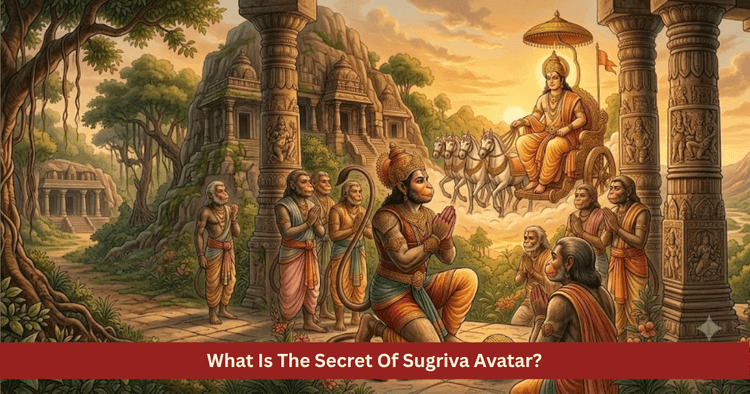
Table of Contents
Sacred Solar Worship And Friendship Ritual Guidelines
In the sacred Vedic tradition Lord Surya is revered as the soul of the cosmos and the primal fountain of all life energy. When an individual confronts betrayal by close relatives, loss of social status, brotherly conflict or immense adversity in worldly life, the worship of the solar deity and his direct manifestation the vanara king Sugriva serves as a supreme shield. This spiritual discipline rekindles dormant inner strength and attracts steadfast, righteous companions. Observing this ritual requires adherence to pure Vedic rules and sacred offerings prescribed in the ancient texts.
| Ritual Element | Vedic Mandate And Scriptural Directive |
|---|---|
| Auspicious Day And Time | Sunday or Shukla Paksha Saptami tithi and the sacred solar ingress period |
| Presiding Deities | Lord Surya Narayana the cosmic light and the solar incarnation King Sugriva |
| Potent Seed Mantra | Om Hram Hreem Hroum Sah Suryaya Namah or Om Mitraya Namah |
| Sacred Materials | Pure copper vessel, holy water, red sandalwood, red flowers, unbroken rice and jaggery |
| Spiritual Benefits | Restoration of lost status, support from faithful allies and inner vitality |
To commence this spiritual practice rise before sunrise during the sacred Brahma Muhurta on a Sunday morning and complete physical purification. Fill a clean copper pot with pure water and mix in a few drops of holy water, red sandalwood paste, red hibiscus flowers, unbroken rice grains and a small piece of natural jaggery. Stand facing the eastern horizon with both arms raised above the level of your head to offer holy oblations to the rising sun.
- Pour the consecrated water in three gentle streams while gazing upon the morning sun through the falling water
- Chant the sacred Gayatri mantra or the twelve divine names of the sun god with a tranquil heart
- Sit upon a red woollen mat facing east and recite the solar seed mantra 108 times using a consecrated rudraksha rosary
- Read the sacred passage of Rama and Sugriva alliance from the Kishkindha chapter of the Valmiki Ramayana to pacify fraternal strife
- Refrain from excessive salt consumption, avoid harsh words and distribute wheat or jaggery to impoverished beings
Practicing this ritual with purity of purpose awakens the luminous solar energy within human consciousness. Discord within the family begins to quiet down and obstructed professional recognition returns naturally. This discipline blesses the spiritual aspirant with remarkable mental resilience to endure worldly trials and walk steadfastly on the path of righteousness.
Celestial Descent Of The Devas And The Birth Of Sugriva
During the Treta Yuga when the demon king Ravana obtained boons from Lord Brahma and spread chaos across the three worlds, Lord Vishnu resolved to descend into the solar dynasty of Ayodhya as Sri Rama to reestablish cosmic order. The demon king held an absolute boon ensuring that gods, celestial musicians, demigods or demons could not kill him. Blinded by pride Ravana considered mortal humans and forest dwelling monkeys beneath notice and omitted them from his list of potential slayers.
Consequently the cosmic grandfather Brahma commanded all the celestial deities to manifest portions of their divine essence upon earth as mighty vanaras and bears to assist Vishnu. Lord Indra manifested his fierce strength as the invincible Vali. Simultaneously the great illuminator of the universe Lord Surya Narayana brought forth Sugriva from his radiant effulgence.
Sugriva emerged directly from solar energy, causing his skin to glow like molten gold. He possessed natural courage, unyielding loyalty and an innate capacity to uphold the duties of sacred friendship. Within the mountain realm of Kishkindha Vali ascended the throne as the elder brother while Sugriva served him with deep reverence, following his every command with devotion. Deep brotherly affection bound them together and the kingdom flourished in unbroken harmony.
The Slaying Of Mayavi And The Seed Of Fraternal Discord
This peaceful era in Kishkindha came to an abrupt halt when an unruly demon named Mayavi, the elder son of Dundubhi, arrived at midnight before the gates of Kishkindha roaring for battle. Vali, whose temperament was fiery and pride boundless, abandoned his slumber and lunged at the demon. Seeing the terrifying fury of the king, the demon fled into the wilderness. Vali pursued him closely and Sugriva ran behind his elder brother to protect his back.
In his desperate flight the demon darted into a deep, subterranean cavern hidden beneath dense mountain thickets. Vali resolved to enter the dark abyss without a second thought. Turning to Sugriva at the mouth of the cavern, Vali commanded him to remain stationed at the entrance and guard the portal until he returned victorious. Sugriva honored the word of his elder brother and stood vigilant at the cavern mouth in the desolate forest.
More than a month passed without any sign of the king. One evening a thick stream of frothy blood emerged from the pitch dark cavern. Terrifying shrieks of triumphant demons echoed from the depths while the voice of Vali was entirely absent. Overcome with grief Sugriva concluded that the cunning demon had overpowered and slain his mighty brother.
Sugriva feared that if the victorious demon emerged from the subterranean passages he would march upon Kishkindha and slaughter the defenseless citizens. Weeping bitterly with a heavy heart Sugriva lifted an enormous boulder and blocked the entrance of the cavern completely. He returned in mourning to Kishkindha. When the royal ministers heard that Vali had fallen, they insisted that the throne could not remain vacant and installed Sugriva as the sovereign ruler.
Yet destiny unfolded a bitter tragedy. Deep within the earth Vali had slain the demon after a protracted struggle. When he made his way out he found the cavern mouth blocked by an immense stone. Smashing the rock with a mighty kick, Vali reached Kishkindha burning with rage. Seeing his younger brother seated on the royal throne, suspicion consumed his reason. He assumed that Sugriva had entombed him alive to usurp the kingdom.
Sugriva immediately stepped down, placed his head at the feet of his elder brother and surrendered the royal crown, recounting the entire truth with folded hands. Consumed by irrational wrath Vali refused to hear his innocent brother. Vali beat Sugriva mercilessly, cast him out of the kingdom in disgrace and forcibly abducted Ruma, the devoted wife of Sugriva, into his inner chambers.
The Sacred Flame Of Alliance And Support Of Sri Rama
Fleeing for his life Sugriva wandered across the earth accompanied by his loyal ministers Hanuman, Jambavan, Nala and Nila. Terror of the wrath of Vali allowed them no rest anywhere. Guided by the wisdom of Hanuman, Sugriva eventually sought sanctuary upon the sacred slopes of Mount Rishyamukha. An ancient curse uttered by Sage Matanga prevented Vali from setting foot within that territory, for his head would shatter into a thousand fragments if he ever stepped upon the mountain.
During that exact period Ravana abducted Mother Sita, driving Lord Rama and his brother Lakshmana across southern lands in sorrow. As they approached Lake Pampa near Mount Rishyamukha, Sugriva noticed the two armed warriors from the mountain peak. Fear gripped his mind that Vali might have sent assassins disguised as forest ascetics. To discern the truth Sugriva dispatched his wisest minister Hanuman disguised as a gentle mendicant.
When Hanuman discovered the divine identity of Sri Rama he was filled with devotional joy and carried the royal brothers upon his shoulders to the summit before Sugriva. In that serene mountain setting Hanuman gathered dry wood and ignited a sacred ceremonial fire. Lord Rama and the vanara king circled the holy flame, grasping hands in an eternal bond of sacred friendship.
- Lord Rama gave his word to slay Vali, restore the lost honor of Sugriva and liberate his captive wife Ruma
- Sugriva pledged at the lotus feet of Rama that his entire forest army would scour the earth to locate Mother Sita
- To remove all lingering doubt from the anxious heart of Sugriva, Rama kicked the colossal skeleton of Dundubhi leagues away
- With a single golden arrow Lord Rama pierced through seven colossal sala trees and the netherworld, solidifying the faith of Sugriva
- Encouraged by Rama, Sugriva challenged Vali to a duel and during the fierce combat Rama shot an arrow from behind a tree to liberate Vali
Following the fall of Vali Lord Rama had Sugriva crowned as the undisputed king of Kishkindha and appointed the young son of Vali, Prince Angada, as the heir apparent. Sugriva regained his lost sovereignty, royal honor and beloved consort.
The Statecraft Of Kishkindha And Mobilization Of The Forces
Once the torrential monsoon rains subsided King Sugriva fulfilled his promise by issuing an urgent decree summoning every vanara warrior from the four corners of the earth. He commanded the valiant prince Angada and Hanuman to ensure that every detachment reached Kishkindha within fifteen days, warning that any neglect of this royal command would carry severe penalties for treason.
The geographic mastery displayed by Sugriva was so extraordinary that Sage Valmiki detailed it across extensive chapters of the epic. Before dispatching search parties to the east, west, north and south, Sugriva described the rivers, mountain ranges, islands, oceans and native populations of every region. He explained precisely which pathways were dangerous and where the abductor might have hidden Mother Sita.
The southern search party was placed under the joint command of Prince Angada, the wise elder Jambavan and the mighty Hanuman. Reaching the shores of the southern ocean, this detachment learned from the ancient bird Sampati that Mother Sita was held captive in the island fortress of Lanka. Hanuman then crossed the hundred league ocean, discovered the queen in Ashoka Vatika and set fire to the golden city.
When the drum of war sounded Sugriva commanded his vast army with the tactical genius of an experienced general. His forces constructed the miraculous Rama Setu across the roaring sea through relentless devotion. On the battlefields of Lanka Sugriva fought with fearless valor, personally vanquishing formidable demonic champions including Kumbhakarna, Virupaksha and Praghasa. At one point Sugriva leaped onto the high towers of Lanka, knocked the crown from the head of Ravana and challenged him directly. Following the victory over Ravana Lord Rama honored Sugriva as an equal brother.
Astrological Influence Of Surya And The Duty Of Friendship
In the timeless principles of Vedic astrology Lord Surya signifies the immortal soul, the father, dignity, sovereign authority and natural leadership. Within the cosmic chart the sun rules the fifth house of wisdom and holds absolute sovereignty over the sign of Leo. The life of Sugriva embodies the finest attributes of solar energy, demonstrating that genuine inner strength shines brightest in the furnace of trials.
| Astrological Factor | Scriptural Association Of Sugriva And Surya |
|---|---|
| Primary Significator | The Sun denoting vitality, radiance, truth and loyalty |
| Zodiac Association | The sign of Leo representing leadership, dignity and organized command |
| House Placements | Third house of courage and siblings, eleventh house of alliances and gains |
| Nakshatra Ruler | Krittika, Uttara Phalguni and Uttara Ashadha governed by the Sun |
| Spiritual Teaching | Adhering to truth in adversity and fulfilling sacred commitments |
In Vedic chart analysis the third house governs younger siblings and raw physical bravery while the eleventh house denotes elder siblings, networks and loyal friends. When the planetary disposition of the Sun and Mars suffers affliction from malefic forces, an individual undergoes bitter brotherly disputes and undeserved slander, precisely as Sugriva suffered under the wrath of Vali.
- A strong placement of the Sun in a birth chart bestows the resilience to overcome slander and regain lost authority
- Benevolent aspects on the third house bless an individual with loyal supporters and tireless personal courage
- An auspicious eleventh house attracts noble and selfless companions in times of crisis, mirroring the aid of Sri Rama
- Without the blessing of a dignified Sun no individual can lead a vast collective organization or maintain public trust
- Betraying a friend afflicts the solar energy within human consciousness, leading inevitably to moral and social decay
The life of Sugriva proves that even when an individual is completely stripped of material resources, a pure heart aligned with cosmic righteousness attracts the grace of the divine as an active protector.
Unwavering Faith In Tribulation And Divine Grace
The profound narrative of King Sugriva provides an enduring lesson that no matter how severe worldly circumstances become, a human being must never abandon devotion to truth. Even when stripped of kingdom, home and family by an invincible brother, Sugriva did not descend into malice. He endured hardship within the caves of Mount Rishyamukha while keeping his spirit untainted.
The friendship between Sri Rama and Sugriva proclaims the eternal truth that the divine rushes to the aid of those who seek refuge with complete humility. When human beings shed personal vanity and surrender before divine will, their deep seated griefs dissolve naturally. Remembering Sugriva reminds us that sacred friendship is the purest bond upon earth. Sharing the joys and sorrows of a companion while offering our best for righteousness is the true fulfillment of human life.
FAQ
Whose divine incarnation was Sugriva? Sugriva was the direct partial incarnation of the solar deity Surya Narayana, born as a vanara in the Treta Yuga to aid Lord Rama.
What caused the bitter enmity between Vali and Sugriva? Vali mistakenly believed that Sugriva had trapped him inside the cave with a boulder to usurp the royal throne of Kishkindha.
How was the alliance between Sri Rama and Sugriva solemnized? The sacred alliance between Sri Rama and Sugriva was solemnized by circling a holy fire ignited by Hanuman upon Mount Rishyamukha.
Why was Mount Rishyamukha a safe sanctuary for Sugriva? Mount Rishyamukha was protected by a curse from Sage Matanga stating that Vali would die if he ever entered that sacred boundary.
Which planet and astrological houses represent the life of Sugriva? The life of Sugriva is represented by the Sun as the primary ruler along with the third and eleventh houses of the birth chart.
Get your accurate Kundali
Generate KundaliDid you like it?
Author

Pt. Nilesh Sharma (63)
Experience: 20
Consults About: Family Planning, Career
Clients In: Punjab, Haryana, Delhi
Share this article with friends and family
About ZODIAQ
ZODIAQ is an online Vedic Astrology platform. It connects clients seeking astrological advice to experienced astrologers with deep knowledge. Our users also generate kundali and perform kundali milan for free. ZODIAQ also offers services to the Astrologers. Astrologers utilize various offerings by ZODIAQ to serve their clients effectively.
If you are a User
Consult with experienced astrologers and seek their guidance. You can also order handwritten Janm Patrika report with life prediction prepared by experienced astrologers. Generate accurate Kundali, perform Kundali Matching and check horoscope and muhurat. Utilize our online library for all the necessary astrological and spiritual information.
If you are an Astrologer
Create accurate kundali for your clients and perform Kundali Matching for up to 5 people at a time. Write comprehensive Janm Patrika report for your clients with ZODIAQ. Check client details anytime by saving it in client directory. Become more productive by tracking how many clients you guide every day.
WELCOME TO
ZODIAQ
Right Decisions at the right time with ZODIAQ
