Gowri Habba Vrat Katha and the Special Grace of Goddess Gowri
By Pt. Amitabh Sharma
Gowri Habba Vrat for Marital Harmony, Prosperity, and Family Wellbeing
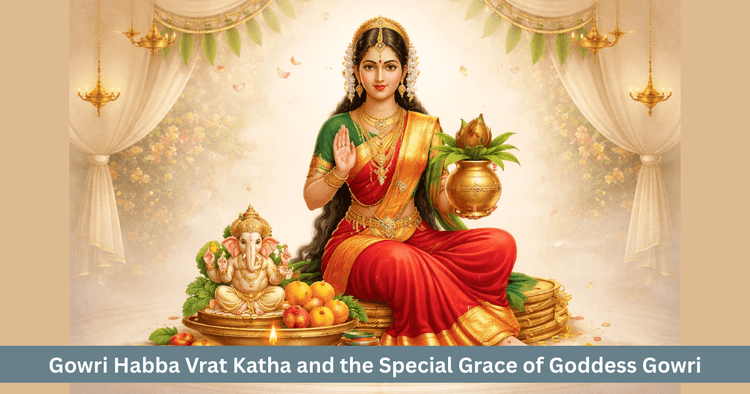
Table of Contents
Gowri Habba is a beautiful and emotionally rich festival of South India, especially Karnataka, dedicated to Mata Gowri, the divine mother of Lord Ganesha. Devotees believe that the observance of Gowri Habba strengthens marital harmony, brings prosperity and supports inner peace in family life. The festival is generally celebrated in the bright fortnight of the month of Bhadrapada, one day before Ganesh Chaturthi and together the two are often seen as a combined Gowri Ganesha celebration.
Gowri Habba is regarded mainly as a vrata for married women. On this day they worship Mata Gowri with a desire for the long life of their husbands, the wellbeing of the family and the protection of their household. The worship of Gowri is also seen as an auspicious prelude to Ganesh Chaturthi, because she is honoured as the mother and Shakti of Ganesha.
When and Why Is Gowri Habba Celebrated
Traditionally Gowri Habba is observed one day before Ganesh Chaturthi. It is considered auspicious to invoke the blessings of Mata Gowri before worshipping Lord Ganesha as the divine child. On this day married women bathe early, wear clean traditional clothes and take a vrata sankalpa.
It is believed that on Gowri Habba, Mata Gowri especially blesses householders with happiness and balance. The festival also honours the dedication, inner strength and selfless service of women within the family.
| Aspect linked to Gowri Habba | Inner meaning and importance |
|---|---|
| Festival timing | Usually Bhadrapada bright fortnight, day before Ganesh Chaturthi |
| Deity honoured | Mata Gowri, mother of Lord Ganesha |
| Main observers | Married women, praying for husband and family |
| Spiritual focus | Peace, prosperity and harmony in family life |
How Is the Idol of Gowri Installed
The first and most important step in Gowri Habba is the installation of the idol of Mata Gowri. A clean place in the house is chosen and a small altar is prepared, often decorated like a simple mandapa or raised platform. In many homes a plate filled with grains is used as the base and the idol of Gowri is placed upon it.
The idol can be of clay, metal or made in the traditional form using turmeric. The goddess is adorned with a beautiful sari, flowers, garlands ornaments and a bindi. A kalasha, coconut, mango leaves, kumkum, turmeric and a lamp are arranged and an elaborate puja is performed with devotion.
Devotees hold that such Gowri worship purifies the mind and heart, strengthens concentration and surrender and fills the home with uplifting spiritual energy.
What Is the Tradition of Bagina during Gowri Habba
One of the most distinctive features of Gowri Habba is the offering called bagina. Bagina is essentially a set of auspicious items gifted to married women, symbolising the sharing of happiness and prosperity.
Each bagina usually contains a small packet of turmeric, kumkum, bangles, black or coloured beads, a blouse piece, a coconut, some grains and a sweet such as jaggery. These objects are associated with marital auspiciousness, feminine grace, prosperity and auspicious intent.
One bagina is offered at the feet of Mata Gowri, while the remaining sets are distributed among married women in the neighbourhood and family. This act becomes not only an exchange of items but an expression of affection, blessings and social bonding.
What Special Practices Do Married Women Follow on Gowri Habba
Gowri Habba is seen as a day of saubhagya sadhana for married women. After bathing, they dress in auspicious colours such as yellow or green saris and adorn themselves with bangles, sindoor and mangalsutra, emphasising the signs of marriage.
In many households women observe a full or partial fast and eat only after completing the Gowri puja. During the worship they sing hymns and offer prayers for the long life of their husbands, the wellbeing of their children and the prosperity of the household.
After the puja they visit other married women or receive them at home, offer kumkum, turmeric and bagina and in turn receive their blessings. Gowri Habba thus becomes both a personal spiritual practice and a collective celebration of mutual goodwill.
How Is Gowri Habba Celebrated in Families
Gowri Habba extends beyond ritual worship. It is also a time for new clothes, festive cooking and meeting loved ones. Families visit temples to take darshan of Gowri and Ganesha and to participate in the devotional atmosphere.
Various traditional dishes and sweets are prepared at home. At midday or in the evening, family members and close relatives gather to share prasada and meals, turning the day into a warm blend of devotion and togetherness.
Where and How Can One Witness Gowri Habba
Gowri Habba is celebrated most prominently in Karnataka. It is primarily a home centred and family oriented festival, so it is not usually seen as a large public event.
Nevertheless, because of the close link with Ganesh Chaturthi, many temples and neighbourhoods display decorations, lamps and floral arrangements reflecting the celebration of Gowri and Ganesha. Some Ganesh pandals also include a representation of Gowri.
Those who are in Karnataka or nearby regions during this period of Bhadrapada can experience the essence of Gowri Habba by visiting local temples and observing the subtle but heartfelt ways in which devotees honour the goddess.
Inner Message of Gowri Habba
The deeper message of Gowri Habba is that balance, love and dedication are the true wealth of family life. Mata Gowri is revered as a union of strength, patience and gentleness. Her worship reminds women that they are the emotional and spiritual foundation of the home and that their presence sustains harmony.
The practice of bagina, the exchange of kumkum and turmeric and the shared worship of the goddess all express the idea that joy and prosperity reach fullness only when they are shared. Gowri Habba is thus a festival that honours womanly strength, household dharma and shared wellbeing.
Frequently Asked Questions
To whom is Gowri Habba dedicated and when is it observed?
Gowri Habba is dedicated to Mata Gowri, honoured as the mother of Lord Ganesha and as a form of divine Shakti. It is generally celebrated in the bright half of Bhadrapada, one day before the observance of Ganesh Chaturthi.
Is Gowri Habba observed only by married women?
The main vows and the tradition of bagina are carried out by married women, since the festival is closely linked with marital auspiciousness and the wellbeing of the husband. In some families unmarried girls also join the worship, praying to Goddess Gowri for a good life partner and a blessed married life.
What is the symbolic meaning of the items placed in bagina?
Bagina includes turmeric, kumkum, bangles, beads, coconut, blouse piece, grains and sweets. Turmeric and kumkum represent marital auspiciousness, bangles and cloth symbolise feminine grace and grains and sweets stand for prosperity and sweetness in relationships.
How is Gowri Habba related to Ganesh Chaturthi?
Worship of Mata Gowri on the day before Ganesh Chaturthi is seen as inviting the mother into the home before welcoming the divine son. It is believed that honouring Gowri first makes the next day’s installation and worship of Ganesha even more auspicious, so the two celebrations are often viewed together as Gowri Ganesha.
What key spiritual teaching does Gowri Habba offer?
The central teaching of Gowri Habba is respect for feminine strength, household dharma and shared prosperity. Through the worship of Mata Gowri, devotees cultivate patience, gentleness, determination and commitment to family harmony, which together support a balanced and joyful life.
Get your accurate Kundali
Generate KundaliDid you like it?
Author
Pt. Amitabh Sharma (56 Years)
Experience: 20
Consults About: Family Planning, Career
Clients In: Punjab, Haryana, Delhi
Share this article with friends and family
About ZODIAQ
ZODIAQ is an online Vedic Astrology platform. It connects clients seeking astrological advice to experienced astrologers with deep knowledge. Our users also generate kundali and perform kundali milan for free. ZODIAQ also offers services to the Astrologers. Astrologers utilize various offerings by ZODIAQ to serve their clients effectively.
If you are a User
Consult with experienced astrologers and seek their guidance. You can also order handwritten Janm Patrika report with life prediction prepared by experienced astrologers. Generate accurate Kundali, perform Kundali Matching and check horoscope and muhurat. Utilize our online library for all the necessary astrological and spiritual information.
If you are an Astrologer
Create accurate kundali for your clients and perform Kundali Matching for up to 5 people at a time. Write comprehensive Janm Patrika report for your clients with ZODIAQ. Check client details anytime by saving it in client directory. Become more productive by tracking how many clients you guide every day.
WELCOME TO
ZODIAQ
Right Decisions at the right time with ZODIAQ
