Parama Ekadashi Vrat Katha: Destroyer of Poverty and Giver of Auspicious Destiny
By Pt. Sanjeev Sharma
Discover the story, significance and blessings of wealth, happiness and auspicious destiny from Parama Ekadashi
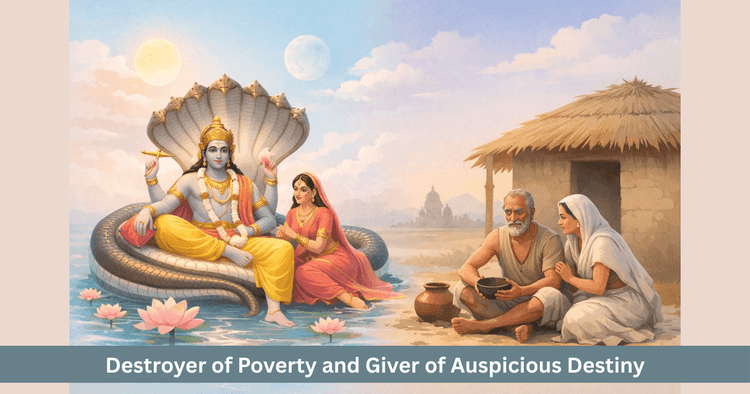
Table of Contents
In the Vedic tradition Parama Ekadashi is regarded as a very sacred and highly meritorious observance of Adhikamas. This Ekadashi appears only in those years when the extra month, called Adhikamas or Malamas, is added to the calendar. Hence its fast is considered rarer and more powerful than an ordinary Ekadashi. Through this vrata sins are destroyed, poverty is removed, happiness is gained in this world and an auspicious destination is attained in the next.
When does Parama Ekadashi occur and what is its place
According to scriptural calculation there are twenty four Ekadashis in a normal year. When Adhikamas or Malamas joins the year, two additional Ekadashis appear. Thus there are twenty six Ekadashis in such a year. The Ekadashi of the Shukla paksha of Adhikamas is called Padmini Ekadashi and the Ekadashi of the Krishna paksha is called Parama Ekadashi.
Adhikamas is also known as Purushottama month and is considered dear to Lord Vishnu. Fasts, recitations, charity and austerities performed in this month are said to bear greater fruit than in other months. Parama Ekadashi is the chief tithi of the Krishna paksha of this month and is especially renowned for removal of poverty, gain of wealth and destruction of sins.
Brief overview of Parama Ekadashi
| Aspect | Information |
|---|---|
| Month | Adhikamas Malamas Purushottama |
| Fortnight | Krishna paksha |
| Tithi | Ekadashi |
| Ekadashi name | Parama Ekadashi |
| Other Ekadashis | Padmini Shukla, Parama Krishna |
| Presiding deity | Lord Vishnu |
| Main fruits | Removal of sin, poverty, good fate |
Question of Arjuna and reply of Shri Krishna
In the Mahabharata era a dialogue is described where Arjuna after hearing the detailed description of the Ekadashi of the bright fortnight requests Lord Shri Krishna to also explain the Ekadashi of the dark fortnight of Adhikamas. He asks its name, the deity to be worshipped, the fruit obtained and the proper method of observance.
Lord Shri Krishna replies that the Ekadashi which comes in the Krishna paksha of Adhikamas is called Parama Ekadashi. In a year in which Adhikamas appears, Padmini and Parama together increase the number of Ekadashis from twenty four to twenty six. Shri Krishna further explains that by observing the fast of Parama Ekadashi according to the proper rules all sins are destroyed. A person gains happiness in this world and an auspicious destiny in the next. Worship of Lord Vishnu with incense, lamp, naivedya and flowers is considered the best discipline for this Ekadashi.
Background of Parama Ekadashi story
To show the greatness of this Ekadashi, Lord Shri Krishna narrates a story that arose among sages in the city of Kampilya.
In that city lived a very righteous Brāhmana named Sumedhā. His wife was pure, devoted and firmly established in the vow of pativratā. Due to the influence of past actions the couple was living in intense poverty. When the Brāhmana went to beg for alms he often did not receive enough to sustain them.
The wife herself lacked proper clothes yet she served her husband with full dedication. If a guest arrived she would give the little food they had to him and remain hungry herself, yet she never demanded anything from her husband. Both husband and wife passed their days in deep poverty while holding on to dharma, service and patience.
Inner conflict of Brāhmana Sumedhā and wisdom of his wife
One day in a state of great disappointment Sumedhā spoke to his wife. He said that when he went to wealthy people to request assistance they refused him. Household life cannot be maintained without wealth. therefore if she agreed, he wished to go to another land and work there to earn money. Sumedhā added that wise people have praised karma, so it seemed right to try.
His wife responded with deep humility and steadiness. She said that she considered herself a servant of her husband and would accept whatever he deemed proper. Yet she gently reminded him that a person receives results according to deeds performed in previous births. Even if one sits on Mount Sumeru, without good fortune one cannot obtain gold. Those who have given gifts of knowledge and land in earlier lives receive knowledge and land in their later birth.
She continued that if a person has not practised charity the Lord provides only enough grain to sustain life. She requested her husband not to leave their home, because she could not bear separation from him. Without the presence of her husband, a woman loses honour in society. Parents, brothers, in laws and relatives all begin to withdraw. Therefore she prayed that whatever is written in their destiny would be received in this very place and that he should not go away.
The Brāhmana accepted his wife’s counsel and gave up the idea of travelling to a distant land. Their time remained difficult, yet the couple continued to live with patience.
Arrival of sage Kaundinya and the way to remove poverty
At that time sage Kaundinya came to that region. Sumedhā and his wife welcomed him with deep reverence. They greeted him respectfully and said that his arrival had made their life meaningful. They offered him a seat and served him food according to their capacity.
After the meal the devoted wife spoke humbly. She requested the sage to show a way to destroy their poverty. She admitted that she had stopped her husband from going to another land to earn money because she could not endure separation from him. Now that the sage had arrived by divine grace she believed that their poverty would end soon. She asked him to kindly show some spiritual means for its removal.
Sage Kaundinya, moved by her simplicity and devotion, explained the remedy. He told her that the fast of Parama Ekadashi of the Krishna paksha of Malamas destroys all sins, sorrows and poverty. Whoever observes this fast with faith becomes prosperous. In this fast it is considered auspicious to remain awake at night with singing, music and recitation in praise of the Lord.
The sage further explained that the treasurer of the gods, Kubera, had also observed the fast of Parama Ekadashi. Pleased by his observance Lord Shiva granted him the position of lord of wealth. In the same way truthful King Harishchandra attained back his son, wife and kingdom through the power of this very fast.
What is the discipline of Pancharātri vrata
Sage Kaundinya did not only speak about a one day fast but also described the Pancharātri vrata associated with Parama Ekadashi. He said that on the day of Parama Ekadashi, after completing the morning duties, one should begin this five day observance according to the rules.
He explained that those who remain in nirjala fasting, without water, for all five days go to heaven along with their mother, father and wife. Those who take food only in the evening for five days also become eligible for heaven. Those practitioners who bathe and then feed Brāhmanas for five days gain the fruit equivalent to feeding the entire world.
Those who give horses in charity during this observance obtain merit equal to giving the three worlds in charity. Those who offer sesame seeds to a worthy Brāhmana reside in the abode of Lord Vishnu for as many years as there are sesame seeds. Those who donate a pot filled with ghee attain the world of the sun. Those who maintain brahmacharya for five days reach heaven accompanied by celestial maidens. The sage told the devoted wife that she should undertake this fast together with her husband and that by doing so they would attain success and finally heaven.
Fruits of Parama Ekadashi fast and transformation of the Brāhmana couple
Following the instructions of sage Kaundinya, Brāhmana Sumedhā and his wife observed the fast of Parama Ekadashi and the Pancharātri vrata. They followed discipline, restraint and faith as far as their capacity allowed. After the completion of the fast the Brāhmana’s wife saw a prince approaching their humble dwelling.
This prince had come by the inspiration of Lord Brahmā. He offered to the couple a beautiful, well furnished house containing all necessary items for living. He also granted them an entire village as means of livelihood so that they would never again suffer from lack of wealth. In this way their poverty completely disappeared.
The story says that after enjoying happiness on earth for many years the husband and wife finally departed for the supreme abode of Lord Vishnu. Thus the fast of Parama Ekadashi did not merely give them wealth but provided lifelong security, inner peace and finally spiritual success.
Spiritual message of Parama Ekadashi fast
The story of Parama Ekadashi is far more than an account of financial upliftment. It conveys deep teachings about patience, pativratā dharma, contentment, the law of karma and trust in the Lord. Sumedhā and his wife did not abandon their home, dharma or relationship even during the hardest times.
The story demonstrates that when the right spiritual discipline comes at the right time destiny can change, yet it also shows that inner purity, faith and dāna are essential in that process. Parama Ekadashi teaches that not only external efforts but also inner transformation through fasting, truthfulness and charity play a decisive role in improving life. One who adopts this fast with sincerity gradually becomes richer not only materially but also mentally and spiritually.
Frequently asked questions about Parama Ekadashi
In which month and fortnight does Parama Ekadashi occur
Parama Ekadashi occurs only in Adhikamas which is also known as Malamas or Purushottama month. It is the Ekadashi tithi of the Krishna paksha of this special month and is counted as one of the twenty six Ekadashis of that year.
What is the difference between Padmini and Parama Ekadashi in Adhikamas
In Adhikamas the Ekadashi of the Shukla paksha is called Padmini Ekadashi and that of the Krishna paksha is called Parama Ekadashi. Padmini is mainly associated with progeny, fame and fulfilment of long term vows, while Parama Ekadashi is especially known for removal of sins, destruction of poverty and wealth.
How does Parama Ekadashi fast remove poverty
According to the story, Brāhmana Sumedhā and his wife observed the fast of Parama Ekadashi and the Pancharātri vrata on the instruction of sage Kaundinya. At the completion of the observance a prince arrived and gifted them a fully furnished house and a village for livelihood. The symbolic meaning is that this fast can open new means of livelihood, stability and respect when it is practised with deep faith.
What main rules are followed in the Pancharātri vrata of Parama Ekadashi
The Pancharātri vrata begins from Parama Ekadashi and continues for five days. It may include nirjala fasting, taking food only in the evening, feeding Brāhmanas, giving charity of horses, sesame and ghee, maintaining brahmacharya and regular bathing and recitation. Each practitioner follows according to personal capacity but the core of the observance is faith, restraint and purity.
For whom is the fast of Parama Ekadashi especially beneficial today
In present times this fast is particularly helpful for those struggling with financial instability, debt, lack of livelihood or an inner sense of poverty. It is also a powerful spiritual practice for those who wish to emerge from the effects of past wrong actions and start a fresh, positive chapter of life supported by the grace of Lord Vishnu.
Get your accurate Kundali
Generate KundaliDid you like it?
Author
Pt. Sanjeev Sharma (63)
Experience: 20
Consults About: Family Planning, Career
Clients In: Punjab, Haryana, Delhi
Share this article with friends and family
About ZODIAQ
ZODIAQ is an online Vedic Astrology platform. It connects clients seeking astrological advice to experienced astrologers with deep knowledge. Our users also generate kundali and perform kundali milan for free. ZODIAQ also offers services to the Astrologers. Astrologers utilize various offerings by ZODIAQ to serve their clients effectively.
If you are a User
Consult with experienced astrologers and seek their guidance. You can also order handwritten Janm Patrika report with life prediction prepared by experienced astrologers. Generate accurate Kundali, perform Kundali Matching and check horoscope and muhurat. Utilize our online library for all the necessary astrological and spiritual information.
If you are an Astrologer
Create accurate kundali for your clients and perform Kundali Matching for up to 5 people at a time. Write comprehensive Janm Patrika report for your clients with ZODIAQ. Check client details anytime by saving it in client directory. Become more productive by tracking how many clients you guide every day.
WELCOME TO
ZODIAQ
Right Decisions at the right time with ZODIAQ
