Sharad Purnima Vrat Katha and the Blessing of the Moon
By Pt. Sanjeev Sharma
Significance of Sharad Purnima Vrat, Chandradeva’s Blessings, and Prosperity
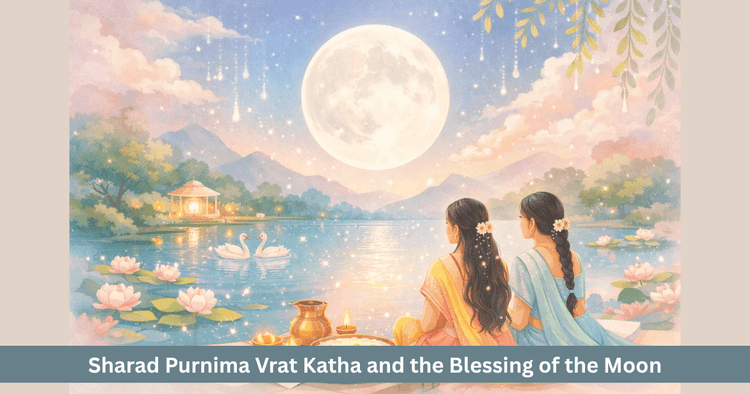
Table of Contents
The vow of Sharad Purnima is regarded as highly auspicious for receiving the grace of Chandradeva, blessings of children, prosperity and inner peace. The moonlit night of this full moon is described as one of the brightest and gentlest nights of the year. It is believed that on this night the cool, nectar like rays of the Moon shower upon the earth and those who observe the vrata with faith, worship and gaze upon the Moon receive special blessings.
In this observance, one begins the day with a resolve for purity and self restraint. At sunset, when the Moon rises, water is offered as arghya and while looking at the Moon, one prays for the removal of sorrow and misfortune and for the growth of good fortune. In the practice of this vow, steadiness, faith and completion hold special importance, which is beautifully illustrated in the Sharad Purnima katha of two sisters.
Key Indications of the Sharad Purnima Vrat
| Aspect | Meaning and indication |
|---|---|
| Presiding deity | Chandradeva and his cooling grace |
| Main purpose | Blessings of children, good fortune, peace and prosperity |
| Core mood of the vow | Complete faith, discipline and full observance |
| Important actions | Offering arghya to the Moon, night observance, gratitude |
The Story of Two Sisters and the Sharad Purnima Vrat
In a certain village there lived a merchant who had two daughters. Both sisters observed the full moon vow, yet their inner attitude and way of looking at the vow were very different. The elder sister was deeply pure, religious and careful about the rules of observance.
She followed the Sharad Purnima vrat with full devotion and proper procedure. In the evening, when the Moon rose, she would offer water to Chandradeva, then complete her worship and only afterwards break her fast. She never left the vow incomplete, never broke it midway and never treated it lightly.
The younger sister, in contrast, was indifferent towards the vow. She kept the full moon fast only in name. There was little faith in her heart and little care for the rules. She would break her fast without completing the observance, sometimes eating before time and sometimes ignoring the discipline that the vow required.
Result of the Sharad Purnima Vrat and Their Married Lives
As time passed, the two sisters reached youth. At the proper time, their father arranged the marriage of both. After marriage, the real examination of life began. In the home of the elder sister, healthy and long lived children were born. Joy, laughter and contentment filled her household.
The younger sister’s life, however was overshadowed by grief. She conceived children but each child died soon after birth. Every time, within a short while after the delivery, the infant would pass away. This repeated loss broke her heart and she began to search for the cause of her misfortune.
The Younger Sister’s Sorrow and Her Visit to the Saint
Deeply distressed by repeated loss of her children, the younger sister sought refuge in a saint. She came before him with tearful eyes and described the emptiness of her home and the repeated deaths of her infants.
The saint listened patiently and asked about her habits, vows and conduct, including her way of performing the full moon vrat. From her answers, it became clear that she had been observing the Sharad Purnima and other full moon vows only in a formal and superficial way. There was no real devotion in her heart, no care for the rules and no respect for completing the vow.
The saint explained that a vow must not be merely in name but should be performed with faith and surrender. He said that an incomplete, neglected and devotionless vow may fail to bring auspicious results and can even invite disorder and obstacles into one’s life. If she would now observe the vow of Sharad Purnima sincerely, with full discipline and dedication, then by the grace of Chandradeva her difficult time might end.
Acknowledging Her Error and Observing the Vrat Anew
Hearing the words of the saint, the younger sister came to a sudden clarity. She realised that until now she had been keeping the vow as mere show, without involving her heart. She resolved inwardly that on the coming Sharad Purnima she would observe the vow with complete faith, purity and proper procedure.
When the night of Sharad Purnima arrived, she kept a disciplined fast throughout the day. At moonrise she offered arghya with devotion, prayed, remembered the katha and completed the vrata according to the rules. This time there was no carelessness in her actions, only surrender and reverence.
Some time later, by divine grace, she again conceived. The vow and austerity of Sharad Purnima filled her heart with hope. When the time of delivery came, she gave birth to a long awaited child.
Death of the Newborn and the Younger Sister’s Plan
Sadly, the previous pattern appeared once more. Soon after birth the child died. For a moment the younger sister’s heart broke again, yet a small light of hope still remained within.
She knew very well that her elder sister had been observing the Sharad Purnima vow with unbroken devotion since childhood and that Chandradeva had special grace upon her. She believed that through the touch of the elder sister, with the support of the Moon’s blessing, her infant might regain life.
She formed a plan. She bathed the child’s body, covered it with a clean cloth and placed it upon a small bed. Then she invited her elder sister to her home on some ordinary pretext and welcomed her with affection.
Touch of the Elder Sister and the Child’s Return to Life
When the elder sister arrived, the younger sister requested her to sit upon the very bed on which the covered body of the child lay. The elder sister did not know what was there. As she moved to sit, the edge of her garment lightly touched the child beneath the cloth.
At that very moment, the child began to cry. The infant who had been considered dead came back to life. Seeing this, the elder sister was astonished. She immediately scolded the younger sister for leaving a baby alone on such a bed and being so careless.
Then the younger sister, with folded hands, told her the truth. She explained that the child had died at birth and that she had placed him there in the hope that the elder sister’s touch, filled with the power of the Sharad Purnima vow and the grace of the Moon, might bring him back to life. The revival of the infant was understood as a direct result of Chandradeva’s blessing and the strength of a faithfully observed vrata.
Spread of the Sharad Purnima Vrat Tradition
After this incident, the greatness of the Sharad Purnima vow became firmly established in both families. The story of the elder sister’s steadfast observance, the grace of the Moon and the younger sister’s new resolve began to spread through the village and beyond.
People understood that Sharad Purnima is not merely a custom but a powerful means of obtaining auspicious results and the joy of children. From that time onwards, it became a tradition to keep the vow of Sharad Purnima with reverence and careful observance, to offer arghya to the Moon and to pray for the well being of the family.
Even today, on the moonlit night of Sharad Purnima, many households follow the practices of fasting, listening to the katha and gazing upon the Moon. The story of the two sisters reminds everyone that the true essence of a vow lies not in the number of rules but in the sincerity of the heart and the completeness of the observance.
Frequently Asked Questions
Why is offering arghya to the Moon important in the Sharad Purnima vrat?
Offering arghya symbolises acceptance of the Moon’s cooling grace and a prayer for release from sorrow, stress and inner strain. It brings together gratitude, humility and the wish for good fortune.
What reason does the katha give for the younger sister’s repeated loss of children?
According to the story, the younger sister kept the full moon vow only in name. She left it incomplete and showed neither faith nor discipline. This careless observance is described as the cause of misfortune and repeated loss of children in her life.
What was the central advice that the saint gave to the younger sister?
The saint taught that a vow must not be a formality. It should be kept with wholehearted faith and careful adherence to its rules. He said that if she observed the Sharad Purnima vrat with true dedication, the grace of Chandradeva could bring an end to her difficult period.
How is the child’s return to life understood in the katha?
The katha explains that through the touch of the elder sister’s garments, charged with the merit of the Sharad Purnima vow and the blessing of the Moon, the dead child revived. It is presented as the combined effect of sincere vrata and divine grace.
What main teaching does the Sharad Purnima vrat offer to a seeker?
The vow teaches that real fruit arises from devotion, surrender and completeness in any spiritual practice. Rather than many half hearted vows, a few observances kept with true feeling are more beneficial. The Sharad Purnima story honours the honesty of the heart and the firmness of discipline as the real foundation of blessing.
Get your accurate Kundali
Generate KundaliDid you like it?
Author

Pt. Sanjeev Sharma (63)
Experience: 20
Consults About: Family Planning, Career
Clients In: Punjab, Haryana, Delhi
Share this article with friends and family
About ZODIAQ
ZODIAQ is an online Vedic Astrology platform. It connects clients seeking astrological advice to experienced astrologers with deep knowledge. Our users also generate kundali and perform kundali milan for free. ZODIAQ also offers services to the Astrologers. Astrologers utilize various offerings by ZODIAQ to serve their clients effectively.
If you are a User
Consult with experienced astrologers and seek their guidance. You can also order handwritten Janm Patrika report with life prediction prepared by experienced astrologers. Generate accurate Kundali, perform Kundali Matching and check horoscope and muhurat. Utilize our online library for all the necessary astrological and spiritual information.
If you are an Astrologer
Create accurate kundali for your clients and perform Kundali Matching for up to 5 people at a time. Write comprehensive Janm Patrika report for your clients with ZODIAQ. Check client details anytime by saving it in client directory. Become more productive by tracking how many clients you guide every day.
WELCOME TO
ZODIAQ
Right Decisions at the right time with ZODIAQ
