Significance of Vrishabha Sankranti and its Spiritual Insights
By Pt. Abhishek Sharma
Sun’s Entry into Taurus and Its Religious Significance
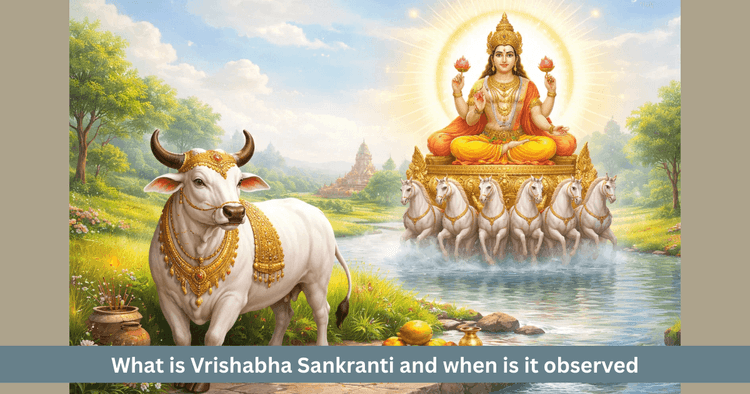
Table of Contents
In Vedic astrology and Sanatana tradition Vrishabha Sankranti is regarded as a very important solar transition. It is the moment when the Sun moves from Mesha rashi Aries to Vrishabha rashi Taurus. According to the solar calendar this transition generally occurs in the month of Vaishakha, while in the North Indian lunar reckoning it is related to the month of Jyeshtha.
From this moment the Vrishabha season or Taurus solar month is considered to begin. In different parts of India this sankranti marks the start of new regional solar months. In Tamil Nadu it is linked with the beginning of Vaigasi masam, in Kerala with Edavam masam, in Bengal with Jyeshto mash and in Odisha it is especially known as Brusha Sankranti. Names differ from region to region, yet the spiritual focus on the Sun’s entry into Taurus remains the same.
What is Vrishabha Sankranti and when is it observed
From an astrological viewpoint a sankranti is the exact moment when the Sun enters a new zodiac sign. Vrishabha Sankranti refers specifically to the Sun’s entry into Vrishabha rashi. The observance depends on the precise solar calculation, regardless of whether the lunar month is counted as Vaishakha or Jyeshtha.
Across India this sankranti is associated with the start of a new solar month or season.
| Region | Name and reference |
|---|---|
| North India | Vrishabha Sankranti in Jyeshtha period |
| Tamil Nadu | Beginning of Vaigasi masam |
| Kerala | Start of Edavam masam |
| Bengal | Period of Jyeshto mash |
| Odisha | Known as Brusha Sankranti |
During this phase the Sun activates the Taurus energy related to steadiness, patience, land and sustained effort. Therefore this sankranti is considered favourable for disciplined work, charity and penance.
Spiritual link between Vrishabha and Nandi
In Sanskrit the word vrishabha denotes a bull and is closely associated with Nandi, the sacred mount of Lord Shiva. Nandi symbolises patience, loyalty and service. Scriptures sometimes hint at a subtle relation between the energy of Vrishabha and the qualities of Nandi.
On Vrishabha Sankranti the Sun’s entry into Taurus is seen as a reminder to awaken Nandi like qualities of steadfastness and devotion in one’s own life. Because of this, in some traditions devotees worship Lord Shiva in the form of Rishabharudha Shiva riding the bull and blessing the world with stability and strength.
At the same time many lineages emphasise Lord Vishnu worship on this day. It is believed that through sincere worship of Vishnu on Vrishabha Sankranti one receives blessings for happiness, prosperity and gradual freedom from the cycle of birth and death.
Astrological and spiritual importance of Vrishabha Sankranti
In Vedic astrology sankranti is not viewed only as a mathematical point but also as a symbolic personification. Ancient texts describe Sankranti as a being of immense size, suggesting a powerful energy field in time.
Traditional belief considers this personified sankranti somewhat inauspicious for performing strictly auspicious rites such as marriage, house warming or major new beginnings. Hence astrologers often advise avoiding the exact sankranti window for those ceremonies.
At the same time the very same period is regarded as highly suitable for tapas, dāna, japa and shraddha. Vrishabha Sankranti, like the other twelve sankrantis of the year, is treated as a potent punya kala favourable for purification, charity and ancestral offerings.
Auspicious timing on Vrishabha Sankranti
Although the entire day around Vrishabha Sankranti is respected, scriptures highlight a more precise window for sankranti related observances. In traditional time reckoning one day equals sixty ghatis.
For Vrishabha Sankranti the most effective period for holy acts is described as the duration from about sixteen ghatis before the exact sankranti moment up to the sankranti moment itself. Activities such as snan, japa, dāna and tarpan during this window are considered especially fruitful.
Many families choose sunrise or the closest suitable time around sankranti to bathe at a river or nearby waterbody, offer water to the Sun and perform simple tarpan. Those who remain at home bathe, recite sacred mantras, light a lamp and practice charity according to their capacity.
Recommended charity and penance on Vrishabha Sankranti
Like other sankrantis, Vrishabha Sankranti is well known as a day for charity and self discipline. The merit of donations offered on this day is believed to support both this life and future births.
Some commonly recommended forms of charity and practice include the following.
- Donation of food, water, clothes and shade, especially arranging drinking water in the heat for travellers.
- Feeding the poor, the hungry, sadhus and Brāhmanas and offering dakshina according to one’s means.
- Performing godāna, the symbolic or actual donation of a cow to a deserving Brāhmana or a genuine go seva centre, regarded as highly meritorious.
- Conducting shraddha and pitru tarpan in certain traditions, seeking peace and upliftment for departed ancestors.
Together with charity, maintaining restraint, purity, truthful speech and humility throughout the day is considered an important part of the vrata.
How to observe Vrishabha Sankranti vrat and worship
Many devotees keep a vrata on Vrishabha Sankranti and treat it as a special solar fast.
On this day one should rise early, preferably in Brahma muhurta, bathe and wear clean, light coloured clothes. Some people begin with a sankramana snan, followed by offering water to the rising Sun.
After this one may formally resolve to observe the Vrishabha Sankranti vrat and remain on simple satvik food or partial fast during the day. The focus is on purity of food, mind and action rather than rigid austerity alone.
Traditionally two forms of worship are highlighted.
- Worship of Lord Vishnu, seeking righteousness and liberation.
- Worship of Lord Shiva in the form of Rishabharudha, symbolic of Shiva mounted on the bull.
Devotees light a lamp, offer tulsi or bilva leaves, incense and bhog and pray for clarity in decisions, patience and strength for rightful actions.
Worship of Rishabharudha Shiva on Vrishabha Sankranti
In some customs Vrishabha Sankranti is marked with special devotion to Rishabharudha Shiva. The image of Shiva riding the bull represents the mastery of higher consciousness over the restless mind and senses.
On this day many worshippers perform abhisheka with milk, curd, honey, ghee and Ganga water and offer bilva leaves and flowers to the Shiva Linga and to Nandi. Simple chanting of “Har Har Mahadev” or “Om Namah Shivaya” is encouraged as a way to align one’s mind with divine strength.
Those observing a stricter vrata remain disciplined through the day, avoid harsh speech and end the fast after sunset or the next morning, feeding Brāhmanas or the needy as part of their observance.
Vishnu worship and aspiration for liberation
Although the word Vrishabha evokes Nandi and Shiva, many scriptural references also associate this sankranti with the worship of Lord Vishnu. Devotees pray that through his grace their journey through repeated births may gradually come to peace.
Simple offerings include food, tulsi leaves, water from a shankha and yellow cloth placed before the deity or image of Vishnu. While taking the sankranti resolve, a devotee may inwardly commit to walk more firmly on the path of dharma rather than merely seeking worldly gain.
Reciting at least one mala of “Om Namo Narayanaya” or “Om Namo Bhagavate Vasudevaya” during this day helps to connect the mind with the sustaining aspect of the divine.
Sacred bath, Sun oblation and ancestral offerings
Vrishabha Sankranti is also linked with sankramana snan, the ritual bath at the time of the Sun’s transition. Where possible people visit holy rivers such as the Ganga, Godavari, Narmada, Kaveri or any respected local river or tirtha.
After bathing they face the east and offer arghya to the Sun, praying for health, energy and inner clarity. Chanting of the Gayatri mantra, Surya mantras or the Aditya related verses is common during this offering.
At many places devotees also perform pitru tarpan on this day using water mixed with black sesame seeds or other traditional substances. The intention is to use the transforming energy of sankranti to bring peace and balance to ancestral lines.
Suggested conduct for observers of the vrat
For one who keeps the Vrishabha Sankranti fast, inner conduct is as important as external rites.
- Sleeping on a simple bed or on the floor if health permits.
- Avoiding anger, harsh words and unnecessary arguments, practising humility instead.
- Refraining completely from meat, alcohol and tamasic food.
- Spending time in mantra recitation, scriptural reading or quiet reflection.
In this way the sankranti vrat becomes a tool not only for outer ritual but also for inner transformation and discipline.
Potential benefits linked with Vrishabha Sankranti
When observed with sincerity, Vrishabha Sankranti is described as bringing subtle benefits in many areas of life.
- Charity and tarpan support peace for ancestors and harmony in the family field.
- Godāna and food donation strengthen the foundation of compassion and dharmic wealth for future generations.
- Worship of Shiva and Vishnu fosters patience, emotional steadiness and better judgement in important matters.
- Sacred bath, Sun worship and japa help cool the body in the heat season and calm the restless mind.
People who regularly honour sankranti times with simple but consistent practices often feel a clearer connection between their actions and the fruits that unfold in their lives.
Frequently asked questions about Vrishabha Sankranti
What exactly is Vrishabha Sankranti and which zodiac change does it mark
Vrishabha Sankranti is the moment when the Sun leaves Mesha rashi and enters Vrishabha rashi. It marks a shift in the solar wheel, usually during Vaishakha Jyeshtha and signals the beginning of the Taurus solar month and Vrishabha season.
Are all auspicious ceremonies suitable on Vrishabha Sankranti
The exact sankranti period is generally not used for ceremonies such as marriage, house warming or major inaugural rituals. However the same time is considered highly auspicious for snan, dāna, japa, shraddha and tarpan, which focus on purification and merit.
Why is godāna especially emphasised on Vrishabha Sankranti
Vrishabha is symbolically linked to the bull and the cow. Donating a cow or supporting genuine go seva on this day is believed to bring blessings in dharma and wealth, as well as satisfaction to ancestors and deities. Godāna is often described as a charity whose merit extends across lifetimes.
Can one worship both Shiva and Vishnu on Vrishabha Sankranti
Yes, many devotees honour both forms. Worship of Vishnu is associated with protection and progress towards liberation, while devotion to Rishabharudha Shiva supports patience, endurance and tapas. Depending on one’s tradition, either or both can be worshipped with equal reverence.
How can Vrishabha Sankranti be observed simply at home
At home one may bathe early, offer water to the Sun, recite mantras, give some food or water in charity and in the evening light a lamp before an image of Shiva or Vishnu. Any sincere act of prayer, charity or self discipline carried out near the sankranti time helps align personal life with the beneficial current of this day.
Get your accurate Kundali
Generate KundaliDid you like it?
Author

Pt. Abhishek Sharma (63)
Experience: 20
Consults About: Family Planning, Career
Clients In: Punjab, Haryana, Delhi
Share this article with friends and family
About ZODIAQ
ZODIAQ is an online Vedic Astrology platform. It connects clients seeking astrological advice to experienced astrologers with deep knowledge. Our users also generate kundali and perform kundali milan for free. ZODIAQ also offers services to the Astrologers. Astrologers utilize various offerings by ZODIAQ to serve their clients effectively.
If you are a User
Consult with experienced astrologers and seek their guidance. You can also order handwritten Janm Patrika report with life prediction prepared by experienced astrologers. Generate accurate Kundali, perform Kundali Matching and check horoscope and muhurat. Utilize our online library for all the necessary astrological and spiritual information.
If you are an Astrologer
Create accurate kundali for your clients and perform Kundali Matching for up to 5 people at a time. Write comprehensive Janm Patrika report for your clients with ZODIAQ. Check client details anytime by saving it in client directory. Become more productive by tracking how many clients you guide every day.
WELCOME TO
ZODIAQ
Right Decisions at the right time with ZODIAQ
