The Deeper Meaning of Palani’s Navapashanam Idol: Siddha Tradition and Transformative Energy
By Pt. Nilesh Sharma
The mystical tradition of Palani Murugan temple linking devotion, Siddha wisdom, and medicinal transformation
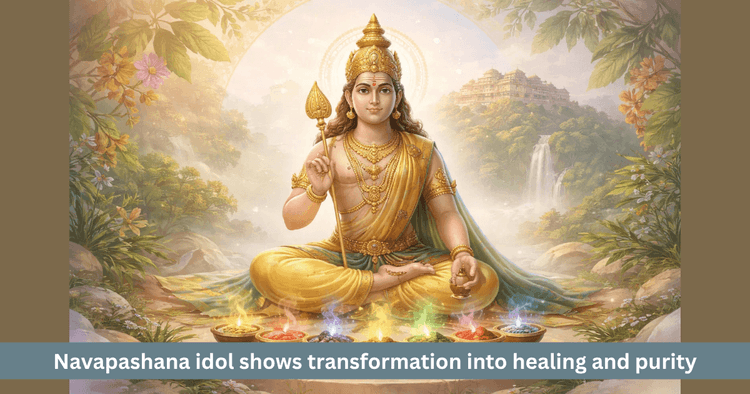
Table of Contents
In the Murugan upasana tradition, meaning the worship of Murugan, the shrine of Palani is regarded as deeply special. It is not only a famous temple but the center of a sacred tradition where bhakti meaning devotion, Siddha jnana meaning Siddha wisdom, an aushadhiya drishti meaning medicinal vision and divine grace are seen together. Among the most discussed features of Palani is the idol of Lord Murugan that is believed to be made not of ordinary stone or metal but of Navapashanam. This belief makes the image far more revered than an ordinary temple idol.
According to this tradition, the idol is believed to have been formed from a special combination of nine poisonous substances. At first hearing, this idea surprises the ordinary mind because substances usually considered harmful are understood, after proper Siddha preparation, balance and sanctification, to take on a beneficent form. The belief surrounding the idol of Palani is not lived merely as a tale. It is also linked with healing, ritual, faith and inner purification.
Why is Palani considered so important
The temple of Palani is one of the major sacred centers of Lord Murugan, who is also worshipped in South India as Kartikeya, Skanda and Subrahmanya. A devotee does not come here only for darshan. The devotee comes seeking an experience of an energy that is believed to be connected with austerity, discipline and grace.
In South Indian devotion, Murugan is not remembered only as a deity of war or valor. He is also worshipped as the deity of wisdom, youthful strength, self restraint, inner radiance and guidance. That is why when it is said that the idol at Palani is made of Navapashanam, the statement does not remain only a detail of temple construction. It becomes a sign of a profound spiritual tradition.
What is Navapashanam
The word Navapashanam generally refers to a traditional concept involving a combination of nine specific poisonous elements that are believed in Siddha tradition to be processed, purified and balanced through special methods. This idea is not limited only to material composition. A larger spiritual meaning is also attached to it, that even those elements of nature which appear harmful in ordinary form may take on a beneficial role through proper knowledge and disciplined practice.
That is why Navapashanam is not discussed merely as a material substance. It is also linked with Siddha chikitsa meaning Siddha healing, tantric sanskara meaning ritual sanctification, energetic purification and sacred idol making. The idol of Palani is considered special for this very reason, because it is regarded not merely as an object of worship but as a divine form made of consecrated elements.
Main points for understanding the idea of Navapashanam
• It is a traditional belief connected with the balanced combination of nine poisonous elements.
• Its importance is understood as both medicinal and spiritual.
• In Siddha tradition, sanctified substances are believed to change in their effect.
• For this reason the idol of Palani is considered different from an idol of ordinary stone or metal.
Who is believed to have made this idol
The most important name associated with the Navapashanam idol of Palani is the great Siddha Bogar. In the Siddha tradition of South India, Bogar is given an exalted place. He is remembered not only as a seeker or yogi but as a realized master deeply connected with rasayana vidya meaning alchemical knowledge, yoga siddhi meaning perfected yogic attainment, medicinal knowledge and sacred practice.
A strong traditional belief says that Bogar created this idol for the welfare of people. This does not mean the image was made only to be seen. Rather, it is believed that an aushadhiya sanskara meaning medicinal consecration was built into it so that through ritual bathing and offerings, a beneficent influence could reach the devotees. That is why Bogar is remembered here not merely as a craftsman but as a Siddha rishi meaning a realized sage of the Siddha path.
Can an idol made of poisonous substances be considered beneficial
At first glance, this is a natural question. The ordinary mind asks how something connected with poisonous materials can be sacred and helpful. The answer given by Indian Siddha traditions is that there is a great difference between ignorant use and consecrated use. The same substances that can cause harm in an unbalanced condition may be understood as useful after Siddha discipline and precise preparation.
This idea also connects with a wider principle of Indian spiritual thought. Within a human being too, anger, attachment and ego can act destructively. Yet when the same energies are purified through practice, they can turn into strength, detachment and compassion. The deeper suggestion behind the Navapashanam idol is also this, that the transformation of poison is possible.
How is the Palani idol connected with the belief in healing water
Among the best known beliefs associated with the Palani temple is the idea that the abhisheka jala meaning the ritual bathing water that touches the idol carries a special effect. Devotees believe that this water holds the power to help relieve illness and offer comfort in various forms of suffering. This belief has made Palani not only a pilgrimage center but also a sacred place associated with hope for healing.
It is important to understand that such beliefs are not limited only to outward physical benefit. For a devotee, abhisheka water is not just a material liquid. It is a medium of prasada meaning blessed offering, grace and divine contact. Therefore when it is said that the water touching the idol is beneficial, the meaning extends beyond the body and includes mental and spiritual comfort as well.
How devotees understand this water
• It is regarded as a form of blessed medicinal grace.
• Many see it as a sacred current that may bring relief in illness.
• It is also linked with devotion, faith and inner support.
• This belief keeps the Siddha tradition associated with the idol alive.
How do Bogar and the Siddha tradition deepen this story
In the South Indian Siddha tradition, many realized beings are remembered as masters who did not separate yoga, medicine, alchemy and spiritual practice into isolated categories. For them the body, life force, mind and spiritual ascent were interconnected. The memory of Bogar also comes with this wider understanding. That is why the story of the Navapashanam idol is not merely a story of making an image. It is also a story of the transformation of Siddha knowledge into public welfare.
When the making of an idol is linked not only with art but also with practice and medicinal insight, its meaning becomes much larger. It does not remain only a temple ornament. It becomes the symbol of a living tradition in which the worship of the deity and the suffering of living beings are understood together.
Is this only a religious belief or does it also carry a wider cultural meaning
The Navapashanam idol of Palani is not only a matter of religious faith. It is also part of the cultural memory of South India in which temple, healing, austerity, knowledge and community were closely connected. In earlier times temples were not only places of worship. They were also centers of teaching, care, ritual and consolation for society.
Seen in this way, the story of the Navapashanam idol reveals a much larger cultural truth. It shows that Indian traditions do not look at matter as matter alone. They also value the energy, consecration and purpose contained within it. That is why this idol does not remain only an object of ancient curiosity. It continues as part of a living sacred tradition.
Spiritual insights offered by the Navapashanam idol
This story does not only tell us what material the idol is believed to be made from. It says something much deeper. It teaches that what appears frightening or poisonous at first sight may become beneficial after proper transformation. This message applies not only to substances but also to the tendencies within a human being.
Anger can be transformed into strength. Attachment can be transformed into devotion. Pain can be transformed into compassion. In the same way, the idea of Navapashanam says that transformation is not only possible but is central to spiritual practice. The idol of Palani presents this truth with remarkable beauty.
A table to understand this tradition
| Element | Traditional meaning |
|---|---|
| Palani shrine | A major center of Murugan worship |
| Navapashanam | A consecrated combination of nine poisonous elements |
| Siddha Bogar | The great Siddha associated with the idol |
| Abhisheka water | Water believed to be beneficial and healing |
| Siddha tradition | A united vision of yoga, alchemy, healing and practice |
Does this belief still live in people’s hearts today
Yes, even today many devotees do not look upon the idol of Palani merely as an ancient heritage object. For them it remains a center of living faith. Devotees believe that the grace of Lord Murugan, the Siddha lineage of Bogar and the sanctity of Navapashanam can still be felt in the sacredness of that place.
That is why a journey to Palani is not only a journey for darshan. For many, it also becomes a journey for healing, mental peace, prayerful longing, spiritual practice and faith. This feeling has kept the shrine of Palani alive in the hearts of devotees across generations.
In which traditions is this belief remembered
The belief surrounding the Navapashanam idol of Palani is commonly associated with Siddha Agama and local sthala puranas, meaning sacred temple legends of the place. In these traditions one finds the understanding that the great Siddha Bogar made the image of Lord Murugan in a medicinal form and that the abhisheka water touching the idol came to be regarded as carrying special qualities. For this reason the account is seen not merely as a local tale but as a meeting point of regional devotion and Siddha tradition.
Between faith and healing
The significance of the Navapashanam idol of Palani does not lie only in the question of what material it is believed to be made from. Its true importance lies in a vision that sees medicine even within poison, consecration within matter and grace within the idol. This is one of the precious qualities of Indian tradition, that it invites the seeker to move beyond outer form and recognize inner meaning.
This image of Lord Murugan does not only teach the devotee to bow. It also teaches that whatever appears harsh, poisonous or unbalanced in life may, through right knowledge and right practice, one day become a means of welfare. That is the deepest teaching of the Navapashanam idol of Palani.
Frequently asked questions
Why is the idol of Palani called Navapashanam
Because tradition holds that the idol was made from a specially consecrated mixture of nine poisonous substances.
What is Bogar’s connection with this idol
In the South Indian Siddha tradition, the great Siddha Bogar is believed to have prepared this idol with a medicinal and welfare giving intention.
Is the abhisheka water considered special
Yes, devotees believe that the abhisheka jala meaning ritual water touching the idol is beneficial and may bring relief in illness.
What is the spiritual meaning of Navapashanam
It is understood as a symbol of transformation in which even poisonous elements can become beneficial after proper consecration.
Which traditions are associated with this belief
It is generally connected with Siddha Agama and local sthala puranas meaning the sacred regional temple traditions.
Get your accurate Kundali
Generate KundaliDid you like it?
Author

Pt. Nilesh Sharma (63)
Experience: 20
Consults About: Family Planning, Career
Clients In: Punjab, Haryana, Delhi
Share this article with friends and family
About ZODIAQ
ZODIAQ is an online Vedic Astrology platform. It connects clients seeking astrological advice to experienced astrologers with deep knowledge. Our users also generate kundali and perform kundali milan for free. ZODIAQ also offers services to the Astrologers. Astrologers utilize various offerings by ZODIAQ to serve their clients effectively.
If you are a User
Consult with experienced astrologers and seek their guidance. You can also order handwritten Janm Patrika report with life prediction prepared by experienced astrologers. Generate accurate Kundali, perform Kundali Matching and check horoscope and muhurat. Utilize our online library for all the necessary astrological and spiritual information.
If you are an Astrologer
Create accurate kundali for your clients and perform Kundali Matching for up to 5 people at a time. Write comprehensive Janm Patrika report for your clients with ZODIAQ. Check client details anytime by saving it in client directory. Become more productive by tracking how many clients you guide every day.
WELCOME TO
ZODIAQ
Right Decisions at the right time with ZODIAQ
