Distinction Between Jagannath and Other Vishnu Temples
By Aparna Patni
Know the secret mysteries of Puri Dhama's traditions
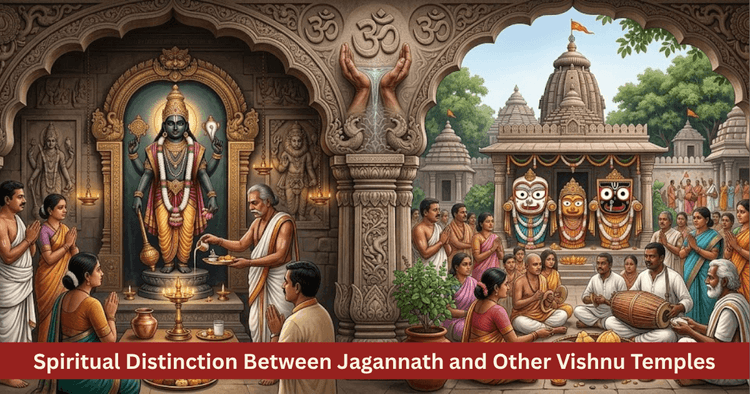
Table of Contents
In the pious and rich tradition of Sanatana Dharma many divine temples of Lord Vishnu and his various incarnations have been constructed. But the glory of Shri Jagannath Temple located in the coastal region of Puri Odisha is considered the most unique wonderful and distinct. Generally when a devotee enters any traditional Vishnu or Krishna temple in India such as Tirupati Balaji Srirangam or Dwarikadhish the entire atmosphere the structure of the idols the arrangement of the sanctum sanctorum and the method of worship appear bound by a specific scriptural code and established modesty. On the contrary upon stepping into the Shri Jagannath Temple of Puri one experiences a completely different supernatural folk culture filled and mysterious energy. This temple is not just wonderful from the perspective of architecture but the spiritual consciousness here is altogether distinct from all other Vaishnava pilgrimage sites.
In this holy abode Lord Krishna the complete incarnation of Lord Vishnu is seated as saaksat Jagannath meaning the master or lord of the entire universe. The most unique thing is that he is not alone in the sanctum sanctorum of this temple but along with him his elder brother Balabhadra and beloved sister Subhadra are also worshiped. While in other temples the idols of the Lord are made of beautiful smooth metal ashtadhatu or bright stones according to scriptural characteristics here in the Jagannath Temple unfinished idols made of kastha meaning neem wood are established. This difference is not just in external decoration or architecture but behind it lie deep spiritual mysteries inclusion of tribal culture and divine plays which make this temple unique in the entire world. This article uncovers those secret causes and experiences that completely separate the Jagannath Temple from other traditional Vishnu temples.
Comparative Details of Jagannath Dhama and Traditional Vishnu Temples
The main differences between the unique folk traditions of the Jagannath Temple of Puri and the pure Vedic worship methods of other general Vaishnava temples can be clearly understood through the following table.
| Comparative Point | Traditional Vishnu and Krishna Temples | Shri Jagannath Temple (Puri) |
|---|---|---|
| Construction Material of Idols | Marble, ashtadhatu, stone or Shaligram stone | Sacred neem wood of local forests (Daru Brahma) |
| Form of the Idols | Extremely beautiful, complete limbs, adorned human form | Large eyes, mysterious unfinished form without hands and feet |
| Deities of the Sanctum Sanctorum | Lord Vishnu along with Goddess Lakshmi, Bhudevi or Radha ji | Shri Krishna (Jagannath), Balabhadra and sister Subhadra |
| Main Offering (Prasad) | Traditional kalakand, makhan-mishri, laddu or chhappan bhog | Special offering made in earthen pots called Mahaprasad |
| Influence of Culture | Pure scriptural, Brahmanical and Vedic code tradition | Wonderful union of Shabara tribal folk tradition and Vedic culture |
| Renewal of Idols | Idols are permanent, changed only if broken | Secret method of Navakalevara every twelve or nineteen years |
Mystery of Daru Brahma and Supernatural Form of Idols
In general Vishnu temples the archa vigraha of the Lord is made of beautifully carved stones or metals according to the rules of sculpture art so that devotees can view the divine calm and attractive form of the Lord to feel blissful. But in Puri Dhama the idols of Lord Jagannath Balabhadra and Subhadra are made of neem wood which is called saaksat Daru Brahma. The hands and feet of these idols are not fully developed and their eyes are very large and circular. This form might surprise any person viewing it for the first time but its hidden spiritual meaning is extremely deep.
According to mythological narrative when Lord Krishna ended his play at the end of Dvapara Yuga his mortal body was cremated. But his heart did not burn even in fire and it remained safe as a divine beating lump. In the later period of Kaliyuga the supreme devotee King Indradyumna received directions in a dream that he should get the idol of the Lord constructed from a special wooden log of neem floating in the sea. Saaksat Vishwakarma the celestial architect appeared as an old sculptor and placed a condition that he would make the idol inside a closed room alone for twenty-one days and during this period no one should enter. But out of curiosity and anxiety the king opened the door of the room on the fourteenth day itself. As soon as the door opened the sculptor had disappeared and the idols remained unfinished. The king felt great repentance but the Lord himself appeared and told the king that he would reside on earth in this very form so that the world could understand that even without physical hands and feet God can operate the entire universe and even without physical ears he can listen to the call of his devotees.
Glory of Mahaprasad and Message of Social Harmony
The prasad obtained in other Vishnu temples is considered very sacred and venerable but the offering of the Jagannath Temple is not just called prasad but it is given the title of Mahaprasad. The process of preparing this Mahaprasad and its social importance are completely unique and supernatural. In the huge and ancient kitchen of the temple seven earthen pots are placed one on top of another in order and food is cooked on a wood fire. The astonishing thing is that the food in the topmost pot cooks first and the food in the lower pots cooks later. Only ancient vegetables and spices of India are used in preparing this food. The entry of foreign vegetables like potatoes tomatoes green chillies or pumpkin is completely prohibited here even today.
When this food is offered to Lord Jagannath and then to Mother Vimala located in the courtyard of the temple it takes the form of saaksat Mahaprasad. The greatest feature of this prasad is its purity and the message of social harmony. While the influence of caste rules and untouchability was seen in other places of Sanatana Dharma in ancient times there is no place for caste in Jagannath Puri. Any person can take this Mahaprasad from the hand of a person of any caste and eat it. Even a supreme scholar Brahmin and the most backward untouchable person of society consume Mahaprasad together from the same vessel in Anand Bazar. This wonderful and touching scene is not seen in any other Vishnu temple which proves that all living beings are equal in the court of Jagannath ji.
Secret Tradition of Navakalevara and Mystery of Brahma Padartha
Another important reason that makes the Jagannath Temple completely distinct wonderful and mysterious from all other Vishnu temples is the ancient and secret tradition of Navakalevara. Generally the idols established in the temples of Sanatana Dharma remain the same for centuries and their form is not changed. But in Puri at intervals of every twelve or nineteen years when the intercalary month falls in the month of Ashadha meaning two Ashadha months arrive the old idols are immersed and new idols are made. This is considered as the Lord assuming a new body just as Lord Krishna told Arjuna in the Gita that the soul leaves the old body and assumes a new body.
During this extremely secret process of Navakalevara electricity is cut off in the entire city of Puri and heavy security is deployed around the temple. Heavy darkness is created in the entire temple premises. Only one veteran chief priest whose eyes are blindfolded and hands are wrapped in thick silk cloth is sent into the sanctum sanctorum of the temple. That priest opens the chest of the old idol takes out the Brahma Padartha from inside it and establishes it inside the new idol with great care. It is believed that this Brahma Padartha is the beating heart of Lord Krishna himself. No one has seen this Brahma Padartha with their naked eyes in Kaliyuga till date. The priests who transfer it state that due to the blindfold they cannot see but something is felt in the hands as if a living object or a bird is beating. This supernatural event raises the divinity of this temple far above other Vishnu temples.
Unique Synthesis of Shabara Tribal Culture and Vedic Tradition
Most temples of the Vaishnava sect are operated completely according to Brahmanical scriptural and rigid rules where worship happens only through verses of the Vedas Sanskrit shlokas and specific rituals. But the history of the Jagannath Temple is directly linked to an ancient tribal clan named Shabara. Originally Lord Jagannath was worshiped secretly in a forest cave by a Shabara tribal named Vishvavasu in the form of Nilamadhava as an idol of blue gem. Later King Indradyumna brought him to Puri and established him as Daru Vigraha.
Due to this very historical and cultural reason even today there is a special class in the Jagannath Temple apart from the traditional Brahmin priests who are called Daitapatis. These Daitapatis are considered the direct descendants of the Shabara tribal Vishvavasu. At the time of the famous Rath Yatra and after Dola Purnima when the Lord falls ill for fifteen days (Anasara period) the command of the temple is completely in the hands of these Daitapatis priests. At that time even the Brahmin priests are not allowed to enter the sanctum sanctorum or touch the Lord. These tribal brothers consider the Lord as a member of their family and offer herbal mixtures during his illness. This is such a beautiful synthesis of tribal folk culture and high Vedic tradition which is not found in any other Vishnu temple of India. This is the reason why devotees coming here experience a different kind of spiritual peace affection and belongingness.
FAQ
Why are the idols of the Jagannath Temple not made of stone or metal like other Vishnu temples?
The idols of Jagannath ji are made of sacred neem wood because they are linked to the Nilamadhava form of the ancient Shabara tribal culture. This form displays the direct connection of Daru Brahma meaning God with nature and forests.
Why do the idols of Jagannath ji appear unfinished and without hands and feet?
Due to King Indradyumna opening the door of the room before time according to the condition the sculptor celestial architect Vishwakarma had disappeared. The Lord expressed his desire to stay in this very unfinished form to give a message to the world that God is capable of doing everything even without physical limbs.
In what way is the 'Mahaprasad' of the Jagannath Temple different from the prasad of other temples?
This Mahaprasad is cooked by placing seven earthen pots one on top of another in which the topmost food cooks first. The method of cooking it is completely traditional and any person of any caste can eat it sitting together without any discrimination which is a symbol of absolute social harmony.
What is the Navakalevara tradition and when is it organized?
Navakalevara means assuming a new body. This mysterious tradition happens every twelve or nineteen years when the intercalary month falls in the Ashadha month. In this the old wooden idols are changed new idols are made and the old Brahma Padartha is transferred into the new idol.
Who are the 'Daitapatis' of the Jagannath Temple and what is their importance in the temple?
Daitapatis are the descendants of the original devotee Vishvavasu Shabara tribal. They are considered family members of the Lord. During the Rath Yatra and the days of seclusion (illness period) of the Lord all the main rituals and secret service of the temple are performed only by them.
Get your accurate Kundali
Generate KundaliDid you like it?
Author

Aparna Patni (63)
Experience: 20
Consults About: Family Planning, Career
Clients In: Punjab, Haryana, Delhi
Share this article with friends and family
About ZODIAQ
ZODIAQ is an online Vedic Astrology platform. It connects clients seeking astrological advice to experienced astrologers with deep knowledge. Our users also generate kundali and perform kundali milan for free. ZODIAQ also offers services to the Astrologers. Astrologers utilize various offerings by ZODIAQ to serve their clients effectively.
If you are a User
Consult with experienced astrologers and seek their guidance. You can also order handwritten Janm Patrika report with life prediction prepared by experienced astrologers. Generate accurate Kundali, perform Kundali Matching and check horoscope and muhurat. Utilize our online library for all the necessary astrological and spiritual information.
If you are an Astrologer
Create accurate kundali for your clients and perform Kundali Matching for up to 5 people at a time. Write comprehensive Janm Patrika report for your clients with ZODIAQ. Check client details anytime by saving it in client directory. Become more productive by tracking how many clients you guide every day.
WELCOME TO
ZODIAQ
Right Decisions at the right time with ZODIAQ
