Shiva Tandava Stotram: The Hymn by Ravana That Invokes Shiva’s Divine Grace
By Pt. Suvrat Sharma
Shiva’s Tandava Power, Ravana’s Devotion and a Pathway to Spiritual Awakening
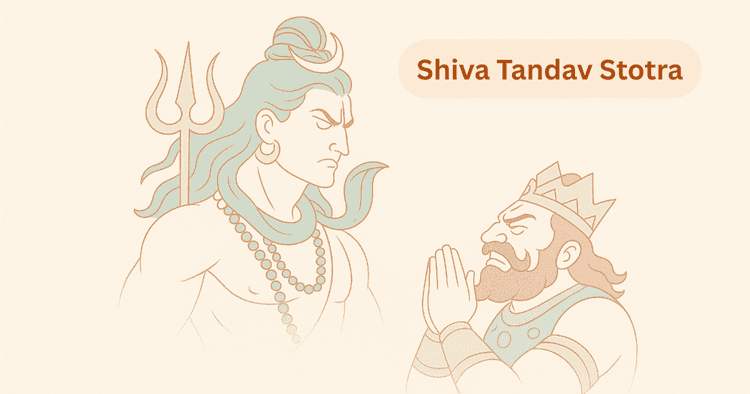
Table of Contents
Shiva Tandava Stotram is far more than a ritual chant, it is an intense expression of Shiva bhakti where cosmic energy flows through powerful poetry. Composed by Lankapati Ravana, not only known as an asura king but also as a devoted worshipper of Shiva, a master astrologer and a profound Vedic scholar, this hymn stands as a symbol of his deep surrender to Lord Shiva. Created in a moment of unbearable pain to please Shiva himself, the stotram acts as a mantra that fills the life of a seeker with spiritual strength, inner fire and divine grace.
Origin of Shiva Tandava Stotram: When Pride Turned into Devotion
According to the Uttarakanda of Valmiki Ramayana, as Ravana was returning to Lanka in the Pushpaka Vimana, his flight path was obstructed above Mount Kailash. Nandi informed him that this was the abode of Lord Shiva and no stranger was allowed to pass over it. Taking this as an insult, Ravana attempted to lift the sacred mountain.
With a gentle yet irresistible force, Shiva pressed the mountain down, trapping Ravanas hand beneath it. Overwhelmed by excruciating pain, Ravana began to sing in praise of Lord Shiva. The verses he poured out from his heart later became known as Shiva Tandava Stotram. Legend says that he turned his own nerves into a veena and sang with such intensity that Shiva was pleased, forgave him and blessed him with boons.
Panchang: The Foundation of Vedic Astrology and Its Role in Life
Shiva Tandava Stotram: Key Verses and Essence
The stotram is composed in a powerful meter that echoes the rhythm of Shiva’s cosmic dance, the Tandava. Each verse describes different aspects of Shiva’s form, energy and universal role as creator, sustainer and destroyer.
Verse 1 (Essence)
Jatatavigalajjala pravahapavitasthale
Gale valambya lambitam bhujanga tungamalikam
Damaddamaddamaddaman ninadavad damarvayam
Chakara chanda tandavam tanotu nah Shivah shivam
This verse portrays Ganga flowing from Shiva’s matted hair, serpents garlanding his neck and the pounding sound of the damaru resounding with his fierce Tandava dance. The devotee prays that such Shiva may bless the world with auspiciousness.
Verse 2 (Essence)
Jatakatahasambhrama bhraman nilimpa nirjhari
Vilolavichivalari virajamanamurdhani
Dhagaddhagaddhagajjvalal lalatapatta pavake
Kishora chandra shekare ratih pratikshanam mama
Here the celestial river swirls through his locks, a blazing fire burns on his forehead and a tender crescent moon adorns his head. The devotee seeks to remain forever enchanted by this vision.
Central Themes in the Verses
- Shiva as the cosmic dancer whose Tandava symbolizes creation, preservation and dissolution in one continuous flow.
- Shiva as destroyer of desire (Kamadeva), pride, ignorance, demons and even death itself.
- Shiva as the compassionate Lord whose single glance can remove all obstacles and fears.
- Shiva as the equal seer, for whom jewel and dust, friend and foe, commoner and king are all the same.
Spiritual Power and Inner Meaning
Each line of Shiva Tandava Stotram carries multiple layers of meaning, both symbolic and philosophical.
- The description of Ganga, serpents and crescent moon reveals Shiva as the meeting point of ascetic austerity, power and grace.
- The fire on his forehead symbolizes destruction of ego, desire and ignorance that bind the soul.
- Snakes, ashes, elephant hide and cremation ground imagery remind the seeker of impermanence and the need for inner detachment.
- The repeated rhythm of the verses helps align the mind with the rising energy of devotion and courage.
When recited with awareness, the stotram becomes a tool of meditation, churning and purifying the subconscious, lifting the seeker toward spiritual fearlessness.
Benefits of Reciting Shiva Tandava Stotram
- Overcoming Obstacles: The hymn empowers the devotee to face challenges with clarity, strength and surrender to Shiva’s will.
- Boosting Creativity and Expression: Artists, musicians, dancers and writers experience a surge of inspiration and creative flow.
- Radiance and Prosperity: Traditions hold that regular chanting brings brilliance to the face and stability in wealth and reputation.
- Relief from Planetary Afflictions: It is widely regarded as beneficial in mitigating the effects of Saturn, Rahu, Ketu, Kaal Sarp Dosh and certain ancestral karmic patterns.
- Inner Courage and Stability: In times of depression, fear or confusion, the stotram instills deep inner courage and resolve.
Proper Method of Recitation
To receive the full spiritual and energetic benefit of Shiva Tandava Stotram, it should be recited with purity and focused intention.
- Time: Dawn or dusk, especially during Pradosh Kaal, is ideal for chanting.
- Place: Sit in a quiet and clean space facing a Shiva Linga or image of Lord Shiva.
- Preparation: Bathe, wear clean clothes and perform abhishek of the Shiva Linga with water or milk, preferably with Ganga water.
- Offerings: Present incense, lamp, flowers and naivedya with devotion.
- Recitation: Chant in a clear, strong voice with correct rhythm, evoking the intensity with which Ravana himself sang.
- Regularity: Daily recitation is recommended, especially on Mondays and Maha Shivaratri for special grace.
Deeper Insight: From Pride to Surrender
Shiva Tandava Stotram also tells the inner story of every seeker. Ravana begins with pride and power, yet in the grip of Shiva’s might he breaks down into pure devotion. This mirrors the spiritual journey where ego is gradually transformed into surrender.
- Shiva punishes arrogance yet never refuses sincere repentance.
- The same Lord who crushes the mountain of pride also lifts the devotee into freedom.
- Chanting this hymn reminds the seeker that Shiva’s justice and his compassion are inseparable.
Living with Shiva’s Power and Grace
For a true devotee, Shiva Tandava Stotram is not just a poem but a living experience of Shiva’s dynamic presence. Through Ravana’s words, even one who went astray found forgiveness in Shiva’s inexhaustible compassion. Those who integrate this stotram into their spiritual life gradually feel more anchored, fearless and inwardly free.
In every verse resound Shiva’s strength, mercy and fairness, teaching that in front of pure love and surrender, even the hardest karma can be transformed.
FAQ
1.Who composed Shiva Tandava Stotram and why?
Shiva Tandava Stotram was composed by Ravana, the king of Lanka, when his hand was crushed under Mount Kailash and in that intense pain he sang in praise of Lord Shiva seeking forgiveness and grace.
2.What is the main spiritual message of Shiva Tandava Stotram?
The core message is that ego and pride must surrender to Shiva, and that sincere devotion can transform suffering into divine connection and liberation.
3.What benefits are associated with regular recitation of Shiva Tandava Stotram?
Regular recitation is believed to remove obstacles, strengthen willpower, enhance creativity, bring prosperity and support deep spiritual growth.
4.When is the best time to chant Shiva Tandava Stotram?
Ideal times are early morning and evening Pradosh Kaal, particularly on Mondays, Pradosh days and Maha Shivaratri.
5.Does this stotram help with planetary doshas?
Traditionally, devotees recite it to ease the effects of Saturn, Rahu, Ketu and Kaal Sarp Dosh, trusting Shiva as the ultimate protector beyond planetary influences.
6.Can beginners chant Shiva Tandava Stotram without full mastery of Sanskrit?
Yes, beginners can chant with sincere effort to learn correct pronunciation and with understanding of the meaning, as devotion and intention are most important.
7.Is Shiva Tandava Stotram suitable for daily practice?
It is well suited for daily sadhana, especially for those seeking courage, energy, focus and a deep connection with Lord Shiva’s transformative power.
Get your accurate Kundali
Generate KundaliDid you like it?
Author
Pt. Suvrat Sharma (63)
Experience: 20
Consults About: Family Planning, Career
Clients In: Punjab, Haryana, Delhi
Explore Related Articles
Explore All
Gajendra Moksha Stotra: When an Elephant Showed the Path to Liberation
Vishnu Sahasranama Stotra: The Infallible Medium of Divine Worship
The Maha Mrityunjaya Mantra: Ancient Prayer That Transforms Fear Into Liberation
Shri Gajanan Stotra: A Spiritual Source of Wisdom, Prosperity and Peace
महामृत्युंजय मंत्र: प्राचीन प्रार्थना जो भय को मुक्ति में बदलती है
श्री गजानन स्तोत्र: बुद्धि, समृद्धि और शांति का आध्यात्मिक स्तोत्र
Share this article with friends and family
About ZODIAQ
ZODIAQ is an online Vedic Astrology platform. It connects clients seeking astrological advice to experienced astrologers with deep knowledge. Our users also generate kundali and perform kundali milan for free. ZODIAQ also offers services to the Astrologers. Astrologers utilize various offerings by ZODIAQ to serve their clients effectively.
If you are a User
Consult with experienced astrologers and seek their guidance. You can also order handwritten Janm Patrika report with life prediction prepared by experienced astrologers. Generate accurate Kundali, perform Kundali Matching and check horoscope and muhurat. Utilize our online library for all the necessary astrological and spiritual information.
If you are an Astrologer
Create accurate kundali for your clients and perform Kundali Matching for up to 5 people at a time. Write comprehensive Janm Patrika report for your clients with ZODIAQ. Check client details anytime by saving it in client directory. Become more productive by tracking how many clients you guide every day.
WELCOME TO
ZODIAQ
Right Decisions at the right time with ZODIAQ
